Tag Archives: water line repair

Understanding Main Water Line Repairs: Timeframes and Processes

main water line repairs

Main water line repairs are a critical aspect of maintaining a safe and functional water supply system. These repairs can be complex, requiring specialized knowledge and equipment to ensure that the water supply is restored efficiently and safely. Understanding the timeframes and processes involved in these repairs can help homeowners and property managers plan and manage their water supply needs effectively. Below we get into the essential aspects of main water line repairs, exploring the typical durations, processes, and the role of professional services in handling these cases.

Understanding the Importance of Main Water Line Repairs

Main water lines are the primary conduits for water supply to homes and businesses. Any damage or disruption to these lines can lead to significant inconveniences and potential hazards. Repairing these lines promptly is essential to prevent water shortages, contamination, and further damage to the infrastructure. Plumbers play a crucial role in ensuring that repairs are conducted effectively and efficiently, minimizing the impact on residents and businesses. By understanding the importance of these repairs, property owners can appreciate the need for timely and professional intervention.

Factors Affecting Repair Times

The duration of main water line repairs can vary significantly based on several factors. These include the extent of the damage, the location of the line, the type of materials used, and the accessibility of the repair site. Additionally, weather conditions and the availability of necessary equipment and personnel can also influence repair times. Understanding these factors can help property owners and managers anticipate potential delays and plan accordingly. By considering these elements, one can better manage expectations and prepare for the associated challenges.

Typical Processes Involved in Main Water Line Repairs

Repairing a main water line involves several steps, each crucial to ensuring the integrity and functionality of the water supply system. The process typically begins with an assessment of the damage, followed by excavation to access the affected area. Once the line is exposed, the damaged section is repaired or replaced, and the area is backfilled and restored to its original condition. Plumbers ensure that each step is conducted with precision and care to prevent further issues.

Assessment and Diagnosis: The First Step in Main Water Line Repairs

The first step in repairing a main water line is to assess the extent of the damage. This involves inspecting the line to identify leaks, cracks, or breaks. Advanced technologies such as video inspection and leak detection equipment are often used to diagnose the issue accurately. This assessment is crucial for determining the appropriate repair strategy and estimating the time required for completion. By leveraging modern diagnostic tools, professionals can provide a more accurate and efficient repair process.

Excavation and Access: Reaching the Heart of the Problem

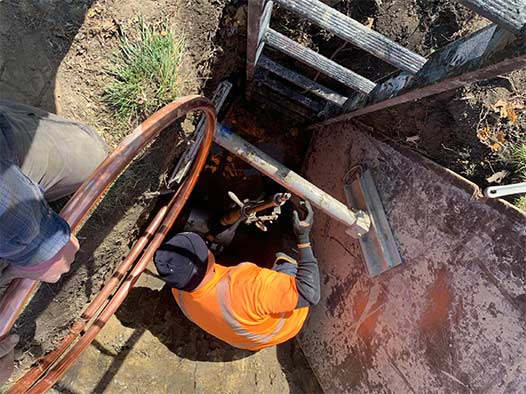
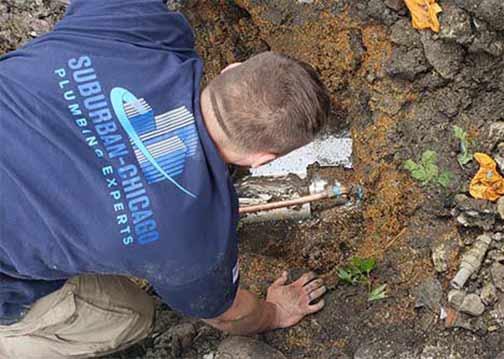
Once the damage has been assessed, the next step is to excavate the area to access the affected section of the water line. This process can be labor-intensive, especially if the line is located underground or beneath structures. Professional services use specialized equipment to ensure that the excavation is conducted safely and efficiently, minimizing disruption to the surrounding area. The excavation phase is a delicate balance of precision and care, requiring skilled plumbers to manage the complexities involved.

Repair or Replacement: Restoring the Water Supply

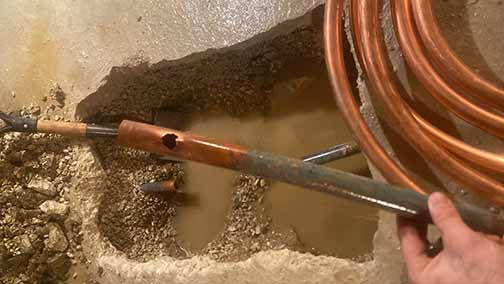
After gaining access to the damaged section of the water line, the repair process begins. Depending on the extent of the damage, the affected section may be repaired or replaced entirely. Plumbers use high-quality materials and techniques to ensure that the repair is durable and reliable. This step is critical to restoring the water supply and preventing future issues. By employing the right materials and methods, professionals can ensure a long-lasting solution to the problem.

Restoration and Cleanup: Returning to Normalcy

Once the repair is complete, the area is backfilled and restored to its original condition. This involves replacing soil, pavement, or landscaping that was disturbed during the excavation process. Professional plumbers ensure that the cleanup is thorough, leaving the site clean and safe for residents and businesses. This final step is essential for maintaining the aesthetic and functional integrity of the property. A well-executed restoration process is a testament to the professionalism and attention to detail of the repair team.

Role of Professional Plumbers in Main Water Line Repairs

Professional plumbers play a vital role in main water line repairs, providing the expertise and resources necessary to conduct repairs effectively and efficiently. These services are equipped with advanced technologies and skilled personnel to handle complex repairs and minimize disruptions. By relying on professional plumbers, property owners can ensure that their water supply is restored promptly and safely. The involvement of professionals is not just about expertise; it’s about trust and reliability in managing critical infrastructure.

Preventive Measures to Avoid Future Repairs

While main water line repairs are sometimes unavoidable, there are preventive measures that can help reduce the risk of damage and prolong the lifespan of the water supply system. Regular inspections and maintenance, proper installation techniques, and the use of high-quality materials can all contribute to preventing future issues. Property owners and managers should work with professional plumbers to implement these measures and protect their water supply system. Prevention is always better than cure, and proactive measures can save time, money, and inconvenience in the long run.

Conclusion: The Path to Reliable Water Supply

Understanding the timeframes and processes involved in main water line repairs is essential for managing water supply needs effectively. By recognizing the factors that affect repair times and the typical steps involved in the repair process, property owners can plan and manage their water supply needs more efficiently. Professional plumbers play a crucial role in ensuring that repairs are conducted safely and effectively, minimizing the impact on residents and businesses. By implementing preventive measures, property owners can reduce the risk of future repairs and maintain a reliable water supply system. In conclusion, a comprehensive approach to main water line repairs combines timely intervention, professional expertise, and preventive strategies to ensure a seamless and reliable water supply for all.
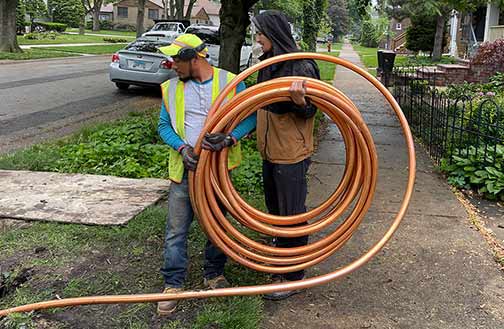
What to Consider When Choosing Between Repairing and Replacing Water Lines in Chicago

What to Consider When Choosing Between Repairing and Replacing Water Lines in Chicago

Water line replacement and repairs are among the most complex and costly plumbing projects you can undertake in your Chicago home. When repairing or replacing your water line, Penny Realty Management warns that if the job is not done right, it can leave you with even bigger problems than you set out to solve.

Unfortunately for many homeowners in Chicago, water line problems are an issue they constantly have to deal with because of aging infrastructure. If your water line is leaking or your home’s water supply is contaminated, maybe it is time to overhaul the line.

But should you repair or replace the damaged water line? That depends on the water line issues you have in your home and how long the problems have been there. It also depends on the steps you have taken to solve past issues. 

In this post, we explain the factors to consider before deciding whether to repair or replace a water line, along with the pros and cons of each option.

Water line repair versus replacement: 4 things to consider

The repair history of the water line

If the records show that your water line has had major problems in the past, there is a chance that it has also been repaired before. As a rule, you only want to repair a water line once. After the first repair, subsequent efforts will cost more money and be less effective. The potential for worse damage increases with each repair. Fixing a water line that has been repaired in the past is not cost-effective.

Age of the water line

If the water line is about or past 50 years old, it makes no sense to repair it. That’s because once a water line goes beyond this threshold, its functionality starts declining rapidly. Older water lines are more brittle, and minor problems with the pipes can easily escalate into major emergencies. Replace your water line if it is close to 50 years. Repair it if it is only 25 years old.

The water line materials

The type of pipes in your water line plays a huge role in your decision to repair or replace the line. If the line is made of lead pipes, replacing the water line is your best option, regardless of the age or condition. Some states and cities even make it illegal to fix lead pipes. In some locations, the only materials legally allowed for main water lines are brass, copper and ductile iron pipes.

The project cost

If the cost of repairing your water line is almost the same as the cost of replacing it, it makes sense to repair the line. As a rule, you want your repair costs to be at least 50%+ lower than your replacement cost. Otherwise, it is better to replace the line. This cost should include the material and labor costs for the entire project.

a water line replacement ready to take place in chicago.

Replacing your water line is a long-term solution. For the next decade, at least, you should not expect any issues with the line.

Pros and cons of repairing your water line

Pros

  • Cost-effective: It will always cost less to repair your damaged water line than it costs to replace it.
  • Less disruptive: The impact on your time, lifestyle and landscaping is minimal if you elect to repair the line.
  • Smaller environmental impact: The volume of waste generated by the repair process is minimal. The impact on the environment is also minor.

Cons

  • Temporary: Repairing the water line is not a long-term fix because the problems may return
  • Potential for future problems: Repairing a water line can predispose it to future problems.
  • Not always an option: If the water line is badly damaged, repairing it may not even be an option.

Pros and cons of replacing your water line

Pros

  • Long-term solution: Replacing your water line is a long-term solution. For the next decade, at least, you should not expect any issues with the line. 
  • Improved performance: Replacing your water line is the best way to deal with all the performance issues plaguing the line.
  • Boost your property value: A new water line is something buyers want to see and are happy to pay more money for.

Cons

  • Costs more money: It costs significantly more money to replace a water line to repair it. Funding the project can be a major challenge.
  • Highly disruptive: Water line replacement involves a lot of excavation. That will often result in damage to your landscaping, driveway and paved walkways. 

To conclude, replacing your water line when the issue can be solved by repairing the line is a waste of money. At the same time, repairing a water line when it should be replaced will force you to spend twice to solve the same problems.

To ensure you choose the right solution for your water line problems, it is vital to have a qualified and experienced professional plumber evaluate the damage to your water line and recommend the most cost effective solution to the problem.

How Professional Water Line Repair Services Ensure a Hassle-free Home Ownership Experience

Professional Water Line Repair Services

Water lines connect your property to the municipal water supply. They ensure a continuous flow of clean water to your home. A healthy and functional water line, devoid of leaks and faulty connections, is one of the most essential things in a home.

Sadly, there is no readily available method for assessing the condition of the water line in your home. Even when buying a new home, Real Property Management Services notes that professional home inspectors are not mandated to do a detailed water line inspection during the standard home inspection.

A home inspection is primarily a visual inspection of the home. Therefore, any sections of the plumbing that are not visible and readily accessible will not be inspected. In most cases, the home inspector will only note the superficial characteristics of the plumbing system.

It means that a home can have serious water line problems, and you would not know it until after you have bought it. These water line problems can be wide-ranging and costly to fix, and they have the power to severely impair you from enjoying your new home.

Some of the water line problems you may encounter in your home include:

Leaky and burst pipes

This is caused by high water pressure, encroaching tree roots, freezing temperatures, weak pipe joints, worn-out seals, pipe corrosion and undetected clogs. A leaky or burst water pipe emergency can lead to warped walls, mold and flooding.

Clogged water line

Foreign materials inside the water supply can lodge within a pipe and choke it. The effect is that the water pressure will increase until the pipe bursts. Old pipes with lots of corroded sections are more susceptible to this problem.

Displaced pipes

An underground water line can be moved from its place by soil shifts and interfering tree roots. A dislodged pipe will become vulnerable to clogs and is more likely to leak. This problem can also result in low water pressure.

a home flooding from broken water line.

A broken pipe can flood your home, damaging your personal property and the structures of your building.

A damaged water line in your home will cause the following problems:

Flooding

A broken pipe can flood your home, damaging your personal property and the structures of your building.

Mold growth

Hidden water leaks and floods create the right conditions for mold, mildew and algae growth.

Property damage

Your home’s ceilings, wooden support structures, flooring  and insulation are highly susceptible to moisture.

Damage to electrical systems

Water and electricity should not mix, but a damaged water line can bridge the electrical connections in your home.

High repair costs

Water damage is the most common and most expensive kind of damage in American homes.

But you can save yourself from all these troubles by simply hiring a professional water line repair service to inspect, repair or even overhaul your home’s water line. What is a professional water line repair service?

Professional water line repair service and why you need it

A professional water line repair service is a trained plumber licensed to repair and maintain the water line in homes. The job of a professional water line repair service is to ensure a regular supply of clean water to the house by resolving all issues with the main water line.

A professional water line service should be one of the first experts you hire after you complete the purchase of your home. It is vital to do this before doing any upgrades to your new home. That is because a malfunctioning water line can damage your new updates.

For more experienced homeowners, a professional water line repair service can be your best ally when removing the inefficiencies in your home’s plumbing. The water line repair expert will solve the current issues in the water line and future-proof your plumbing by implementing lasting solutions.

professional water line repair service.

A professional water line service should be one of the first experts you hire after you complete the purchase of your home.

Benefits of hiring a professional water line repair service

When you hire a professional water line repair service, these are some of the benefits you can expect:

  • A water line repair expert will detect existing and potential problems in the water line with pinpoint accuracy. Doing this reduces the time and money spent to solve water line issues.
  • A professional water line repair service uses modern techniques and state-of-the-art equipment that help them detect and fix underground leaks without damaging your property or disrupting your lifestyle.
  • A water line repair expert is an invaluable asset when doing preventive maintenance for your plumbing. That is because they can detect weaknesses in your water line before they result in expensive emergencies.
  • Water line problems like tree root/foreign object intrusion, which are usually hard to solve, are not a problem for a professional water line repair service. They have the expertise to deal with these complicated issues.
  • The real benefit of hiring a professional water line repair service becomes apparent months after they finish their work because your home’s plumbing will continue to function with optimal efficiency.

Are you a homeowner who wants to experience a hassle-free life in your home? By detecting and restoring the problems in your water line that have the potential to interfere with your enjoyment of the property, a professional water line repair service can improve the quality of your life.

Do I Need to Leave My Home During a Main Water Line Repair?

Do I Need to Leave My Home During a Main Water Line Repair

When it comes to home maintenance and repairs, few things can cause more stress and inconvenience than a problem with the main water line. This critical component of your home’s plumbing system is responsible for delivering clean and fresh water to every faucet, shower, and toilet in your house. So, when the main water line needs repair, it’s natural to wonder whether or not you will have to leave your home during the process.

Here we will explore the factors that determine whether or not you need to leave your home during a main water line repair. We will also provide some tips and considerations to help make the process as smooth and stress-free as possible.

Factors to Consider

Extent of the Damage

The extent of the damage to your main water line plays a significant role in determining whether or not you will need to temporarily vacate your home. In some cases, minor repairs can be completed without disrupting the water supply to your house. However, if the damage is extensive and requires major repairs or replacement of the entire main water line, it is more likely that you will need to find alternate accommodations during the repair period.

Access to the Main Water Line

Another important factor to consider is the accessibility of the main water line. If the line is located underground or in a hard-to-reach area of your property, the repair process may involve digging or excavation, which can be disruptive and messy. In such cases, it is advisable to temporarily leave your home to avoid the inconvenience and potential hazards associated with these repair techniques.

Duration of the Repair

The duration of the repair is also an essential factor to consider. Minor repairs can often be completed within a few hours or a day, allowing you to stay in your home during the process. However, major repairs or replacements may take several days or even weeks to complete, making it necessary for you to make alternative arrangements for accommodation.

Tips for a Smooth Repair Process

If you find yourself needing a main water line repair, here are some tips to help make the process as smooth and hassle-free as possible:

Plan Ahead

If you suspect that your main water line may need repairs in the future, it is a good idea to plan ahead. Start by researching reputable plumbers in your area and save their contact information for easy access when needed. By being prepared, you can minimize the time it takes to find a reliable professional and get your repair scheduled.

Communicate with Your Repair Provider

Once you have selected a repair provider, be sure to communicate openly with them about your expectations and concerns. Ask them about the estimated duration of the repair, the extent of the disruption, and whether or not you will need to temporarily leave your home. By having a clear understanding of the repair process, you can plan accordingly and make necessary arrangements.

Arrange Alternative Accommodations

If it is determined that you will need to leave your home during the main water line repair, it is essential to arrange alternative accommodations. This may include staying with family or friends, booking a hotel room, or renting a temporary residence. Consider the duration of the repair and choose an option that is most convenient and comfortable for you and your family.

Take Precautions

Before the repair begins, take some precautions to protect your belongings and minimize potential damage. Move valuable items away from the affected area, cover furniture and electronics with plastic sheets or tarps, and secure any loose items that may get in the way of the repair work.

Follow Safety Instructions

If you choose to stay in your home during the repair process, be sure to follow any safety instructions provided by the repair provider. This may include avoiding certain areas of your home, limiting water usage, or temporarily disconnecting specific appliances or fixtures.

In Conclusion

In conclusion, whether or not you need to leave your home during a main water line repair depends on several factors, including the extent of the damage, accessibility of the line, and duration of the repair. Communication with your repair provider and careful planning can help make the process as smooth as possible. If you do need to temporarily vacate your home, arrange alternative accommodations and take necessary precautions to protect your belongings. Remember to follow any safety instructions provided to ensure a successful and hassle-free repair process.

How To Identify a Leaking Water Line

How To Identify a Leaking Water Line

Of the different types of water leaks in your home, leaks involving the water line are usually the worst. Orca Realty says that is because water line leaks can do massive damage in a relatively short time.

Your home’s water line carries large volumes of water. The water often has a lot of pressure. Problems in this part of the plumbing can impair your quality of life and even endanger the structures of your home.

What is a water line?

The water line, or main water line, is the pipe that connects to the city water supply and carries water from the street into your home. While the impact of leaks in water pipes located inside the house can often be limited to the part of the home where the pipe is located, this is not the case with the water line.

Water line leaks affect the entire building. Even if the water supply to the house is not interrupted, a water line leak can affect the quality and quantity of water coming into the home. It will cause the water bill to skyrocket or even impair the structural integrity of the building. What are the signs that you may have a broken water line?

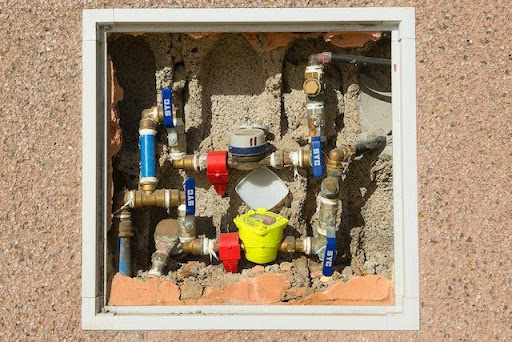
a water main system.

Signs of a leaking water line

  • Low water pressure: A noticeable change in water pressure across the entire home may signify a large leak in your water line.

  • Discolored water: If soil finds its way into the opening in the water line, it can cause the water entering your home to have a murky color.

  • Mounting water bills: If your water bill is going up, but there is no major change to the way you use water, you may have a water line leak.

  • Recurring clogs: Debris inside the water supply can cause frequent clogs in your drains, especially when the clogs happen to several drains in the home.

  • Smelly water: Impurities that enter the water through the crack in the water line can give it a bad odor.

  • Strange noises from pipes: A burst water line will make a bubbling or hissing sound. You may also hear the sound of dripping water.

  • Wet patches in your lawn: Because it runs underground, a broken water line can cause wet patches in your lawn.

  • Mold and mold-loving insects: You may have a water leak in your water line if you start seeing mold in your home or insects that love mold and water.

How to know if you have a leaking water line

If you notice some or all of the above signs in your home, you may be sure there is a water leak in your home. But the leak can be in your main water line or in one of the pipes inside the house. To determine the location of the leak, follow these steps.

How to know if your main water line is leaking

  • Turn off the main water valve in your home and make sure no water-utilizing appliance is running.

  • Look for your home’s main water shut-off valve and turn it off. It is the valve that controls the supply of water to the house. Turning it off ensures that no water enters your home.

  • Look for your home’s water meter; it is often located on the front curb of the home or somewhere on the basement.

  • Open the lid of the water meter box and remove the cover to access the water meter. Lift the flap on the face of the water meter to see the dials. You may need to wipe dust and debris off the face of the meter.

  • If the snowflake indicator on the water meter is moving, it means water is still flowing through the pipes, even though you are not using any water in your home. That shows you have a leak.

  • If you are not sure, take the water meter reading and wait a few hours. If the water meter reading changes while the water supply to your home is off, you have a leak in your main water line.

a home water shutoff valve.

How to know if a water pipe inside your home is leaking

If you do the above steps and there is no movement in the water meter, the leak is probably inside your home.

  • To determine if this is correct, open the main water shut-off valve.

  • Check to see if the snowflake dial on the water meter starts moving.

  • If it moves, go back and turn off the water shut-off valve.

  • If the snowflake indicator on the water meter stops moving, the leak is inside your home.

To identify the exact location of the water leak, regardless of whether the leak is in your main water line or inside your house, please contact a professional plumber. It is not a good idea to try to fix water leaks in the home by yourself, especially when those leaks are in the home’s water line.

The Pros and Cons of Repairing Water Lines vs. Replacing Them: A Chicago Comparison

The Pros and Cons of Repairing Water Lines vs. Replacing Them

As a homeowner in Chicago, it’s not uncommon to experience issues with water lines. Over time, pipes can deteriorate due to old age, corrosion, or even tree roots causing damage. When faced with the need for a main water line repair, the decision to repair versus replace can be challenging. There are pros and cons to both options, and it ultimately comes down to what is best for your situation. Here is a side-by-side comparison of repairing vs. replacing water lines in Chicago.

Repairing Water Lines

Pros

  • Cost-effective – repairing a water line is generally cheaper than replacing it
  • Less disruptive – repair work can be finished quickly and doesn’t require extensive digging or excavation
  • Eco-friendly – repairing the existing pipes minimizes waste and is a more sustainable solution

Cons

  • Temporary fix – while repairing a water line can solve the immediate problem, it may not be a long-term solution
  • More vulnerable – repaired pipes can be more susceptible to future leaks or damage due to their age and wear and tear
  • Not always possible – in some instances, a water line may be too damaged and require replacement rather than repair

Replacing Water Lines

Pros

  • Better long-term solution – replacing water lines can provide a permanent solution to issues with deteriorating pipes
  • Improved functionality – new pipes can improve water pressure and flow, making your plumbing system more efficient
  • Increased home value – replacing water lines is a significant upgrade that can increase the value of your home

Cons

  • Expensive – replacing water lines can be costly, and the price can vary depending on the extent of the damage and the complexity of the job
  • Extensive work – replacing water lines may require excavation, which can be disruptive and time-consuming
  • Not always necessary – in some cases, repair work may be sufficient and replacing water lines may not be needed

a water line replacement happening in chicago.

Repairing water lines can be a cost-effective and less disruptive solution, but it may not be a long term fix.

Factors to Consider

When deciding whether to repair or replace your main water line, there are several factors to consider. One important factor is the age of the pipes. If the pipes are relatively new and in good condition, repair work may be sufficient. However, if the pipes are old and corroded, replacement may be necessary. Additionally, the extent of the damage is also a key consideration. Minor leaks or cracks may be repaired, but if the pipes are severely damaged, replacement may be the only option.

Another factor to consider is the location of the pipes. If the pipes are located in a hard-to-reach or inaccessible area, repair work may be the more practical choice. However, if the pipes are in an easily accessible area, replacement may be easier to accomplish. Additionally, the cost of repair vs. replacement is another critical factor. Repair work is generally less expensive than replacement, but depending on the situation, the cost differential may be negligible.

Conclusion

In summary, whether to repair or replace water lines ultimately comes down to the individual situation and needs of the homeowner. Repairing water lines can be a cost-effective and less disruptive solution, but it may not be a long term fix. Replacing water lines can provide a permanent solution, but it can be costly and require extensive work. Homeowners should weigh the pros and cons of each option and speak with a local plumber in Chicago to determine the best course of action.

Water Pipes Knocking: Everything Homeowners Should Know

Water Pipes Knocking

Most times, the water pipes in your home will do their work without making any noise. Even if the pipes vibrate slightly as water flows through them, the sounds they make are often not loud enough to be heard. But sometimes, your water pipes will make clanging or knocking sounds that are both abnormal and annoying.

Why do the water pipes in a house knock? 

McCourt Real Estate Management says there are several reasons why the pipes in your home might sound like a mischievous ghost is playing with them. But thankfully, all of those reasons are due to everyday plumbing issues that can be resolved fairly quickly. Below you will find six reasons why water pipes knock and what to do about the problem.

6 reasons why your water pipes knock and how to solve them

Loose pipes fittings

This is the most common reason why pipes knock and also the one that is easiest to fix. The pipes in your home, especially pipes that carry hot water, can detach from their holding straps. When this happens, the pressure of the water traveling through the pipes can cause them to move and knock against a wall or other pipes in their vicinity. To solve this problem, simply attach the pipes to a nearby stable object like a beam or support it with insulated pipe clips. If the pipe is inside a wall where you cannot reach it, pack the space around its exit and entry points with foam or a soft pad.

Air inside the pipes

Pipes will also knock if there are pockets of air locked inside them. Due to variations in the water pressure, the air inside these pipes will cause them to shake and clang. To solve this problem, turn off the water supply to your home from the mains. Open all the faucets in the house, including external faucets and water hoses. Leave them open until all the water in them drains out. After the trickle of water stops completely, close all the faucets and hoses, and turn the water on slowly. That should get rid of any air inside the pipes. 

pipes banging against masonry.

Pipes knocking against the masonry

Pipes will knock if they are too close to the masonry. That can happen even if the pipe fittings are in place. To solve this problem, here is what you should do. Wedge a piece of hardwood between the pipe and masonry. The wood should fit tightly to keep it from falling. You can ensure this by bolting the pipe to the wood with a u-strap. Another way to solve the problem is to encase the pipe with rubber or cotton batting to muffle the knocking sounds. You can also slit a piece of hose and use it to wrap the pipe.

Water hammers

A water hammer is a loud hammering noise caused by a sudden change in the direction or rate of flow of water. Water hammering mostly happens when the water supply is shut off suddenly, such as when a toilet valve is turned off swiftly. The solenoid switches in your dishwasher, washing machines, and ice maker can also cause water hammers when they turn off the water suddenly instead of gradually. You can solve this problem by installing a water hammer arrestor in your home. But since this is a more complicated issue than the ones mentioned above, it is a good idea to talk to your plumber.

copper water lines.

Copper pipes

As a rule, hot water pipes are more likely to knock than cold water pipes. But metal pipes are also more inclined to knock. The knocking tendency of copper pipes increases when hot water passes through them. The heat causes the pipes to expand and rub against anything near them. One way to solve this problem or reduce its severity is to lower the temperature setting on your water heater. It will keep the pipes from heating up and expanding too much. However, if this is not an acceptable solution, your next option is to talk to your plumber about the issue.

Sediment buildup inside the water heater

This is the most unexpected cause of knocking pipes. This type of knocking can happen when water is not even running in the pipes; typically in the morning or evening. The culprit here is sediment that has built up inside your water heater. Steam bubbles that are trapped under this sediment will force your plumbing to make a knocking sound as they escape. The simple way to get rid of the problem is to flush the water heater. Water heaters should be flushed once or twice a year.

Getting the pipes in your home to stop knocking is easy if you can identify the origin of the problem. But if after doing the steps above, the problem persists, there may be a deeper issue with your home’s plumbing. In that case, your next best step is to get a professional plumber to do a thorough sewer camera inspection of your home.

Common Water Line Problems That Require Repair or Replacement

common water line problems

Have you ever imagined what life would be like if you did not have potable water running in your home? Would modern life exist if you had to dig a well and every time you needed water, go to the well and manually fetch water from it?

The water that flows in your home is a lifesaver and the pipes that make it possible for that water to reach your home are a lifeline. Without those pipes, you would not have the convenience of a modern home with water on demand, explains Keyrenter Hampton Roads.

But this fact is not always obvious because your home’s water line is out of sight. Homeowners tend to forget that this vital part of the home’s plumbing also requires attention. Your water line is subject to many of the same issues that the rest of your plumbing is.

The water line can get damaged. It can get old or the very water that runs through the water line can corrode the pipes and make them less efficient. If your water line collapses, your ability to do simple household tasks will come to an abrupt end.

But this doesn’t happen often because water lines are designed to be sturdy and can go for many years without any signs of trouble. But this is also why water line issues are costly to fix. The problem can build up for years, only to be discovered after it has done maximum damage.

This is why it is important to always make sure your water line is in good condition. You need a local plumber to inspect the system periodically and make sure everything is as it should be. You should also know the potential problems that can happen with your water line. in some cases it makes more sense to replace your main water line than to have it spot repaired.

What are the common water line problems that require repair or replacement?

Old pipes or regular wear and tear

If your home is old and the pipes have not been replaced since the house was built, you can expect more water line problems. Firstly, your water line may have metal pipes that are more prone to corrosion. Secondly, a lot of the other factors listed below may be affecting the pipes.

Tree roots intrusion

Tree roots can damage your water line either by dislodging it or by penetrating the pipes. The latter problem is more common when the pipe already has a leak or weak point. But pipes that are dislodged by tree roots may eventually start to leak also.

Poor installation and human error

If pipes are not installed by a professional or according to the proper procedures, you will have issues with the water line. Water lines may also be damaged if heavy equipment is driven over the ground where pipes are buried. This can also happen if someone digs in the yard and accidentally damages the pipe.

High water pressure

Excessively high water pressure is more damaging to your plumbing than low water pressure, although the latter problem is more likely to get your attention. High water pressure causes vibrations inside pipes that can damage the water line or home appliances and cause leaks.

Soil movements

Upward or downward movement of the soil surrounding your water line can dislodge the pipes and cause you all kinds of problems. These movements are often unforeseen at the time the pipes were laid. Also, there may be no practical way to predict or prevent these ground movements or seismic activity.

Sediment buildup and mineral deposit

If the water in your city is hard, the water line will be more susceptible to this particular issue. The mineral content of water, along with other impurities, will be deposited inside your pipes as water travels through them. Over time this can narrow the diameter of the pipes and make them more likely to burst and leak.

Accumulation of dirt inside the water line

This does not typically happen unless the water line is broken. If the line is cracked anywhere along its length, dirt from the surrounding soil can find its way into the pipes. You can usually tell when you have this problem because the water coming into your home will be discolored.

Frozen water

This is a common issue in areas with harsh winters. If the water line has ever frozen or come close to freezing, the structural integrity of the pipes may be compromised. Freezing water will stress the pipe as the water inside the pipe expands, making the chance of a burst pipe emergency more likely.

Water leaks

The water line can leak as a result of the problems listed above or for unknown reasons. Water line leaks are not as easy to detect as leaks inside your home. If you notice spikes in your water bill without any changes in your water usage, you may have a leak in your plumbing systems, possibly in the water line.

Rodent damage

Burrowing animals, especially rodents, can damage your water line. They will damage the water line not just by digging around the pipes and dislodging them, but also by chewing on the pipes.

Replacing Your Lead Water Service Line in Chicago

water-service-line-replacement-chicago

In 2021, the city of Chicago has initiated a program called the Lead Service Line Replacement (LSLR) plan designed to fast track the replacement of the city’s nearly 400,000 lead service lines. If you are a homeowner in Chicago, you need to know what this program is about and how to take advantage of incentives being offered by the city to replace your lead service line. Same goes for landlords and property owners, says Bill Koonce, owner of Chicago Plumbing Experts.

What is the Lead Service Line Replacement (LSLR) plan?

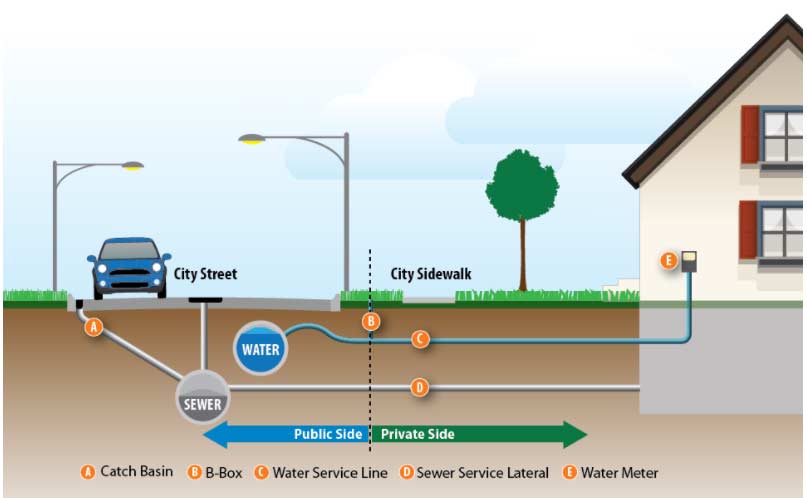
A service line is a pipe that carries water from the city’s main water supply in the street to your home. The pipe runs underground from your home, across the lawn, and underneath the city sidewalk until it reaches the water main below the street.

Why does the city want you to replace your service line?

Only service lines made of lead are being replaced. This is because of the health hazard posed by exposure to the lead in these pipes. Even the lowest level of lead exposure has been shown to adversely affect the IQ of children and their attention spans.

Although most lead poisoning happens via contact with lead-based paint or lead-contaminated dust, lead may also leach into drinking water from the lead service line. Since there is no identified safe level for lead exposure, the best way to prevent this issue is to replace the lead water lines on your Chicago property.

How will you know if you have a lead service line?

If your house or two-flat building was built before 1986 and the water service has never been replaced during renovation, there is a big chance the water service line is made of lead. If you are not sure, here is a simple test to identify the material in your water service line.

  • Step one: Locate the water meter or shutoff valve in your home. The service line typically enters through the basement before it connects to the meter. If you can’t find the meter, use the shutoff valve.
  • Step two: Hold a magnet to the pipe to check if it is magnetic.
  • Step three: Scratch the pipe with a coin or key to see the color of the material.

The pipe should be made of one of these materials:

  • Copper: Copper is not magnetic. It has a shiny orange appearance and is quite common in Chicago.
  • Galvanized steel: Steel is magnetic. It is silver-gray and is no longer used in new construction.
  • Lead: Lead is not magnetic. It has a shiny silver-gray color and is not used in new construction.
  • PVC: PVC plastic is not magnetic. It is typically white and is rarely used in Chicago.

What does replacing a water service line entail?

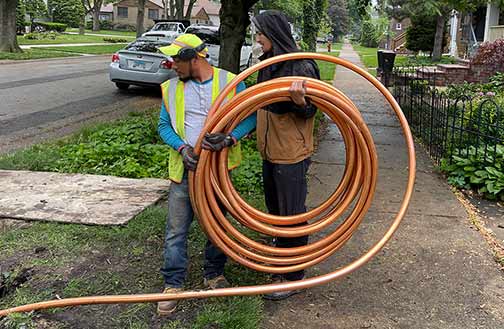
Replacing the water service line is a labor-intensive process that involves digging a trench from your home to the street, up to the point where the service line connects to the water main. After the trench is dug, the old lead line is replaced with a new copper service line. A water meter is also installed to help you save money on any spiking water bills.

a water lead line replacement taking place in chicago.

Replacing the water service line is a labor-intensive process that involves digging a trench from your home to the street, up to the point where the service line connects to the water main.

Will the City of Chicago help with your lead service line replacement?

To assist as many homeowners as possible with their lead service line replacement, the city of Chicago is accepting applications for the Equity Lead Service Line Replacement Program. Under the program, homeowners are eligible for free lead service line replacement plus a free water meter, if:

  • They live in a home they own.
  • Have a child under 18 years old living in the home, or
  • Their water has elevated lead level as shown by a free test by the Department of Water Management, and
  • The household income is 80% below the area median income, which is $74,550 for a family of 4.

But for homeowners who do not meet the criteria, the city still offers incentives. These are for homeowners who hire a private contractor to replace their lead service line and the incentives are available in the form of waivers and freebies. Commercial and mixed-use residential/commercial properties are not eligible for this. Here is how it works.

  • The homeowner will pay for the lead service line replacement (LSLR).
  • The city will subsidize the standard permits, allowing homeowners to save as much as $3,100.
  • The city will attach the new service line to the water main free of charge and provide a free water meter for the home (if there is none).

But to qualify, this must be a standalone project, and not part of a home renovation or expansion. Additionally, the contractor must be licensed.

When selecting a contractor for LSLR, homeowners are encouraged to follow the below process:

  • Contact three licensed Chicago plumbers to request quotes and qualifications information.
  • The plumber should visit the home to confirm service line material and other details.
  • The plumber should have an Illinois Department of Public Health (IDPH) Plumbing Contractor License Number and must be on the list of City of Chicago-Licensed Plumbing Contractors.
  • The plumber should be able to provide a list of 3-5 addresses where they have acquired a City of Chicago Department of Buildings permit for residential LSLR (with details of those projects).

Interested in replacing your lead water lines in the City of Chicago? Contact us at 773-599-9181 or by form below for a free estimate!