Vacuum Truck Pumping Services in Chicago, IL
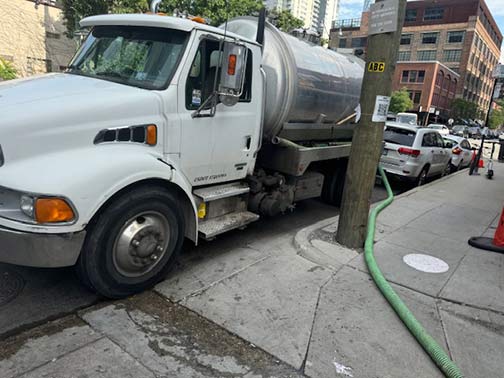
Vacuum truck pumping in Chicago provides the high-capacity extraction needed when a drainage, wastewater, or containment system holds more liquid, sludge, sediment, grease, or debris than standard pumping equipment can handle. Chicago Plumbing Experts uses 4,000-gallon and 5,000-gallon vacuum trucks for demanding pumping projects throughout Chicago and the surrounding Chicagoland area.
Some pumping jobs are simply too large for conventional equipment. A catch basin filled with years of sediment, a drainage system holding substantial standing water, or a commercial waste system with heavy sludge buildup may require specialized vacuum equipment to remove the material efficiently.
When Standard Pumping Equipment Is Not Enough
Not every pumping problem can be handled with a conventional pump. When large quantities of liquid or accumulated material need to be removed, the capacity of the equipment becomes an important part of the solution.
High-capacity vacuum equipment can be useful when a property is dealing with:
- Large amounts of standing water
- Heavy sludge or sediment
- Accumulated debris
- Wastewater that needs to be removed
- Grease and other difficult material
- Flooded or heavily affected areas
- Large drainage structures
- Commercial or industrial pumping requirements
- Material that cannot be efficiently removed with standard equipment
The right approach depends on what needs to be removed, how much material is present, where it has accumulated, and how the system can be safely accessed.
The Equipment Behind High-Volume Extraction
Chicago Plumbing Experts operates 4,000-gallon and 5,000-gallon vacuum pump trucks for demanding pumping projects throughout Chicago and Chicagoland.
That capacity becomes especially valuable when a project involves substantial quantities of liquid, sludge, sediment, or other accumulated material. Rather than trying to handle a large-volume problem with equipment designed for a much smaller job, the appropriate vacuum equipment can be brought to the site for the conditions involved.
This type of equipment is useful for commercial properties, industrial facilities, construction sites, drainage systems, wastewater applications, and other locations where high-capacity extraction is necessary.
Removing Liquid, Sludge, Sediment and Heavy Debris
Vacuum equipment can remove much more than clear water. Depending on the application, the truck can be used to extract accumulated material from drainage, wastewater, and containment systems.
Standing Water
Large amounts of standing water can collect in drainage structures, flooded areas, commercial systems, and other low-lying locations. High-capacity equipment can remove substantial volumes when a smaller pump is not practical for the job.
Sludge and Sediment
Sediment settles wherever water slows down. Over time, that material can accumulate inside catch basins, drainage structures, wastewater systems, and other collection areas.
Removing the accumulated material restores usable capacity instead of simply pushing the material farther into the system.
Heavy Debris
Leaves, dirt, sand, gravel, trash, and other debris can collect inside drainage structures. Once the quantity becomes substantial, vacuum extraction can be an efficient way to remove it.
Grease and Waste Material
Commercial kitchens and other facilities can accumulate grease, sludge, and food waste that require specialized removal. Vacuum equipment can extract accumulated material from larger grease traps and interceptors.
For dedicated restaurant and commercial kitchen service, see our grease trap cleaning services.
High-Volume Pumping for Commercial and Industrial Properties
Commercial and industrial properties can generate pumping requirements that are far greater than those found in a typical residential plumbing system.
A large facility may have substantial drainage structures, wastewater systems, catch basins, grease interceptors, or other areas where liquid and solid material accumulate. When those systems need to be emptied or cleaned, having sufficient extraction capacity can make the work much more efficient.
Vacuum pumping can be useful for:
- Commercial buildings
- Industrial facilities
- Restaurants and food service properties
- Apartment and multi-unit properties
- Construction sites
- Parking facilities
- Large drainage systems
- Facilities with specialized wastewater needs
The objective is not simply to remove water or waste. The goal is to remove the material affecting the system while minimizing disruption to the property.
Catch Basin and Drainage Structure Pumping
Catch basins can collect years of sediment, sludge, leaves, trash, and other material. As that buildup increases, there is less room available for incoming stormwater.
High-capacity vacuum equipment can remove the accumulated material from the basin so the structure has more usable capacity.
Our catch basin cleaning services provide dedicated cleaning and maintenance for these structures. If the basin itself has structural damage, a different type of service may be necessary.
This distinction is important because pumping removes accumulated material, but it does not repair a cracked, collapsed, or deteriorated drainage structure.
Stormwater Systems and Large Drainage Applications
Stormwater systems can collect significant amounts of sediment and debris, particularly on commercial properties with large paved areas and extensive drainage networks.
When material accumulates inside collection structures, simply removing visible debris from the surface may not be enough. High-capacity pumping can remove water, sediment, sludge, and other accumulated material from areas that have become difficult to maintain with smaller equipment.
For dedicated stormwater maintenance, our storm drain cleaning services address the cleaning of storm drainage systems and related components.
Septic Pumping for Properties Throughout Chicagoland
Vacuum trucks are also used for septic tank pumping on properties that rely on private septic systems.
This is primarily a Chicagoland suburban and rural application rather than a typical Chicago proper plumbing service. Most properties in the City of Chicago are connected to municipal sewer infrastructure, while private septic systems are found in portions of the surrounding suburbs, rural communities, and unincorporated areas.
Over time, solids accumulate inside a septic tank and reduce the space available for wastewater. Removing that accumulated material is an important part of maintaining a private septic system.
Our septic tank pumping services in Chicagoland provide more information for properties that use onsite septic systems.
Vacuum Pumping for Construction and Job Sites
Construction and excavation projects can create pumping conditions that are very different from an ordinary plumbing service call.
Water can collect in excavated areas, drainage structures can become filled with sediment, and construction debris can interfere with temporary or permanent drainage systems.
Depending on the site, high-capacity vacuum equipment may be used to remove accumulated water and material so the work area can be managed more effectively.
The ability to remove substantial volumes can be particularly valuable on larger job sites where smaller pumping equipment would require repeated cycles or extended operating time.
How the Pumping Process Works
Every project is different, but high-capacity pumping generally begins with understanding exactly what needs to be removed and where it has accumulated.
Evaluating the system or structure
We determine what material is present, how much needs to be removed, where it is located, and what access is available for the equipment.
Choosing the right approach
The material involved helps determine how the job should be handled. Standing water, sludge, sediment, grease, wastewater, and heavy debris may require different pumping approaches.
Extracting the accumulated material
The vacuum equipment is positioned for the job and used to remove the accumulated material from the affected structure or system.
Handling the collected material
Extraction is only part of the job. The material collected by the truck must be handled, transported, and disposed of appropriately based on the material involved and applicable requirements.
Evaluating the system afterward
Once the material has been removed, the affected system can be evaluated to determine whether additional cleaning, inspection, repair, or maintenance is necessary.
In some situations, removing the accumulated material addresses the immediate problem. In others, the buildup is a symptom of a larger drainage or sewer issue.
When Other Services May Be Needed
High-capacity pumping is designed to remove accumulated liquid and material, but it does not replace every type of sewer or drainage service.
For example, a system may contain heavy debris that needs to be extracted while also having stubborn buildup attached to the interior of the pipe. In that situation, hydro jetting may be appropriate for breaking down and removing buildup from suitable lines.
If the condition of an underground sewer line is unknown, a sewer camera inspection can provide visual information about the interior of the pipe.
The important thing is to match the equipment and service to the actual condition of the system rather than assuming every pumping problem has the same solution.
Why High-Capacity Equipment Matters for Large Pumping Jobs
The Chicago area has a wide range of commercial properties, industrial facilities, older drainage systems, and large stormwater structures. These systems can accumulate significant quantities of sediment, sludge, debris, and standing water.
When the volume is substantial, equipment capacity matters.
A 4,000-gallon or 5,000-gallon vacuum truck provides substantially more collection capacity than equipment designed for smaller pumping jobs. That can make a meaningful difference when a property needs a large amount of material removed without repeatedly stopping to empty smaller equipment.
The right equipment can help make a demanding pumping project more efficient while reducing unnecessary disruption to the property.
When to Consider High-Capacity Vacuum Pumping
A specialized pumping solution may be appropriate when a drainage, wastewater, or containment system has accumulated more material than routine maintenance equipment can reasonably handle.
Common situations include:
- Large amounts of standing water
- Catch basins filled with sediment
- Heavy sludge accumulation
- Commercial grease buildup
- Large quantities of wastewater
- Drainage structures filled with debris
- Flooded areas requiring substantial water removal
- Commercial or industrial pumping requirements
- Construction sites with significant water or sediment accumulation
- Systems that cannot be efficiently cleared with standard equipment
When the volume is substantial, using equipment designed for high-capacity extraction can make the project much more manageable.
Frequently Asked Questions About Vacuum Truck Pumping
What is vacuum truck pumping used for?
Vacuum truck pumping is used to remove large quantities of liquid and accumulated material, including standing water, sludge, sediment, grease, wastewater, and heavy debris from drainage, wastewater, and other specialized systems.
How large are your vacuum trucks?
Chicago Plumbing Experts operates 4,000-gallon and 5,000-gallon vacuum pump trucks for demanding pumping projects throughout Chicago and the surrounding Chicagoland area.
Can a vacuum truck remove sludge and sediment?
Yes. Vacuum equipment is particularly useful for extracting accumulated sludge, sediment, standing water, and other material from structures where ordinary pumping equipment may not provide enough capacity.
Can vacuum trucks pump catch basins?
Yes. Vacuum pumping can be used when catch basins contain significant amounts of sediment, sludge, standing water, leaves, trash, or other accumulated material.
Do you provide vacuum pumping for commercial properties?
Yes. Commercial properties can require high-volume pumping for drainage systems, grease traps, wastewater systems, catch basins, stormwater structures, and other applications.
Is vacuum pumping the same as hydro jetting?
No. Vacuum pumping primarily removes liquid and accumulated material from a system or structure, while hydro jetting uses high-pressure water to break apart and clean buildup from suitable pipes. Depending on the situation, both services may be useful together.
Can vacuum pumping identify a damaged sewer line?
Vacuum pumping itself is not a substitute for an interior sewer inspection. If the condition of an underground sewer line needs to be determined, a sewer camera inspection can provide visual information about the inside of the pipe.
Does vacuum pumping repair a damaged drainage structure?
No. Vacuum pumping removes accumulated material, but it does not repair structural damage. If a catch basin or other drainage structure is cracked, collapsed, or deteriorated, additional repair may be necessary.
High-Capacity Pumping Services Throughout Chicago and Chicagoland
When a drainage, wastewater, or containment system has more liquid, sludge, sediment, grease, or debris than standard equipment can reasonably handle, vacuum truck pumping provides the capacity needed to remove it.
Chicago Plumbing Experts provides high-capacity pumping for commercial, industrial, construction, drainage, stormwater, and private wastewater applications throughout Chicago and the surrounding Chicagoland area.
Our 4,000-gallon and 5,000-gallon vacuum trucks are designed for demanding pumping projects where substantial quantities of material need to be removed efficiently.
The right first step is determining what has accumulated, how much material is involved, and what equipment the situation actually requires.
Chicago Plumbing Experts
Call us at: 708-775-2566
Email us at: chicagoplumbingexpert@gmail.com
Hours: Monday – Friday 7AM – 6PM | Saturday 7AM – 4PM
After Hours Emergency Plumbing Services: 708-518-7765
We would love to hear from you! Please fill out the quick contact form and we will get in touch with you shortly.