French Drain Installation in Chicago, IL
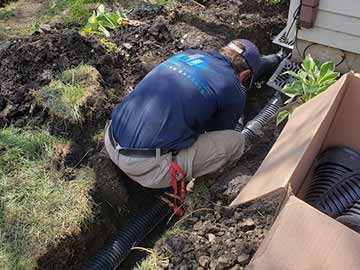
French drain installation in Chicago can help move excess groundwater and surface water away from areas where it causes standing water, saturated soil, basement moisture, or drainage problems around the foundation. A properly designed French drain gives water a controlled path to move away from vulnerable areas instead of allowing it to collect where it can create ongoing problems.
Chicago Plumbing Experts designs and installs French drain systems for properties dealing with poor yard drainage, recurring water accumulation, foundation moisture, and other drainage concerns. We evaluate how water moves across the property, where it collects, the existing grading and drainage, and where collected water can be discharged before determining the appropriate system.
The right French drain is not simply a trench filled with gravel and pipe. Location, depth, slope, drainage capacity, soil conditions, and the discharge point all affect whether the system will actually solve the property’s water problem.
What Is a French Drain?
A French drain is an underground drainage system designed to collect and redirect excess water.
A typical system consists of a perforated drainage pipe installed within a gravel-filled trench. Water enters the drainage area through the surrounding stone and perforations in the pipe, then travels through the pipe toward an appropriate discharge point.
The system is designed to intercept water before it remains concentrated around a foundation, pools in a yard, or saturates an area where drainage is inadequate.
French drains can be used for different drainage situations, including:
- Standing water in a yard
- Saturated areas of landscaping
- Water collecting near a foundation
- Basement moisture associated with exterior drainage
- Poorly draining low areas
- Groundwater moving toward a structure
- Persistent runoff problems
The important part is not simply installing the drain. The system needs to be designed around where the water originates, where it travels, and where it can safely be redirected.
When a French Drain May Be the Right Solution
A French drain is most useful when excess water needs to be collected and redirected through a controlled drainage path.
You may want to have your property evaluated for a French drain if you notice:
Standing Water After Rain
If water remains in the same part of the yard long after rainfall ends, the area may not have enough natural drainage.
A French drain can intercept water in or near the problem area and redirect it toward a suitable discharge location.
A Constantly Soggy Yard
Repeatedly saturated soil can make parts of a property difficult to use and can damage landscaping.
If the same areas remain wet after normal rainfall, improving how water moves through the property may be more effective than continually repairing the surface.
Water Collecting Near the Foundation
Water that repeatedly accumulates beside a foundation can contribute to moisture problems and may increase the amount of water that reaches the basement.
A drainage system can be designed to intercept and redirect water before it remains concentrated against the structure.
Basement Moisture After Heavy Rain
If basement moisture consistently appears after major storms, exterior drainage should be evaluated rather than assuming the problem is always a plumbing leak.
Poor grading, surface runoff, groundwater, and inadequate drainage can all contribute to moisture around a foundation.
A Low Spot That Keeps Flooding
Low areas naturally collect water. If the surrounding grading does not provide a path for runoff, a French drain may provide a way to intercept and redirect that water.
The important question is whether the system has somewhere appropriate to send the collected water.
How a French Drain System Works
The basic concept is straightforward: collect water where it is causing a problem and give it a controlled path to move away.
A typical French drain installation includes several components working together.
The Trench
The drainage trench is excavated along the planned route. Its location and depth depend on where water needs to be intercepted and where it needs to go.
Perforated Drainage Pipe
A perforated pipe allows surrounding water to enter the drainage system and then carries that water toward the discharge point.
Gravel or Drainage Stone
The stone surrounding the pipe creates space for water to move through the system while supporting the drainage pipe.
Filter Fabric
Depending on the design and soil conditions, filter fabric can help limit the movement of surrounding soil and sediment into the drainage system.
Proper Slope
The drainage route needs to be designed so collected water can move toward the intended discharge point.
A French drain without a workable discharge path cannot solve the underlying drainage problem simply because water is being collected underground.
French Drain Installation Starts With Finding the Water Problem
One of the biggest mistakes with drainage work is assuming that the visible water is the entire problem.
A puddle in the yard may be the result of grading. Basement moisture may be related to exterior drainage. Water near a foundation may be coming from an uphill part of the property.
Before installing a French drain, the drainage pattern should be considered as a whole.
Chicago Plumbing Experts evaluates factors such as:
- Where water originates
- Where water collects
- Existing grading
- Soil and drainage conditions
- Foundation location
- Existing drainage systems
- Downspout discharge
- Available discharge locations
- Areas affected by recurring moisture
This allows the drainage system to be designed around the actual water movement instead of simply treating the most obvious puddle.
Exterior French Drain Systems Around Foundations
An exterior French drain can be installed around or near a foundation when groundwater or surface runoff is contributing to drainage problems.
The system can intercept water before it remains concentrated alongside the foundation and redirect it through an underground drainage path.
Exterior systems can be particularly useful when a property has:
- Persistent water along one side of the home
- Poor drainage near the foundation
- A sloped property directing water toward the house
- Saturated soil around the structure
- Recurring moisture following heavy rain
Exterior drainage does not automatically solve every basement moisture problem. The source of the water needs to be identified first.
If water is entering through foundation cracks, hydrostatic pressure, plumbing leaks, or another pathway, a French drain may need to be part of a broader solution rather than the only repair.
Yard Drainage and French Drains
French drains can also be used to address problems away from the foundation.
A yard with poor drainage may develop recurring wet areas because water has nowhere practical to go. This can happen around landscaping, walkways, patios, low areas, or other parts of the property.
A properly planned drainage system can intercept water before it spreads across the landscape.
The design should account for the natural flow of water across the property rather than simply placing a drain at the lowest visible point.
Depending on the property, other drainage components may also be appropriate.
French Drains and Chicago’s Heavy Rainfall
Chicago properties can experience significant changes in drainage conditions throughout the year.
Heavy summer storms can send large amounts of surface water across a property in a short period. Spring snowmelt can saturate soil for extended periods. Frozen or compacted ground can also affect how quickly water is absorbed.
These conditions can expose weaknesses in an existing drainage system.
A French drain does not stop rainfall or eliminate groundwater. Its purpose is to provide a controlled pathway for excess water when natural drainage is not sufficient.
That makes proper design especially important. The system needs enough capacity and a suitable discharge route for the water it is expected to handle.
French Drain vs. Sump Pump
French drains and sump pumps are often used together, but they solve different drainage problems.
A French drain collects and redirects water through an underground drainage system.
A sump pump removes water that has collected in a sump basin, typically at or below the basement level, and pumps it away from the foundation.
A property can benefit from both.
For example, an exterior French drain may intercept groundwater before it reaches the foundation, while a sump pump handles water that still reaches the basement drainage system.
If your primary problem is a failing or inadequate sump pump, our sump pump repair and installation services in Chicago address that separate part of the drainage system.
French Drain vs. Flood Control System
A French drain is one type of drainage solution. Flood control is a broader category that can involve multiple systems depending on where water is coming from.
A property experiencing basement flooding may need to address:
- Groundwater
- Surface runoff
- Sewer backups
- Sump pump failure
- Foundation drainage
- Stormwater problems
A French drain can help with groundwater and surface drainage, but it is not designed to stop wastewater from backing up through a sewer line.
Our Chicago flood control systems for basement protection cover the broader range of solutions that may be appropriate when a property has multiple sources of flooding risk.
French Drain vs. Storm Drain
French drains and storm drains both manage water, but their applications are different.
A French drain is typically designed to collect water from surrounding soil and move it through an underground perforated pipe.
A storm drain system is designed to collect and convey surface water through drainage structures and piping.
For commercial properties, parking areas, larger drainage systems, and stormwater infrastructure, professional storm drain cleaning in Chicago may be more relevant than a French drain.
The correct drainage system depends on the volume and source of water and how the property is designed to handle it.
French Drain vs. Sewer Problem
Not every drainage problem is a French drain problem.
If wastewater is backing up through a basement floor drain, toilet, or other plumbing fixture, the issue may involve the sewer system rather than groundwater or surface drainage.
A French drain should not be used as a substitute for diagnosing a sewer backup.
If your property is experiencing wastewater backups, our Chicago sewer backup services for active drainage problems address a completely different type of water problem.
This distinction is important because the correct solution depends on where the water is coming from.
Our French Drain Installation Process
A successful drainage installation requires more than excavating a trench and installing pipe.
1. Evaluate the Property
We begin by looking at the areas where water collects, the direction water naturally travels, the property’s grading, and existing drainage conditions.
2. Identify the Drainage Objective
The system may need to intercept groundwater, redirect surface runoff, protect a foundation, or address a specific low area.
Determining the objective helps establish where the drainage system should be installed.
3. Plan the Drainage Route
The trench location, depth, slope, pipe configuration, and discharge point are planned around the property.
4. Excavate the Drainage Trench
The trench is excavated along the planned route with attention to the required depth and slope.
5. Install the Drainage Components
Perforated drainage pipe, stone, filter materials, and other necessary components are installed according to the system design.
6. Establish the Discharge Path
Collected water needs somewhere appropriate to go. The discharge portion of the system is an important part of the overall design.
7. Backfill and Restore the Area
After installation, the trench is backfilled and the affected area is restored as appropriate.
8. Verify Drainage Performance
The completed system is evaluated to confirm that water can move through the intended drainage path.
The goal is not simply to bury a pipe. It is to create a drainage system that addresses the actual water problem on the property.
Can a French Drain Prevent Basement Water?
A French drain can help reduce basement moisture and flooding when groundwater or surface drainage is contributing to the problem.
However, it is important to identify the source of the water before assuming a French drain will solve it.
For example:
- Groundwater may require drainage improvements.
- Surface runoff may require grading or a drainage system.
- Sewer backups require sewer backup protection.
- Foundation cracks may require separate repair.
- Plumbing leaks require plumbing repair.
- Sump pump failures require sump pump service.
A proper evaluation helps determine which problem is actually occurring.
French Drain Maintenance and Cleaning
Like any underground drainage system, a French drain can become less effective if sediment, soil, roots, or other material restricts the drainage pathway.
The amount of maintenance required depends on the system design, soil conditions, surrounding landscape, water volume, and other factors.
Signs that a French drain may need attention include:
- Water returning to previously dry areas
- Standing water lasting longer after storms
- Slow drainage
- Saturated soil near the drain
- Basement moisture returning
- Visible discharge problems
- Drainage performance declining over time
If an underground drainage line becomes restricted, cleaning may sometimes restore flow without immediately replacing the entire system. The appropriate cleaning method depends on the pipe and the nature of the restriction.
Protecting a French Drain From Sediment and Root Intrusion
Drainage systems installed underground are exposed to the surrounding soil and landscape.
Sediment can enter drainage components, while roots can grow toward areas containing moisture.
Proper installation methods can help reduce these risks, but no underground drainage system is completely isolated from its environment.
Regular observation of the property’s drainage performance is useful. If the system begins behaving differently after years of service, the problem should be evaluated before assuming the entire French drain needs to be replaced.
When a French Drain May Need Repair or Replacement
A drainage system does not necessarily need to be replaced simply because it is no longer performing as well as it once did.
The cause of the problem should be identified first.
Potential issues can include:
- Sediment buildup
- Pipe obstruction
- Root intrusion
- Soil movement
- Damaged drainage pipe
- Improper slope
- A failed discharge point
- Changes to surrounding grading
- Increased water volume
In some cases, cleaning or targeted repair may restore performance. In other situations, the drainage system may need to be redesigned or replaced.
The appropriate solution depends on the condition of the existing system and why it is no longer handling water effectively.
French Drain Installation for Chicago Homes and Properties
French drains can be useful for a wide range of residential drainage problems, but the system should always be designed around the property.
A successful installation considers the landscape, foundation, grading, soil, water flow, and available discharge options.
Chicago Plumbing Experts can evaluate drainage problems involving:
- Standing water
- Saturated yards
- Foundation drainage
- Basement moisture
- Poor surface drainage
- Recurring storm-related water accumulation
- Low areas of the property
The objective is to give excess water a controlled path away from areas where it can create damage or ongoing moisture problems.
Frequently Asked Questions About French Drains
What is a French drain used for?
A French drain collects and redirects excess groundwater and surface water away from problem areas. It can be used for standing water, saturated soil, foundation drainage, yard drainage, and certain types of basement moisture problems.
Does a French drain prevent basement flooding?
It can help reduce basement flooding when groundwater or surface drainage is contributing to the problem. It does not prevent sewer backups or solve every possible source of basement water.
How deep does a French drain need to be?
There is no single depth that applies to every property. The required depth depends on where water needs to be intercepted, the property’s grading, soil conditions, existing drainage, and the planned discharge route.
Where should a French drain discharge?
The discharge point depends on the property and applicable drainage conditions. The system needs a practical destination where collected water can be released without simply creating another drainage problem.
Can a French drain be installed around a foundation?
Yes. Exterior French drain systems can be designed near a foundation to intercept groundwater or surface water and redirect it away from the structure.
Does a French drain need a pump?
Not always. A properly designed system may be able to move collected water by gravity. If gravity drainage is not practical, pumping may be necessary depending on the property’s elevations and discharge options.
How long does a French drain last?
The service life varies significantly based on installation quality, soil conditions, drainage volume, pipe and surrounding materials, maintenance, and exposure to sediment or roots. There is no reliable single lifespan that applies to every system.
Does a French drain require maintenance?
It can. Sediment, soil, roots, and debris can affect drainage performance over time. Monitoring the system and addressing changes in performance can help maintain proper drainage.
Can a French drain fix standing water in my yard?
It can help when the standing water is caused by poor drainage and the property has a suitable way to collect and redirect that water. The source and movement of the water should be evaluated first.
Is a French drain the same as a storm drain?
No. A French drain generally collects water from surrounding soil through a perforated underground pipe, while storm drains typically collect and convey surface runoff through drainage structures and piping.
Give Excess Water Somewhere Better to Go
Persistent standing water, saturated soil, and recurring basement moisture are signs that your property’s drainage deserves a closer look. A properly designed French drain can give groundwater and surface runoff a controlled path away from your foundation, yard, and other vulnerable areas.
Chicago Plumbing Experts provides French drain installation and drainage solutions throughout Chicago and surrounding areas. We evaluate how water moves across the property, identify the areas that need protection, and design the drainage system around the actual conditions rather than relying on a one-size-fits-all approach.
If water keeps returning to the same part of your yard or basement, solving the drainage problem at its source can be far more effective than repeatedly dealing with the symptoms.
Chicago Plumbing Experts
Call us at: 708-775-2566
Email us at: chicagoplumbingexpert@gmail.com
Hours: Monday – Friday 7AM – 6PM | Saturday 7AM – 4PM
After Hours Emergency Plumbing Services: 708-518-7765