Grease Trap Cleaning in Chicago, IL for Restaurants and Commercial Kitchens
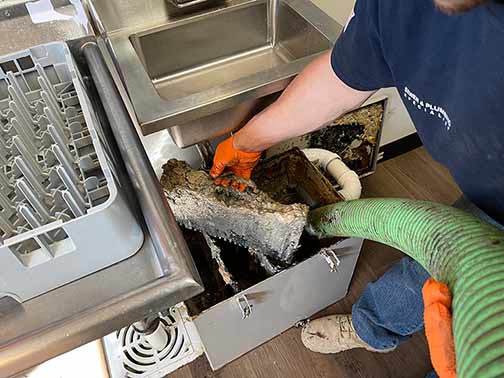
Grease trap cleaning in Chicago is essential for restaurants, food service businesses, and commercial kitchens that rely on Grease Trap Cleaning in Chicago, IL for Restaurants and Commercial Kitchens
Grease trap cleaning in Chicago is an important part of keeping restaurants, commercial kitchens, cafeterias, food-service facilities, and other high-use kitchens operating without preventable drainage problems. Fats, oils, grease, food particles, and settled solids accumulate inside a grease trap over time, reducing its usable capacity and increasing the chance of odors, slow drainage, and backups.
Chicago Plumbing Experts provides professional grease trap cleaning and pumping for commercial properties throughout Chicago. Our approach focuses on removing the material that has accumulated inside the trap, cleaning the system thoroughly, and identifying conditions that could lead to additional plumbing problems.
For a busy kitchen, routine grease trap service is not just another maintenance task. It helps protect the drainage system that your business depends on every day.
What Happens Inside a Grease Trap?
A grease trap is designed to slow wastewater down so fats, oils, grease, and heavier solids can separate from the water before wastewater continues into the drainage system.
That sounds simple, but commercial kitchens can put a tremendous amount of material through their plumbing every day.
Dishwashing, food preparation, cooking, and equipment cleaning all contribute grease and food waste to the wastewater stream. As that material accumulates, the trap gradually loses capacity.
Eventually, the buildup can interfere with normal flow and create conditions that affect the rest of the plumbing system.
Signs Your Grease Trap Is Due for Cleaning
A grease trap does not always fail suddenly. There are often warning signs that the system is becoming overloaded.
Watch for:
- Strong or persistent grease odors
- Slow drainage in kitchen sinks
- Wastewater backing up
- Grease or sludge accumulating around drains
- Reduced drainage performance
- A trap that is visibly overloaded
- Recurring kitchen drain clogs
- Increased plumbing service calls
- Problems returning shortly after the system has been cleared
- A noticeable decline in overall kitchen drainage
If the same drainage problem keeps returning, the issue may extend beyond the fixture drain itself. Excess grease inside the trap or connected plumbing can continue causing restrictions even after a localized clog has been removed.
Why Grease Builds Up So Quickly in Commercial Kitchens
Restaurants and commercial kitchens produce far more grease than a typical residential plumbing system.
Even when employees scrape plates and use drain screens correctly, some fats, oils, food particles, and wastewater solids still enter the drainage system.
Grease can begin as a liquid when it enters the plumbing, but it can cool and adhere to the interior surfaces of the trap and connected piping. Over time, layers of grease and solids can become increasingly difficult to remove without professional equipment.
The higher the kitchen’s daily volume, the faster that accumulation can occur.
That is why grease trap maintenance should be based on the actual demands of the business rather than an arbitrary schedule that treats every kitchen the same.
Professional Grease Trap Cleaning Versus a Quick Pump-Out
There is an important difference between removing some accumulated material and thoroughly servicing the grease trap.
A professional cleaning should address the material that has settled and accumulated throughout the system rather than simply removing what is easiest to access.
Depending on the trap and its condition, service may involve:
- Removing accumulated grease
- Pumping settled solids
- Removing food debris
- Cleaning interior surfaces
- Rinsing remaining residue
- Inspecting the condition of the trap
- Checking accessible connections
- Evaluating drainage performance
- Recommending an appropriate maintenance interval
The objective is to leave the system with usable capacity and a cleaner interior, not simply to make the problem temporarily disappear.
Grease Trap Pumping for Heavily Used Kitchens
Some commercial kitchens generate enough waste that routine cleaning requires full pumping and waste removal.
Chicago Plumbing Experts provides vacuum truck pumping services for demanding commercial applications where larger quantities of grease, sludge, wastewater, or other accumulated material need to be removed.
High-capacity pumping equipment can be particularly useful for larger grease traps, grease interceptors, heavily accumulated systems, and commercial properties where a standard service approach is not sufficient.
The appropriate equipment depends on the size and configuration of the system and the amount of material that needs to be removed.
What Our Grease Trap Cleaning Process Looks Like
Every commercial kitchen has different equipment and plumbing configurations, but the cleaning process generally follows the same basic principles.
Evaluate the Grease Trap
Before cleaning begins, the condition of the trap and the amount of accumulated material are evaluated.
This helps determine the appropriate cleaning approach and provides information that can be useful when establishing future maintenance intervals.
Remove Grease and Solids
Accumulated fats, oils, grease, food particles, sludge, and other waste are removed from the trap using appropriate pumping equipment.
The goal is to remove the material that has reduced the system’s available capacity.
Clean the Interior
After the accumulated material has been removed, the interior of the trap is cleaned to address remaining grease and residue that may be adhered to the surfaces.
Rinse and Inspect
The system is rinsed as appropriate and inspected for visible problems, excessive buildup, damaged components, or other conditions that may affect performance.
Establish a Maintenance Schedule
The frequency of future service should reflect how heavily the kitchen uses the system, how much grease it generates, the size of the trap, and how quickly material accumulates.
A restaurant serving hundreds of meals each day may require a very different schedule than a smaller commercial kitchen.
How Often Should a Grease Trap Be Cleaned?
There is no universal cleaning interval that works for every commercial kitchen.
Service frequency can depend on:
- Grease trap size
- Daily kitchen volume
- Type of food being prepared
- Amount of grease entering the plumbing
- Number of meals served
- Number of kitchen fixtures
- Existing plumbing configuration
- Previous maintenance history
- Rate of grease and solids accumulation
A kitchen that generates substantial grease may need much more frequent service than a facility with relatively light usage.
Rather than waiting for a backup to determine when the trap needs attention, businesses can use their previous service history and buildup rate to establish a more predictable maintenance routine.
What Happens If a Grease Trap Is Neglected?
A neglected grease trap can eventually affect much more than the trap itself.
As available capacity decreases, wastewater can have a harder time moving through the system. Grease can also migrate into connected drainage lines and accumulate farther downstream.
That can contribute to:
- Slow kitchen drains
- Recurring clogs
- Sewer backups
- Strong odors
- Overflowing grease traps
- Emergency plumbing calls
- Disruptions to food preparation
- Unplanned business downtime
In severe cases, a plumbing problem can force part of a kitchen to stop operating until the drainage system is restored.
Preventative cleaning is generally far easier to schedule than an unexpected plumbing failure in the middle of a busy service period.
When Grease Reaches the Drain Lines
Cleaning the trap itself may not resolve a problem when grease has already accumulated farther into the connected plumbing.
If grease has hardened inside drain lines, standard drain clearing may not remove all of the buildup.
In situations involving significant grease accumulation, hydro jetting can be used to deliver high-pressure water through the piping and break apart stubborn deposits.
Hydro jetting is not necessary for every grease trap cleaning. It is a specialized cleaning method that may be appropriate when the condition of the connected plumbing calls for more aggressive buildup removal.
Grease Trap Cleaning for Restaurants
Restaurants place some of the highest demands on commercial grease management systems.
Cooking oils, sauces, meat products, dairy products, food particles, dishwashing wastewater, and other kitchen waste can all contribute to grease accumulation.
A restaurant’s maintenance schedule should account for its actual daily workload rather than relying on a generic assumption.
Keeping the trap clean helps reduce the risk that a plumbing issue will interrupt food preparation, dishwashing, or customer service.
Grease Trap Service for Commercial Kitchens
Not every commercial kitchen operates like a full-service restaurant.
Cafeterias, schools, hotels, institutional kitchens, food production facilities, assisted-living facilities, and other properties can also have significant grease management requirements.
The appropriate cleaning approach depends on the type of facility, the equipment connected to the drainage system, the size of the grease trap, and the volume of wastewater and grease produced.
Chicago Plumbing Experts works with commercial properties to address those different operating conditions.
When Cleaning Is Not Enough
Sometimes a grease trap continues to perform poorly even after thorough cleaning.
That may indicate a problem with the trap itself, its configuration, its capacity, its connections, or the surrounding plumbing system.
If the existing equipment is damaged, outdated, improperly sized, or no longer suitable for the kitchen’s demands, replacement may make more sense than continuing to clean a system that cannot keep up.
Chicago Plumbing Experts also provides grease trap installation for new systems, replacements, and commercial kitchen projects.
The goal should be to determine why the system is struggling rather than repeatedly treating the same symptom.
Grease Trap Problems Can Become Larger Plumbing Problems
A commercial kitchen’s grease trap is connected to the rest of its drainage system.
If grease continues escaping into downstream plumbing, the resulting buildup can affect larger sections of the drainage network.
That is why recurring kitchen backups should not automatically be treated as isolated sink clogs.
If a kitchen repeatedly experiences drainage problems even after the immediate blockage has been cleared, the grease trap and connected lines may need to be evaluated together.
Keeping Kitchen Operations Moving
For a restaurant or food-service business, plumbing downtime can quickly become an operational problem.
A backed-up sink can interfere with dishwashing. A flooded floor can create a safety concern. Strong odors can affect the kitchen environment. A major drainage failure can interrupt food preparation altogether.
Routine grease trap service gives businesses an opportunity to address accumulated waste on a planned schedule rather than waiting until the system becomes overwhelmed.
The goal is not simply cleaner equipment. It is a commercial plumbing system that is less likely to become an unexpected obstacle during the workday.
Grease Trap Cleaning and Commercial Plumbing Maintenance
Grease trap service is one part of a larger commercial plumbing maintenance strategy.
Depending on the property, a business may also need drain cleaning, hydro jetting, sewer inspections, storm drainage maintenance, or other plumbing services.
Chicago Plumbing Experts provides broader commercial plumbing services for restaurants, businesses, commercial properties, and other facilities throughout Chicago.
Addressing grease buildup as part of the overall plumbing system can help identify developing problems before they turn into larger and more disruptive failures.
Frequently Asked Questions About Grease Trap Cleaning
What does grease trap cleaning remove?
Professional cleaning removes accumulated fats, oils, grease, food particles, sludge, and other material that has collected inside the grease trap.
How often should a restaurant clean its grease trap?
The appropriate frequency depends on the size of the trap, kitchen usage, grease production, and how quickly material accumulates. High-volume kitchens generally require more frequent service than lower-volume facilities.
What happens if a grease trap gets too full?
An overloaded trap can restrict wastewater flow and increase the risk of odors, slow drainage, backups, and grease entering downstream plumbing lines.
Can grease trap cleaning eliminate kitchen odors?
It can help when accumulated grease and decomposing food waste inside the trap are contributing to the odor. Persistent smells after cleaning may indicate another plumbing or drainage problem that needs investigation.
Does grease trap cleaning include pumping?
Professional service can include pumping when the amount of grease, solids, and waste requires it. Larger or heavily accumulated systems may require high-capacity vacuum equipment.
Can grease buildup affect sewer lines?
Yes. Grease that escapes the trap can accumulate farther downstream and contribute to restrictions inside connected drainage and sewer piping.
When is hydro jetting needed?
Hydro jetting may be appropriate when substantial grease, scale, sludge, or other buildup has accumulated inside connected plumbing lines. It is not necessary for every grease trap cleaning.
How do I know whether my grease trap needs replacement?
Repeated performance problems, physical damage, inadequate capacity, or a system that no longer suits the kitchen’s demands may indicate that replacement should be considered.
Can you clean large commercial grease traps?
Yes. Larger commercial systems may require specialized pumping equipment and a cleaning approach based on their size, configuration, and accumulated material.
Can grease trap cleaning be scheduled around business hours?
Commercial plumbing service can often be planned around a business’s operating schedule to minimize disruption. The appropriate timing depends on the property and scope of work.
Keep Your Commercial Kitchen’s Grease System Under Control
Grease buildup is inevitable in a busy commercial kitchen. Plumbing problems do not have to be.
Regular grease trap cleaning helps remove accumulated fats, oils, grease, food waste, and solids before they reduce capacity or contribute to larger drainage problems. For restaurants and food-service businesses, that maintenance can make the difference between a planned service appointment and an unexpected plumbing interruption.
Chicago Plumbing Experts provides professional grease trap cleaning and pumping for commercial kitchens throughout Chicago. We evaluate the condition of the system, remove accumulated material, clean the trap, and help businesses determine an appropriate maintenance approach based on how their kitchen actually operates.
When grease buildup is already affecting connected drain lines, additional cleaning methods may be appropriate. When the trap itself is no longer adequate, replacement may be the better long-term solution.
The right answer depends on the condition of the entire system, not just how much grease is visible inside the trap.
Chicago Plumbing Experts
Call us at: 708-775-2566
Email us at: chicagoplumbingexpert@gmail.com
Hours: Monday – Friday 7AM – 6PM | Saturday 7AM – 4PM
After Hours Emergency Plumbing Services: 708-518-7765
We would love to hear from you! Please fill out the quick contact form and we will get in touch with you shortly.