Overhead Sewer Systems in Chicago, IL
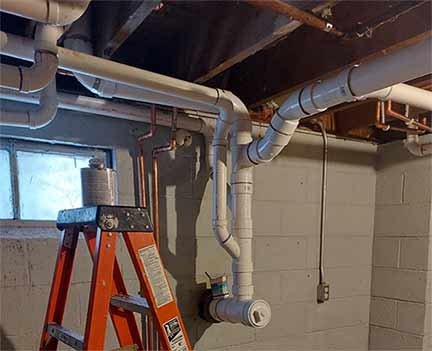
Overhead Sewer Systems in Chicago, IL
Overhead sewer systems in Chicago are designed to help protect basements from sewage backups by changing how wastewater from the lower level leaves the home. Instead of relying on a conventional below-grade sewer connection that can be vulnerable when the municipal sewer system becomes overloaded, an overhead sewer system uses an elevated drainage configuration to reduce the risk of wastewater flowing back into basement plumbing fixtures.
Chicago Plumbing Experts provides overhead sewer installation, conversion, and repair for Chicago homes and properties throughout the surrounding area. We evaluate the existing sewer configuration, basement plumbing, drainage layout, and flood history to determine whether an overhead sewer system is an appropriate solution for the property.
For homeowners who have experienced repeated basement sewer backups, especially during heavy rain, an overhead sewer conversion can be a major upgrade to the way the property handles lower-level wastewater.
How an Overhead Sewer System Works
A conventional basement drainage system may allow wastewater to travel through sewer piping located below or near the basement level. When the public sewer becomes overloaded, wastewater can potentially move backward through that connection and enter the home through basement drains and plumbing fixtures.
An overhead sewer system changes that configuration.
Basement and lower-level plumbing fixtures drain into a collection basin. A sewage ejector pump then moves the wastewater upward through a discharge line before it connects to the home’s sewer system at an elevated point.
The elevated connection helps reduce the chance of wastewater from an overloaded public sewer flowing backward into the basement.
The exact configuration varies from one property to another. The location of the existing sewer connection, basement elevation, plumbing layout, available installation space, and existing drainage system all affect how an overhead sewer system should be designed.
Why Overhead Sewers Matter for Chicago Basements
Basement sewer backups can be particularly destructive because wastewater may enter finished living areas, damage flooring and drywall, contaminate belongings, and create difficult cleanup conditions.
Older Chicago homes can be especially challenging because their original plumbing configurations were designed around the conditions that existed when the property was built. Changes in the surrounding sewer infrastructure, drainage patterns, basement use, and stormwater conditions can make an older system more vulnerable to backups.
An overhead sewer system does not prevent the public sewer from becoming overloaded. Instead, it changes the way the home’s lower-level plumbing connects to that system, helping reduce the opportunity for reverse wastewater flow into the basement.
That distinction is important. The goal is to improve the property’s protection against sewer backups, not to eliminate every possible source of basement water.
Signs Your Home May Need an Overhead Sewer System
An overhead sewer system is not necessary for every Chicago home. It becomes more relevant when the property has a history or configuration that makes basement sewer protection a priority.
You may want to consider an overhead sewer evaluation if your property has:
Repeated Basement Sewer Backups
If sewage has entered your basement more than once, particularly during heavy rainfall, the existing drainage configuration deserves a closer look.
Repeated backups can indicate that the property’s current sewer connection does not provide enough protection against reverse flow.
A Finished Basement You Need to Protect
Finished basements can contain bedrooms, recreation areas, offices, storage, appliances, flooring, and other valuable improvements.
Reducing the possibility of sewage entering that space can be an important part of protecting the investment you have made in the lower level.
Basement Plumbing Fixtures Below the Sewer Connection
Homes with basement bathrooms, laundry areas, utility sinks, or other lower-level plumbing fixtures may have a drainage configuration that is vulnerable to sewer backups.
An overhead sewer system can provide a different way to route that wastewater.
An Older Chicago Plumbing System
Older homes often have plumbing layouts that were installed decades ago. If the home has experienced recurring sewer problems, an evaluation can determine whether the existing configuration should be upgraded.
A History of Storm-Related Sewer Problems
If backups occur primarily during major rain events, the issue may involve the relationship between your home’s sewer connection and an overloaded municipal system.
An overhead sewer system can be considered as part of a larger basement flood-protection strategy.
Overhead Sewer Installation in Chicago
Installing an overhead sewer system is a significant plumbing modification, so the system needs to be designed around the actual property rather than treated like a standard one-size-fits-all installation.
Chicago Plumbing Experts begins by evaluating the existing plumbing configuration and determining how lower-level wastewater currently leaves the home.
The installation may involve:
- Evaluating existing basement drainage
- Determining the location of the sewer connection
- Installing a sewage ejector basin
- Installing the appropriate pumping equipment
- Rerouting basement plumbing
- Installing elevated discharge piping
- Connecting the system to the appropriate sewer piping
- Addressing required venting and plumbing components
- Testing the completed system
The exact work depends on the existing home and how its plumbing was originally configured.
Overhead Sewer Conversion for Older Chicago Homes
Many homeowners do not need an entirely new drainage concept. Instead, their existing basement plumbing can be modified through an overhead sewer conversion.
A conversion involves changing the way lower-level wastewater is collected and discharged so that the basement is less exposed to reverse flow from an overloaded sewer system.
This can be particularly valuable when a home has a history of basement backups but the existing plumbing layout is otherwise usable.
During a conversion, the existing drainage system is evaluated first. The goal is to determine what can remain, what needs to be modified, and how the new elevated configuration should connect with the property’s existing sewer system.
A properly planned conversion can transform an older basement drainage arrangement into a more flood-resistant system without treating the entire property as if it needs to be rebuilt from scratch.
Overhead Sewer Systems and Basement Bathrooms
Basement bathrooms are one of the most common reasons a property may require pumped wastewater removal.
When a toilet, shower, or sink is located below the level where wastewater can conveniently flow by gravity, the plumbing needs another way to move that wastewater toward the sewer.
An overhead sewer system can incorporate a sewage ejector basin and pump to collect wastewater from the lower level and move it upward into the elevated sewer connection.
This is different from a sump pump, which is designed to remove groundwater and drainage water rather than wastewater from toilets and other plumbing fixtures.
For properties that need new basement plumbing, our rough-in plumbing services in Chicago can also be part of the planning process when lower-level plumbing is being added or remodeled.
Overhead Sewer vs. Sump Pump
These two systems are often confused because both can involve a pit and pumping equipment, but they solve completely different problems.
A sump pump removes groundwater that collects around or beneath the foundation.
An overhead sewer system handles wastewater generated by plumbing fixtures and changes how that wastewater is discharged from the lower level.
For example, water entering a basement from groundwater may require a sump pump, while wastewater from a basement toilet may require a sewage ejector system.
A property can also need both systems.
If you need help with groundwater protection or a failing sump pump, our sump pump services in Chicago cover repair, replacement, installation, and related basement pumping needs.
Overhead Sewer vs. Backwater Valve
An overhead sewer system and a sewer backwater valve both address sewer backup risk, but they do it in different ways.
A backwater valve is designed to help prevent wastewater from flowing backward through a sewer connection by restricting reverse flow when conditions require it.
An overhead sewer system changes the configuration of the lower-level drainage system by collecting wastewater and pumping it to an elevated sewer connection.
The right approach depends on the property’s plumbing configuration, basement elevation, sewer connection, backup history, and other conditions.
Our sewer backwater valve installation services can be considered when a backwater valve is appropriate for the property.
Overhead Sewer Systems and Ejector Pumps
A sewage ejector pump is an important component of many overhead sewer systems because lower-level wastewater needs to be lifted to the elevated sewer connection.
The ejector basin collects wastewater from basement plumbing fixtures. When the wastewater reaches the appropriate level, the pump activates and moves it through the discharge piping.
That means the ejector pump and overhead sewer system are related, but they are not the same thing.
The ejector pump provides the pumping action. The overhead sewer system describes the larger drainage configuration that uses an elevated sewer connection to help protect the basement from reverse sewer flow.
If your existing ejector pump is failing, our ejector pump services in Chicago cover repair, replacement, and installation.
When an Overhead Sewer May Not Be the Right Solution
An overhead sewer system is a powerful basement sewer protection option, but it should not automatically be recommended for every property.
A professional evaluation should consider:
- The elevation of the basement
- Existing sewer connection
- Plumbing layout
- Location of basement fixtures
- History of sewer backups
- Condition of existing sewer piping
- Available installation space
- Existing pumping equipment
- Overall flood-control needs
In some situations, another solution may make more sense. A property may need sewer line repair, a backwater valve, sump pump improvements, or a combination of flood-control measures.
The objective should be to identify the actual vulnerability instead of installing equipment simply because it is commonly used in other homes.
Overhead Sewer Systems as Part of a Larger Flood-Control Plan
An overhead sewer system can be one component of a broader basement flood-protection strategy.
For example, a Chicago home with a finished basement may have several different potential sources of water:
- Groundwater around the foundation
- Stormwater drainage problems
- Public sewer backups
- Damaged sewer piping
- Poorly configured lower-level plumbing
- Sump pump failure
Each source requires a different response.
Our flood control systems in Chicago page explains how different plumbing and drainage solutions can work together to protect a property from basement flooding.
If the problem is specifically a damaged sewer line rather than reverse flow from an overloaded municipal sewer, sewer line repair services may be the more appropriate solution.
What an Overhead Sewer Installation Process Looks Like
Because every property is different, the installation process starts with an evaluation rather than immediately cutting into the basement floor.
1. Evaluate the Existing Plumbing
The existing sewer connection, basement drains, plumbing fixtures, and available installation areas are reviewed to understand how wastewater currently leaves the home.
2. Identify the Backup Vulnerability
The plumber considers the property’s backup history, sewer configuration, basement elevation, and other conditions that may contribute to wastewater entering the lower level.
3. Develop the System Layout
The location of the basin, pumping equipment, discharge piping, and elevated sewer connection is planned around the home’s existing configuration.
4. Complete the Plumbing Modification
The necessary basement plumbing is rerouted and connected to the new pumping and discharge system.
5. Test the System
The completed system is tested to confirm that wastewater moves properly through the basin, pump, discharge piping, and sewer connection.
The goal is a properly integrated system that functions as part of the home’s overall plumbing rather than an isolated piece of equipment.
Maintaining an Overhead Sewer System
An overhead sewer system is designed to provide long-term protection, but the system still contains mechanical and plumbing components that should be monitored.
The sewage ejector pump, float controls, basin, check valve, discharge piping, and related components all play a role in keeping the system operating properly.
Warning signs that deserve attention include:
- The pump runs continuously
- The pump does not activate
- Unusual pump noises develop
- Basement fixtures begin draining slowly
- Wastewater remains in the basin
- Sewage odors develop
- The system repeatedly trips a breaker
- The basement experiences another sewer backup
Addressing a developing problem before the system completely fails can reduce the chance of wastewater accumulating in the basement.
What Happens During a Power Outage?
Because an overhead sewer system can depend on pumping equipment, electrical power is an important consideration.
A power outage can affect any electrically powered pump, including the equipment responsible for moving lower-level wastewater.
The appropriate backup strategy depends on the property’s plumbing configuration and flood-protection needs. In some situations, backup pumping equipment or another form of emergency protection may be appropriate.
This is one reason an overhead sewer evaluation should consider the complete system rather than just the primary pump.
Protecting a Finished Basement From Sewer Damage
A finished basement represents a significant investment. Flooring, drywall, furniture, electronics, appliances, and personal belongings can all be damaged by a sewage backup.
An overhead sewer system is designed to reduce the risk of wastewater entering the basement through lower-level plumbing fixtures when the public sewer system becomes overloaded.
That makes it particularly relevant for homeowners who have invested heavily in their lower level or rely on their basement as usable living space.
The best time to address sewer backup risk is before the next backup occurs.
Frequently Asked Questions About Overhead Sewer Systems
What is an overhead sewer system?
An overhead sewer system is a basement drainage configuration that collects lower-level wastewater and pumps it to an elevated sewer connection. The elevated connection helps reduce the risk of wastewater flowing backward into basement plumbing fixtures during a sewer backup.
Is an overhead sewer the same as a sewage ejector system?
Not exactly. A sewage ejector pump provides the pumping action needed to move wastewater upward. An overhead sewer system refers to the larger drainage configuration that uses an elevated sewer connection.
Does every Chicago home need an overhead sewer?
No. Whether an overhead sewer system makes sense depends on the property’s plumbing configuration, basement elevation, sewer connection, backup history, and overall flood-protection needs.
Can an overhead sewer help with basement sewer backups?
Yes. An overhead sewer system is specifically designed to reduce the risk of wastewater entering lower-level plumbing fixtures when the public sewer system becomes overloaded.
Can an overhead sewer be installed in an existing home?
Yes. Existing homes can often be converted to an overhead sewer configuration. The installation requirements depend on the existing basement plumbing, sewer connection, layout, and available access.
Does an overhead sewer prevent all basement flooding?
No. An overhead sewer primarily addresses wastewater backup through the home’s lower-level sewer connection. Groundwater, stormwater, foundation drainage, sump pump failures, and other sources of basement flooding require different solutions.
How do I know if my home needs an overhead sewer conversion?
A history of recurring basement sewer backups, particularly during heavy rain, is one reason to have the existing drainage configuration evaluated. A professional inspection can determine whether an overhead sewer conversion is appropriate.
Can an overhead sewer system work with a basement bathroom?
Yes. Basement bathrooms can be connected to an overhead sewer configuration when wastewater needs to be pumped from the lower level to an elevated sewer connection.
Give Your Chicago Basement a Better Defense Against Sewer Backups
If your basement has already experienced a sewage backup, you know how quickly a plumbing problem can become a property-damage problem. An overhead sewer system can change the way your home handles lower-level wastewater and provide an important layer of protection against reverse sewer flow.
Chicago Plumbing Experts provides overhead sewer installation, conversion, and repair throughout Chicago and the surrounding area. We evaluate the existing plumbing configuration, explain the available options, and design the system around the actual needs of the property.
For homeowners with recurring basement backups, finished lower levels, or older sewer configurations, an overhead sewer evaluation can be an important step toward more dependable basement protection.
Chicago Plumbing Experts
Call us at: 708-775-2566
Email us at: chicagoplumbingexpert@gmail.com
Hours: Monday – Friday 7AM – 6PM | Saturday 7AM – 4PM
After Hours Emergency Plumbing Services: 708-518-7765
We would love to hear from you! Please fill out the quick contact form and we will get in touch with you shortly.