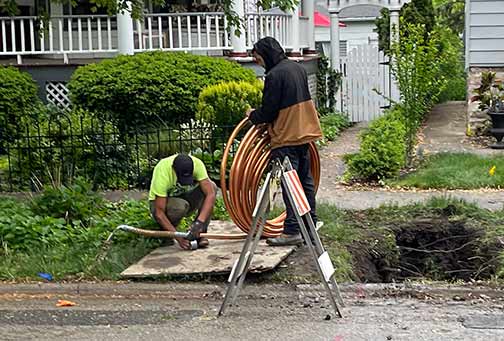
Tag Archives: main water line repair

Understanding Risks: Common Mistakes That May Cause Main Water Line Damage

Common Mistakes That May Cause Main Water Line Damage

Understanding the potential risks associated with main water lines is crucial for homeowners, property managers, and anyone responsible for maintaining a building’s infrastructure. The main water line is a critical component of any property, serving as the primary conduit for water supply. Damage to this line can lead to significant water loss, costly repairs, and even structural damage. By gaining insights into the common mistakes that may cause main water line damage, one can take proactive measures to prevent such issues and ensure the longevity and reliability of their water supply system.

The Importance of Regular Maintenance and Its Role in Preventing Water Line Damage

Regular maintenance is a fundamental aspect of preventing main water line damage. Over time, water lines can deteriorate due to various factors such as corrosion, ground movement, and the natural aging process. Routine inspections and maintenance can help identify potential problems before they escalate into major issues. By scheduling regular check-ups with a professional plumber, property owners can ensure that their water lines remain in optimal condition, reducing the risk of unexpected failures and costly repairs.

Moreover, regular maintenance involves more than just visual inspections. It includes checking for corrosion, ensuring that joints and connections are secure, and testing water pressure levels to ensure they remain within safe limits. This comprehensive approach to maintenance not only extends the lifespan of the water lines but also enhances the overall efficiency of the water supply system. Property owners who prioritize regular maintenance can avoid the inconvenience and expense of emergency repairs, while also contributing to water conservation efforts by minimizing leaks and wastage.

Identifying Signs of Water Line Damage: Early Detection for Cost-Effective Solutions

Early detection of water line damage is key to minimizing the impact of such issues. Property owners should be vigilant in identifying signs of potential damage, such as unexplained increases in water bills, reduced water pressure, and the presence of damp spots or water pooling in the yard. Additionally, unusual sounds like hissing or gurgling coming from the pipes can indicate a leak or blockage. By promptly addressing these warning signs, property owners can prevent further damage and avoid the high costs associated with extensive repairs.

Another critical aspect of early detection is understanding the typical lifespan of water lines and being aware of when they may be due for replacement. Materials such as copper, PVC, and galvanized steel each have different expected lifespans, and knowing this information can help property owners plan for necessary upgrades before issues arise. Regularly updating and replacing older lines can preemptively address potential weak points in the system, ensuring continued reliability and safety.

Common Mistakes Leading to Water Line Damage: Avoiding Costly Oversights

Several common mistakes can lead to main water line damage. One of the most frequent errors is neglecting to locate and mark the water lines before undertaking construction or landscaping projects. Excavation work, whether for building additions or planting trees, can inadvertently damage water lines if their locations are not properly identified. Another mistake is failing to address small leaks promptly. Even minor leaks can escalate into significant problems if left unattended, leading to water wastage and potential structural damage.

Additionally, some property owners may attempt DIY repairs on water lines without the necessary expertise or tools, which can exacerbate existing issues or create new ones. It is crucial to rely on professional plumbers for repairs and maintenance to ensure that all work is done to code and that the integrity of the water line system is preserved. By avoiding these common mistakes, property owners can protect their water lines and prevent costly damage and repairs.

The Role of Environmental Factors in Water Line Health

Environmental factors play a significant role in the health of main water lines. Natural events such as earthquakes, floods, and heavy rains can cause ground movement, which may lead to water line displacement or rupture. Additionally, changes in temperature can affect the integrity of the pipes. For instance, freezing temperatures can cause water within the pipes to expand, leading to cracks or bursts. Understanding these environmental risks and taking preventive measures, such as insulating pipes, can help mitigate potential damage.

Climate change and its associated impacts, such as increased frequency of extreme weather events, further highlight the importance of preparing water lines for environmental challenges. Property owners can take proactive steps by reinforcing vulnerable areas, installing backflow prevention devices, and ensuring proper drainage systems are in place to handle excessive rainfall or flooding. By addressing environmental factors, property owners can enhance the resilience of their water lines and reduce the risk of damage from natural events.

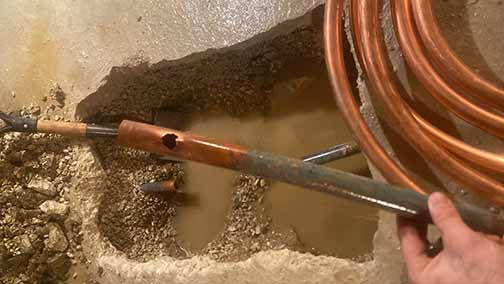
a main water line repair
Using high-quality materials for main water line repairs and replacements can enhance durability and reduce the risk of future issues.

Preventive Measures and Best Practices for Water Line Protection

Implementing preventive measures and best practices is essential for safeguarding main water lines from damage. One effective strategy is to install a water pressure regulator to maintain optimal pressure levels within the system. Excessive pressure can strain the pipes and increase the likelihood of leaks or bursts. Additionally, using high-quality materials for main water line repairs and replacements can enhance durability and reduce the risk of future issues. Property owners should also educate themselves about the location and layout of their water lines to avoid accidental damage during any construction or landscaping activities.

Furthermore, investing in modern technology can aid in water line protection. Smart water monitoring systems can detect leaks and pressure changes in real-time, alerting property owners to potential issues before they become significant problems. These systems can provide valuable data on water usage patterns, helping owners identify inefficiencies and areas for improvement. By adopting these best practices and technologies, property owners can ensure the long-term health and performance of their water lines.

The Impact of Tree Roots on Water Lines: Prevention and Mitigation Strategies

Tree roots are a common cause of water line damage. As trees grow, their roots can extend significant distances in search of water and nutrients. If a water line is within the vicinity of a tree, the roots may infiltrate the pipes, causing blockages or even ruptures. To prevent this, property owners should be mindful of the types of trees planted near water lines and consider using root barriers to protect the pipes. Regularly inspecting the area around water lines for signs of root intrusion can also help in early detection and prevention of damage.

Moreover, selecting tree species with less aggressive root systems and planting them at a safe distance from water lines can minimize the risk of root-related damage. Consulting with a professional arborist can provide valuable insights into suitable tree species and planting techniques that align with the property’s water line layout. By taking these preventive measures, property owners can enjoy the benefits of trees without compromising the integrity of their water lines.

The Importance of Professional Inspections in Water Line Maintenance

While property owners can undertake basic maintenance tasks, professional inspections are invaluable for ensuring the comprehensive assessment of water line health. Plumbers and water line specialists have the expertise and equipment to conduct thorough inspections, identify hidden underground leaks, and provide recommendations for necessary repairs or upgrades. Investing in professional inspections can save property owners from the inconvenience and expense of unexpected water line failures.

Professional inspections often include the use of advanced technologies such as video cameras to explore the interior of pipes, allowing for precise identification of blockages, leaks, or structural weaknesses. This detailed understanding enables targeted repairs and maintenance, reducing the likelihood of future issues. By prioritizing professional inspections, property owners can maintain their water lines’ optimal performance and avoid costly emergency repairs.

Understanding the Costs of Water Line Damage: Financial Implications and Prevention

The financial implications of water line damage can be substantial. Repairing or replacing a damaged main water line can be costly, particularly if the damage is extensive or requires excavation. Additionally, water line failures can lead to increased water bills due to leaks and water wastage. In severe cases, water line damage can cause flooding or structural damage to the property, resulting in even higher repair costs. By understanding these potential costs, property owners can appreciate the value of preventive measures and regular maintenance in protecting their investment.

Beyond the immediate repair costs, water line damage can also impact property value and insurance premiums. Properties with a history of water line issues may be less attractive to potential buyers, and insurance companies may increase premiums or deny coverage if water line maintenance is neglected. By investing in preventive measures and addressing water line issues promptly, property owners can protect their property’s value and avoid financial setbacks associated with water line damage.

Conclusion: Proactive Management for Long-Term Benefits of Water Line Health

In conclusion, understanding the risks and common mistakes that may cause main water line damage is essential for proactive management and maintenance of a property’s water supply system. By taking preventive measures, conducting regular inspections, and addressing issues promptly, property owners can ensure the longevity and reliability of their water lines. This proactive approach not only protects against costly repairs and water wastage but also contributes to the overall safety and sustainability of the property. Investing in the health of the main water line is an investment in the long-term well-being of the property and its occupants.

Ultimately, a well-maintained water line system enhances the quality of life for residents by providing a reliable and efficient water supply. It also supports broader environmental goals by minimizing water wastage and promoting sustainable resource management. As property owners embrace proactive management strategies, they contribute to a future where water line damage is minimized, and the integrity of water supply systems is preserved for generations to come.

My Main Water Line is Broken – What Should I Do?

My Main Water Line is Broken

Your main water line is the most essential water pipe in your home, but despite its vital role, it is the water pipe that most homeowners know the least about, says Abrams Management. That is because the main water line is often underground, out of sight, and therefore out of the homeowner’s mind.

But like other plumbing system components, problems happen with the main water line. The line can clog, leak, corrode or be damaged by rodents, tree roots and soil movements. When this happens, the effects on your home can be disastrous.

Main water line issues

Common problems associated with damage to a main water line include:

Low water pressure

Your home may suffer from low water pressure as water pressure is siphoned from the pipe through the leaky section.

High water bills

Water bills will keep increasing even if your water usage pattern is still the same and the water company hasn’t increased its rates.

Contaminated water

A broken main water line will admit soil into the water supply. If there is rust in the line, it may also cause water discoloration.

Foul-smelling water

Impurities can give the water an unpleasant odor, maybe as a result of the presence of bacteria in the water.

Puddles in the lawn

Water from a broken main water line will seep into your lawn, and you may start to see puddles in the yard or soggy patches of soil.

Sinking or swelling ground

Sometimes, a broken water main can cause sections of your yard to bulge or sink. This problem can also cause sinkholes.

Pest invasion of property

The promise of easy access to a reliable water source may start to draw all kinds of vermin to your property. 

Structural damage

A broken water line can pose a major threat to your building’s foundation. It can damage the driveway, deck and concrete walkways.

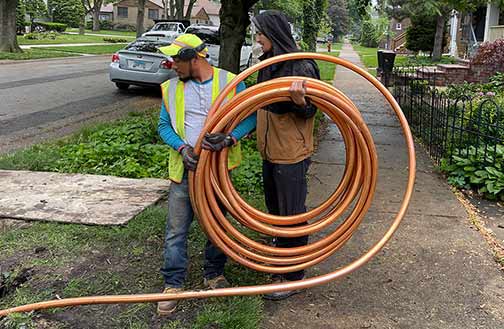
a main water line repair.

The plumber you call must have experience in water line repair. It is even better if the plumber offers emergency plumbing services.

What to do about a broken main water line

Fixing a damaged water line requires the know-how of a professional plumber. Water line repair and replacement is not a job for homeowners; this is not a DIY project. Water line problems must be handled by experienced and licensed plumbers.

Depending on the severity of the problem, the line may be repaired or replaced. Also, you do not have to repair or replace the main water line; only the damaged section. However, if the pipe is already old, complete replacement may be the best option.

Follow these steps to fix your broken water line.

Turn off the water supply

You may have to turn off your water supply as soon as you discover the problem. To cut off the water supply, close the main water shut-off valve. This step is not needed if the damaged water line does not pose a threat to your property.

Call a professional plumber

The plumber you call must have experience in water line repair. It is even better if the plumber offers emergency plumbing services. An emergency plumber can start repairs immediately, even on holidays and weekends.

Locate the Leak

The leak can happen in the section of the main water line inside your home or the underground portion. Leaks may also happen in the street-side section of the water line. This portion of the water line is the responsibility of the city.

Notify the water company

If the break happens in the part of the main water line that belongs to the water company, it is their job to fix it. But even if this is not the case, you may still need to notify the company of the problem.

Conduct the necessary tests

The plumber will need to inspect and test your water line to detect the exact location of the water leak. It not only helps to pinpoint the problem, but it also narrows the scope of the repair and helps you cut costs.

Inform your neighbors

If your neighbors’ properties are affected by the break in your water main, you should inform them of the problem and the steps you are taking to solve it. That can help to avert further property damage.

Obtain the required permits

In some cases, fixing or replacing a broken water line may require you to get permits. That should not be a problem if the plumber you hired for the job is local and well-informed about the operations of the local authorities.

Start the repairs

To repair or replace a broken water line, the plumber will normally dig a trench to access the line. The steps for fixing the problem depend on the size of the issue, the pipe material, the age of the water line and the chosen solution.

After the water line is fixed, it is wise to take steps to prevent future problems. That can mean creating a program for preventive care of the water line, with yearly water line inspections by a qualified plumber.

What to Consider When Choosing Between Repairing and Replacing Water Lines in Chicago

What to Consider When Choosing Between Repairing and Replacing Water Lines in Chicago

Water line replacement and repairs are among the most complex and costly plumbing projects you can undertake in your Chicago home. When repairing or replacing your water line, Penny Realty Management warns that if the job is not done right, it can leave you with even bigger problems than you set out to solve.

Unfortunately for many homeowners in Chicago, water line problems are an issue they constantly have to deal with because of aging infrastructure. If your water line is leaking or your home’s water supply is contaminated, maybe it is time to overhaul the line.

But should you repair or replace the damaged water line? That depends on the water line issues you have in your home and how long the problems have been there. It also depends on the steps you have taken to solve past issues. 

In this post, we explain the factors to consider before deciding whether to repair or replace a water line, along with the pros and cons of each option.

Water line repair versus replacement: 4 things to consider

The repair history of the water line

If the records show that your water line has had major problems in the past, there is a chance that it has also been repaired before. As a rule, you only want to repair a water line once. After the first repair, subsequent efforts will cost more money and be less effective. The potential for worse damage increases with each repair. Fixing a water line that has been repaired in the past is not cost-effective.

Age of the water line

If the water line is about or past 50 years old, it makes no sense to repair it. That’s because once a water line goes beyond this threshold, its functionality starts declining rapidly. Older water lines are more brittle, and minor problems with the pipes can easily escalate into major emergencies. Replace your water line if it is close to 50 years. Repair it if it is only 25 years old.

The water line materials

The type of pipes in your water line plays a huge role in your decision to repair or replace the line. If the line is made of lead pipes, replacing the water line is your best option, regardless of the age or condition. Some states and cities even make it illegal to fix lead pipes. In some locations, the only materials legally allowed for main water lines are brass, copper and ductile iron pipes.

The project cost

If the cost of repairing your water line is almost the same as the cost of replacing it, it makes sense to repair the line. As a rule, you want your repair costs to be at least 50%+ lower than your replacement cost. Otherwise, it is better to replace the line. This cost should include the material and labor costs for the entire project.

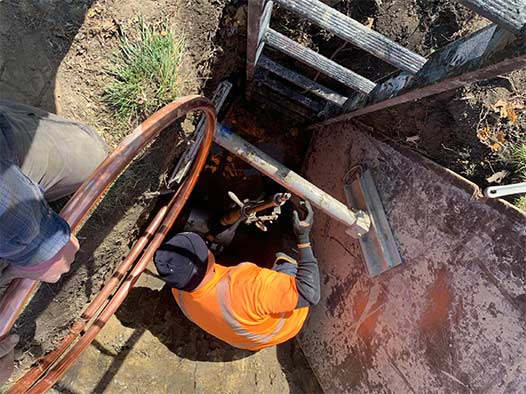
a water line replacement ready to take place in chicago.

Replacing your water line is a long-term solution. For the next decade, at least, you should not expect any issues with the line.

Pros and cons of repairing your water line

Pros

  • Cost-effective: It will always cost less to repair your damaged water line than it costs to replace it.
  • Less disruptive: The impact on your time, lifestyle and landscaping is minimal if you elect to repair the line.
  • Smaller environmental impact: The volume of waste generated by the repair process is minimal. The impact on the environment is also minor.

Cons

  • Temporary: Repairing the water line is not a long-term fix because the problems may return
  • Potential for future problems: Repairing a water line can predispose it to future problems.
  • Not always an option: If the water line is badly damaged, repairing it may not even be an option.

Pros and cons of replacing your water line

Pros

  • Long-term solution: Replacing your water line is a long-term solution. For the next decade, at least, you should not expect any issues with the line. 
  • Improved performance: Replacing your water line is the best way to deal with all the performance issues plaguing the line.
  • Boost your property value: A new water line is something buyers want to see and are happy to pay more money for.

Cons

  • Costs more money: It costs significantly more money to replace a water line to repair it. Funding the project can be a major challenge.
  • Highly disruptive: Water line replacement involves a lot of excavation. That will often result in damage to your landscaping, driveway and paved walkways. 

To conclude, replacing your water line when the issue can be solved by repairing the line is a waste of money. At the same time, repairing a water line when it should be replaced will force you to spend twice to solve the same problems.

To ensure you choose the right solution for your water line problems, it is vital to have a qualified and experienced professional plumber evaluate the damage to your water line and recommend the most cost effective solution to the problem.

Do I Need to Leave My Home During a Main Water Line Repair?

Do I Need to Leave My Home During a Main Water Line Repair

When it comes to home maintenance and repairs, few things can cause more stress and inconvenience than a problem with the main water line. This critical component of your home’s plumbing system is responsible for delivering clean and fresh water to every faucet, shower, and toilet in your house. So, when the main water line needs repair, it’s natural to wonder whether or not you will have to leave your home during the process.

Here we will explore the factors that determine whether or not you need to leave your home during a main water line repair. We will also provide some tips and considerations to help make the process as smooth and stress-free as possible.

Factors to Consider

Extent of the Damage

The extent of the damage to your main water line plays a significant role in determining whether or not you will need to temporarily vacate your home. In some cases, minor repairs can be completed without disrupting the water supply to your house. However, if the damage is extensive and requires major repairs or replacement of the entire main water line, it is more likely that you will need to find alternate accommodations during the repair period.

Access to the Main Water Line

Another important factor to consider is the accessibility of the main water line. If the line is located underground or in a hard-to-reach area of your property, the repair process may involve digging or excavation, which can be disruptive and messy. In such cases, it is advisable to temporarily leave your home to avoid the inconvenience and potential hazards associated with these repair techniques.

Duration of the Repair

The duration of the repair is also an essential factor to consider. Minor repairs can often be completed within a few hours or a day, allowing you to stay in your home during the process. However, major repairs or replacements may take several days or even weeks to complete, making it necessary for you to make alternative arrangements for accommodation.

Tips for a Smooth Repair Process

If you find yourself needing a main water line repair, here are some tips to help make the process as smooth and hassle-free as possible:

Plan Ahead

If you suspect that your main water line may need repairs in the future, it is a good idea to plan ahead. Start by researching reputable plumbers in your area and save their contact information for easy access when needed. By being prepared, you can minimize the time it takes to find a reliable professional and get your repair scheduled.

Communicate with Your Repair Provider

Once you have selected a repair provider, be sure to communicate openly with them about your expectations and concerns. Ask them about the estimated duration of the repair, the extent of the disruption, and whether or not you will need to temporarily leave your home. By having a clear understanding of the repair process, you can plan accordingly and make necessary arrangements.

Arrange Alternative Accommodations

If it is determined that you will need to leave your home during the main water line repair, it is essential to arrange alternative accommodations. This may include staying with family or friends, booking a hotel room, or renting a temporary residence. Consider the duration of the repair and choose an option that is most convenient and comfortable for you and your family.

Take Precautions

Before the repair begins, take some precautions to protect your belongings and minimize potential damage. Move valuable items away from the affected area, cover furniture and electronics with plastic sheets or tarps, and secure any loose items that may get in the way of the repair work.

Follow Safety Instructions

If you choose to stay in your home during the repair process, be sure to follow any safety instructions provided by the repair provider. This may include avoiding certain areas of your home, limiting water usage, or temporarily disconnecting specific appliances or fixtures.

In Conclusion

In conclusion, whether or not you need to leave your home during a main water line repair depends on several factors, including the extent of the damage, accessibility of the line, and duration of the repair. Communication with your repair provider and careful planning can help make the process as smooth as possible. If you do need to temporarily vacate your home, arrange alternative accommodations and take necessary precautions to protect your belongings. Remember to follow any safety instructions provided to ensure a successful and hassle-free repair process.

The Pros and Cons of Repairing Water Lines vs. Replacing Them: A Chicago Comparison

The Pros and Cons of Repairing Water Lines vs. Replacing Them

As a homeowner in Chicago, it’s not uncommon to experience issues with water lines. Over time, pipes can deteriorate due to old age, corrosion, or even tree roots causing damage. When faced with the need for a main water line repair, the decision to repair versus replace can be challenging. There are pros and cons to both options, and it ultimately comes down to what is best for your situation. Here is a side-by-side comparison of repairing vs. replacing water lines in Chicago.

Repairing Water Lines

Pros

  • Cost-effective – repairing a water line is generally cheaper than replacing it
  • Less disruptive – repair work can be finished quickly and doesn’t require extensive digging or excavation
  • Eco-friendly – repairing the existing pipes minimizes waste and is a more sustainable solution

Cons

  • Temporary fix – while repairing a water line can solve the immediate problem, it may not be a long-term solution
  • More vulnerable – repaired pipes can be more susceptible to future leaks or damage due to their age and wear and tear
  • Not always possible – in some instances, a water line may be too damaged and require replacement rather than repair

Replacing Water Lines

Pros

  • Better long-term solution – replacing water lines can provide a permanent solution to issues with deteriorating pipes
  • Improved functionality – new pipes can improve water pressure and flow, making your plumbing system more efficient
  • Increased home value – replacing water lines is a significant upgrade that can increase the value of your home

Cons

  • Expensive – replacing water lines can be costly, and the price can vary depending on the extent of the damage and the complexity of the job
  • Extensive work – replacing water lines may require excavation, which can be disruptive and time-consuming
  • Not always necessary – in some cases, repair work may be sufficient and replacing water lines may not be needed

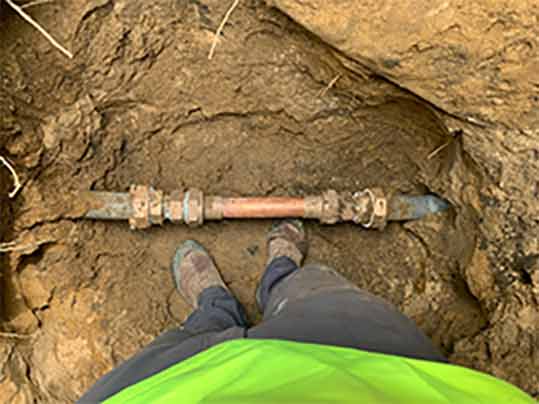
a water line replacement happening in chicago.

Repairing water lines can be a cost-effective and less disruptive solution, but it may not be a long term fix.

Factors to Consider

When deciding whether to repair or replace your main water line, there are several factors to consider. One important factor is the age of the pipes. If the pipes are relatively new and in good condition, repair work may be sufficient. However, if the pipes are old and corroded, replacement may be necessary. Additionally, the extent of the damage is also a key consideration. Minor leaks or cracks may be repaired, but if the pipes are severely damaged, replacement may be the only option.

Another factor to consider is the location of the pipes. If the pipes are located in a hard-to-reach or inaccessible area, repair work may be the more practical choice. However, if the pipes are in an easily accessible area, replacement may be easier to accomplish. Additionally, the cost of repair vs. replacement is another critical factor. Repair work is generally less expensive than replacement, but depending on the situation, the cost differential may be negligible.

Conclusion

In summary, whether to repair or replace water lines ultimately comes down to the individual situation and needs of the homeowner. Repairing water lines can be a cost-effective and less disruptive solution, but it may not be a long term fix. Replacing water lines can provide a permanent solution, but it can be costly and require extensive work. Homeowners should weigh the pros and cons of each option and speak with a local plumber in Chicago to determine the best course of action.