Tag Archives: leaking garbage disposal

Understanding Garbage Disposal Issues and Fixes

Understanding Garbage Disposal Issues and Fixes

Garbage disposals are one of the most misunderstood appliances in homes, says Keyrenter Buxmont Group. People routinely dump all kinds of food scraps into their sink, hoping their garbage disposal will grind them. Consequently, garbage disposals are often a hugely problematic device in the kitchen.

However, most of these issues come from the wrong use and inadequate care of the appliance. If well-maintained, garbage disposals are one of the most beneficial appliances in your home. They help to prevent sewer line issues by minimizing the risk of clogs in your drainage system.

What are the common issues in garbage disposals? How should you use your garbage disposal to prevent these problems? Find the answers to these questions below. Here are five of the most common garbage disposal problems in homes, their causes, and what to do about them.

  1. Garbage disposal is jammed or clogged

Since its primary role is to crush food scraps into smaller bits that can easily pass through your drainage pipes, it should not be surprising that this is the most common garbage disposal problem. This issue originates mostly from the indiscriminate dumping of food scraps into the appliance.

Hard items that are not broken down by the appliance, such as large fruit seeds, bones, and shells, may lodge between the blades and prevent the free flow of water. Fats, oils, grease, and starch from a wide variety of food scraps can also stick to the blades of the appliance and clog it.

To fix this problem, turn off the unit from the circuit breaker box, remove the sink strainer, and reach into the pipe with a gloved hand or grasping tool to remove the offending material.

  1. Garbage disposal stinks

If your sink smells like trash, your garbage disposal is probably not grinding food scraps as efficiently as it could. The result is small pieces of food scraps left inside the unit. As the debris decays, the resulting bacterial growth will cause bad odors in your sink and pest infestation.

It’s also possible that the inside of the garbage disposal is coated with a thin layer of decaying food residue. To solve the problem, toss lime or lemon wedges into the disposal and run it for half a minute.

Pour ½ cup of baking soda and 1 cup of vinegar into the appliance, wait 5-10 minutes, and run cold water into the unit. To prevent this problem, clean the inside of your garbage disposal with a toothbrush, baking soda, and vinegar at least once a month.

  1. Garbage disposal makes strange noises

It is normal for the garbage disposal to make a low humming sound as it works. But if it makes a loud noise, that is not normal. Possible causes of the problem are: the blade is rubbing against a hard object within the appliance, or the blades of the unit are bent.

If there are objects stuck inside the unit, remove them by reaching into the appliance with a gloved hand or grasping tool. Remember to turn off the garbage disposal at the circuit breaker box before doing this.

Before running the appliance again, hit the reset button at the bottom of the unit. If the garbage disposal blade is bent, get a professional plumber to check the unit. The best solution might be to replace the entire unit.

  1. Garbage disposal is leaking

This problem is mostly the result of weak or broken seals. If the unit is leaking from the top, you may be dealing with brittle putty around the seal, a loose flange, a broken O-ring, or a worn-out rubber gasket. These problems don’t cost a lot to fix.

If the unit is leaking from its sides, the leak is probably from the supply line to the garbage disposal. Tightening the clamps and screws on this line should solve the problem. If the unit is leaking from the shell, you need a new appliance.

  1. Garbage disposal drains slowly 

Sometimes the blades of a garbage disposal will become dull from years of use. If this happens, the unit will lose its ability to break down food particles efficiently, leading to food matter piling up inside the appliance. Typically, this buildup occurs on top of the blade.

However, sometimes the spinning blades of the garbage disposal will let fibrous, greasy, and other unbreakable material pass through. But they will lodge at a point below the blades, causing a clog in the system. In this case, you cannot remove the clog from inside the sink.

To sharpen the blades of your garbage disposal, put some rock salt and ice cubes in the unit and run it. Then use cold water to clean out the unit.

These are not the only garbage disposal issues that can happen in your home; these are the most common. If your garbage disposal problem is not listed here or you have tried some of the solutions in this post but the issue persists, it may be time to call in a local plumbing expert.
How to Fix a Leaking Garbage Disposal

How to Fix a Leaking Garbage Disposal

Garbage disposals are one of the most hardworking appliances in the kitchen. These small machines constantly grind away food scraps to ensure they don’t become a problem inside your home’s drain system. They cut down on the work you must do cleaning the kitchen sink.

But hidden away from view as they are – beneath the kitchen sink – it is often hard to see the physical condition of your garbage disposal. For most homeowners, the garbage disposal is fine as long as they can hear the appliance working and there are no clogs in the kitchen sink.

But PG Management warns that apart from getting jammed, other things can happen to garbage disposal. Your garbage disposal can leak, and when that happens, it can cause all sorts of problems in your home. Since it is hidden from view, you may not even know the unit leaks.

A leaking garbage disposal will cause foul odors in your kitchen, damage the area under your sink, encourage mold growth, and force you to do expensive repairs. That’s why you must know how to fix a leaking garbage disposal quickly and safely. This post will show you how.

How to fix a leaky garbage disposal

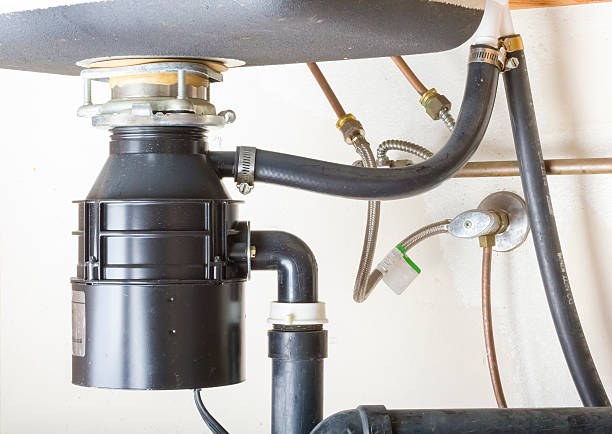
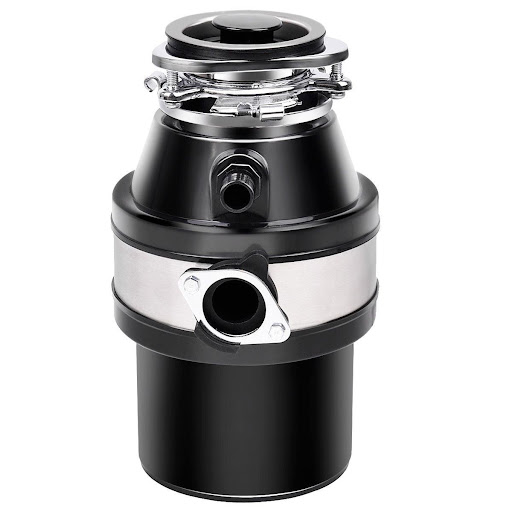
There are two areas where leaks are most likely to happen in a garbage disposal; the leak could result from damage to the rubber gasket at the top of the appliance or due to issues with the flange which goes through your kitchen sink.

a person washing dishes.

Needed tools and materials:

  • Wrench or pliers
  • Screwdriver
  • New gasket (if this is the problem)
  • Plumber’s putty

Fixing a leaking garbage disposal when the gasket is damaged

If the leak is from the very top rim of the disposal – the point where the rubber seal meets the flange – the leak could be due to a damaged rubber gasket. Rubber gaskets leak for four main reasons:

  • The gasket has aged and becomes brittle. As a result, it no longer provides a watertight seal.
  • There was no water in the garbage disposal for a long time, which allowed the rubber gasket to dry up and crack.
  • In the past, the garbage disposal was removed and reinstalled without replacing the gasket, as is required whenever you remove an old disposal.
  • The gasket was not evenly locked on all three sides during the installation.

To replace the rubber gasket, follow these steps:

  1. Disconnect the drain, unplug the power cord, and if you have a dishwasher, disconnect the dishwasher drain hose from the disposal.
  2. Remove the disposal by twisting the mounting nuts counterclockwise to unscrew them. Use a wrench that is the right size.
  3. To install the new gasket, find a convenient workspace. Position the disposal so the gasket is visible. Peel off the old gasket and replace it with the new one, ensuring it aligns appropriately and sits flat.
  4. To be sure you get the right gasket for your disposal, take your old gasket, along with the model number of the disposal, when going to the store.
  5. Once the gasket is in place, you can replace the disposal. Make sure the gasket sits flat before you lock the disposal into place. Check the mounting groves to ensure they are locked in.
  6. Reconnect the drain and dishwasher drain hose before you plug the power cord.
  7. Test the garbage disposal.

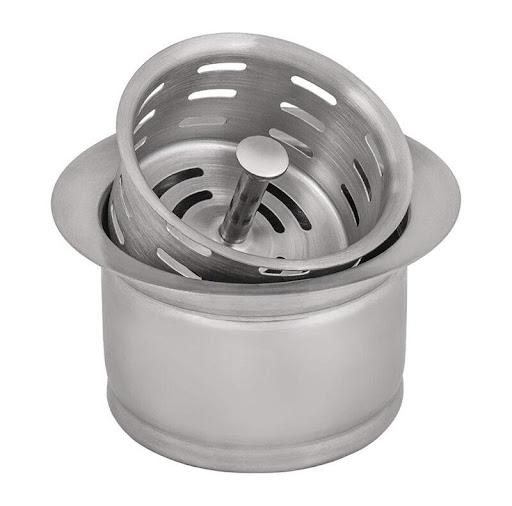
a sink strainer.

Fixing a garbage disposal that’s leaking from the flange

A garbage disposal can also spread from the flange. The flange passes through the kitchen sink to connect to the garbage disposal. It will leak if the flange is not tight enough or well-sealed with the plumber’s putty. To reseal the flange, you have to take down the disposal.

Follow these steps to do that:

  1. Disconnect the drain, unplug the garbage disposal power cord, and remove the dishwasher drain hose if you have a dishwasher.
  2. Unmount the garbage disposal by unscrewing the mounting nuts on the sides; turn them counterclockwise with the right wrench.
  3. Free the flange by loosening the bolts that hold it in place. Check the bottom flange to locate the clip that holds it in place; pop it out with a screwdriver. Pull the flange out from the top of the sink.
  4. Now you can reseal the flange. But before you do that, clean the sink opening to remove any old putty. Roll out a generous amount of plumber’s putty. Apply it to a uniform width by snaking it around the opening.
  5. Push the flange into position and return the clip holding the bottom flange into its place.
  6. Tighten the screws. Remove any excess putty from the sink. Reconnect the drain, dishwasher drain hose, and power cord.
  7. Test the garbage disposal. 

If this doesn’t work or it feels like too much work, please call a professional plumber to help you solve the problem. It could also be that you need a new garbage disposal. If this is true, a good local plumber can help you choose the right garbage disposal for your home.