Tag Archives: hydro jetting

Sewer Back Up Causes and Quick Fixes

Sewer Back Up Causes and Quick Fixes

The sewer system is necessary for urban infrastructure because it helps maintain a healthy and safe environment. Carrying away wastewater helps keep the environment secure from flooding and helps stop the spread of water-borne diseases. Therefore, it could be troublesome if a sewer backup is in your home.   

The sewage system is a vital component of your commercial building since it is responsible for adequately disposing of wastewater away from the property. By strategically discarding waste, it is crucial to keep it well-maintained to avoid issues affecting its functionality. 

Although the primary function of a sewer is to circulate wastewater, a commercial system is complex and requires maintenance and professional services. Installing plastic access doors and panels will allow convenient access to these critical fixtures whenever there is a need for repairs and maintenance. 

But what are the common causes of backed-up sewers, and what can we do to fix and prevent it from happening again? Keep on reading to find out more!  

Cause #1 Clogs or Blockages  

Does your sink drain water slowly? Are there unfamiliar gurgling noises when you flush the toilet? These common signs could indicate clogged drains. Clogs mainly develop over time and are a product of a blockage that restricts the water flow from your drainpipes, impacting the plumbing throughout your entire home or establishment.   

Clogged drains can affect multiple fixtures such as sinks, toilets, showers, bathtubs, and sprinkler systems. Raw sewage could travel back into your drainpipes and your plumbing fixtures from the septic tank or the main sewer lines if the clogs become severe. The situation can get messy, and you would want to contact a plumber right away for professional hydro jetting service.

Drain clogs are usually a long process of material buildup in your drains. Here are some of the common materials that can clog your pipes: 

  • Hair  
  • Solidified grease  
  • Baby wipes and feminine hygiene products  
  • Extra-thick toilet paper, facial tissues, towels, and other wiping products.   
  • Dental floss and cotton swabs  
  • Products labeled non-flushable 

You can place a drain strainer in your bathroom drains or sinks to prevent materials from falling into your drainpipes to prevent clogs from occurring. Also, make sure to dispose of hygienic products properly and, as much as possible, minimize the amount of toilet paper that you flush down your toilet.  

Cause #2 Tree Roots  

Tree root invasion happens when trees roots penetrate your sewage lines, growing through your plumbing pipes or crawling around and crushing the lines, searching for the water that flows inside.  

The tree root invasion process is usually slow, but it could speed up if your lines are in bad condition, with holes or cracks that conveniently allow the roots to enter the drain. 

To prevent yourself from dealing with this situation, you should estimate the suitable area if you’re planning to plant a tree within your property. It will vary depending on the type of plant and its growth rate. Ensure that the site you choose will not interfere with your plumbing pipes.  

Cause #3 Main Sewer Line Blockage 

A blockage in your sewer system usually occurs in the main sewer line owned and maintained by your city. The sudden backup caused by a clog is similar to what you experience during a household blockage. It can also be due to insufficient design capacity if your area encounters serious growth.  

The problem becomes prominent if a community has difficulties with the sewers after heavy rainfall. The main sewer blockage will continuously affect your plumbing in the entire house or establishment, rather than affecting just one drain.   

To decrease the damage, once there is a block in your main sewer line, shut off all water supplies in your home or establishment and shield drain openings with material that can absorb the liquid.  

Final Thoughts 

Although these valuable tips are practical and helpful, you should immediately contact a professional sewer line cleaning service if nothing changes. There could potentially be a more severe cause for the blockage, which would require a possible sewer line repair or replacement. 

Why Hydro Jetting is Important Before a Sewer Line Repair

The sewer lines in your home are designed to last a long time. It is not uncommon to find fully functional sewer lines that are twenty years old and over. This is because sewer systems, due to the type of content that passes through them, are designed to be sturdy.

Why Hydro-Jetting is Important Before a Sewer Line Repair

However, even the most well built sewer line will eventually have problems. These issues can come from several sources. The sewer line in your home can get damaged because of misuse, warns Jilsa Management. Or it can lose some of its function through wear and tear or a natural accident.

Regardless of the origin of the issues in your sewer lines, you want to solve the problem and make sure it does not return. To get this result, you should know the best practice for fixing a damaged sewer line; the sewer line repair should be preceded by hydro-jetting.

What is hydro-jetting? What does it do? And why is hydro-jetting important during sewer line repair?

What Is hydro-jetting?

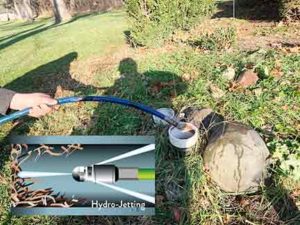
Hydro-jetting is a drain cleaning method that uses high-pressure water to blast away clogs and blockages inside the sewer lines. Water is delivered at a pressure of up to 6000 PSI, which is enough force to remove tree roots, sludge, and other materials lodged inside the pipes.

The process of hydro-jetting is as follows:

  1. As a first step, the plumber conducts a sewer camera inspection by installing a small camera on one end of a cable and inserting it into the sewer line.

  2. The camera travels through the sewer line and sends back images of the interior of the pipes to a computer screen monitored by the plumber.

  3. This initial process helps the plumber pinpoint the location of the problem and determine its severity. The inspection also tells the plumber if it is safe to go on with the next step.

  4. If it is safe to proceed – that is, there is no possibility of the sewer line collapsing – the actual hydro-jetting process can now begin.

  5. Hydro-jetting equipment consists of a large tank filled with water, a specialized high-pressure water hose, a super-strong nozzle, and equipment for pushing the water through the nozzle at high pressure.

  6. The high-pressure water hose, with the nozzle at its head, is inserted into the sewer line until it reaches the point of the blockage.

  7. The clog is blasted with just enough water pressure to break up the obstruction inside the pipe. Hydro-jetting can deliver enough water pressure to shear away plant roots.

  8. The dislodged material is washed down the pipe and into the city’s main sewer lines.

  9. Finally, another sewer camera inspection is done to view the results of the process and determine the condition of the pipes.

Hydro-jetting lets your plumber clear blockages inside the pipes without digging up the yard or exposing your pipes to the risk of damage. Hydro-jetting can be used to effectively remove the following kinds of blockage from a sewer line.

  • Sludge or grease, fat, and oil build: When you flush grease, fats, and oil into the drain, these materials cling to the sides of the pipes and trap dirt. A hydro jet will remove buildup.

  • Intruding tree roots:  In a bid to find water and nutrients, the roots of nearby shrubs or trees can find their way into the sewer line. Hydro-jetting will solve this problem.

  • Pipe scale: Dissolved minerals in hard water are deposited on the interior surface of pipes, where they reduce the diameter of the pipe. Hydro-jetting will remove pipe scale.

  • Non-flushable objects: A range of items we use in the home find their way into the sewer line. Hydro-jetting can blast away these troublesome items.

Hydro-jetting is a powerful yet gentle method for cleaning drains. But why is it necessary to carry out this procedure before a sewer line repair service?

hydro jetting a sewer line

Why hydro-jetting is done before sewer line repair

  • To detect problems: Hydro-jetting the sewer line washes away the layers of filth inside the sewer line and exposes the actual surface of the pipes. This allows the plumber to see the true extent of the damage to the sewer line.

  • Improves the accuracy of repairs: By combining sewer camera inspection with hydro-jetting, the plumber can pinpoint the location of a problem. Hydro-jetting injects a high level of accuracy into sewer repair. It ensures the finished job is well done and long- lasting.

  • Reduce costs: There are other ways to clean a sewer line before it is repaired, but hydro-jetting is the quickest and most-effective method. Other methods will cost more in labor and time.

Improves sanitation and indoor air quality: Hydro-jetting the sewer before repairing helps the plumber do a more complete job. Hydro-jetting gets rid of the bacteria inside the drain that cause bad odors. Unless the sewer line is cleaned with hydro jetting, the bacteria inside them are not easily removed.

Is Hydro Jetting the Drain Cleaning Solution You Need?

Unfortunately, blocked drains in the home are a common problem. A blocked drain is a huge pain as it will reduce water flow, slow down or prevent drainage, and damage the plumbing. But as Blue Door Realty says, the worst is the possibility of disgusting wastewater backing up into your home.

hydro-jetting-chicago

Thankfully, there are many ways to deal with a blocked drain. Anyone can unclog a blocked drain if they know how to use a rodding machine or snake. But plungers and drain snakes are only good if the cause of the blockage is close to the drain opening.

For blockages deep into the drain system plungers and drain snakes won’t work. Having the right solution to unclog a drain is essential and this will depend on why the clog occurred, where the clog is within the drain, and how long it has been there.

The most common causes of drain clogs are hair, food debris, grease, soap, oil, mineral buildup, and foreign objects that fall in the drain by accident. If any of these foreign objects make it far enough down into the drain pipes, they cannot be dislodged with a plunger.

For such intricate blockages, a high-end solution like hydro jetting is what you need. Hydro jetting will dislodge blockages no matter how far they are down the drain pipe. What is hydro jetting drain cleaning, what are its benefits and when should you use this technique in your home?

Hydro jetting drain cleaning: how it works and its benefits

Hydro jetting removes drain clogs by blasting them with high-pressure water via a special hose threaded into the plumbing system. This has an attached nozzle, which is able to create a stream of high-pressured water with a force of up to 4,000 psi (pound-force per square inch).

This is enough pressure to break down obstructions, shear away tree roots, and remove buildup. Hydro jetting can be used for pipes of various sizes and to resolve the most severe drain clogs. The size and design of the nozzle can be altered to suit the pipe and type of blockage.

What are the advantages of hydro jetting over other methods of drain cleaning?

It is quick

When you have a blocked drain, speed is of the essence. With hydro jetting, you don’t have to wait long before you can start to use your drains again. The process can be completed in a few hours.

It is not messy

Plumbing jobs almost always create a mess. You will not have this problem when you use hydro jetting. Since hydro jetting flushes away the obstructions inside the drain, you will not have to deal with any smelly unsanitary mess.

It is safe

Because you will not come into contact with wastewater from the drain or any stuff inside the pipes, hydro jetting does not expose you or your family to the risk of disease or illness.

Doesn’t use dangerous chemicals

Hydro jetting uses only water. No strong chemicals will be forced into your drain system. So you can be sure of the safety of your pipes and drain. 

It is versatile

Hydro jetting can be used for pipes of all sizes and any type of blockage. All that’s needed is a nozzle that matches the size of the pipe and the nature of the problem.

It removes sludge

One of the hardest types of drain clogs to remove is sludge. Whether it is sludge caused by soap scum, oil and grease, or coffee grinds, hydro jetting will remove it completely.

Useful for preventing clogs

You can use hydro jetting to protect your drain pipes and maintain the function of the drain system by having the system flushed occasionally. 

Does your drain need hydro jetting?

hydro-jetting-services-chicago

You will need hydro jetting if any of these drain problems apply to you:

Other solutions have failed

Sewer rodding and drain snakes are no good when removing clogs that lie beyond the opening of your drain. For instance, if you are dealing with sludge buildup, a sewer rodding will only poke holes in the sediment, instead of fully removing it. The problem will return eventually. The best way to deal with blockages that are not easily resolved is to use hydro-jetting.

Major blockages

If you have substantial scale accumulation in your drain pipes, or you are dealing with tree root intrusion, silt, or heavy sludge buildup, the most effective way to solve the problem is with hydro jetting. Mineral/sludge buildup, if not dealt with effectively can damage your drain pipes. Hydro jetting is a more affordable option than replacing sewer lines.

Your drain needs maintenance

If you want a way to maintain drain pipes that is effective but does not take a lot of time, hydro jetting is the recommended solution. It will clear away the debris inside sewer lines and return them to how they were at installation.