Author Archives: Chicago Plumbing Experts

Making Safe Bathrooms For Seniors

making safe bathrooms for seniors

When people get older, many things they did in the past without difficulty or assistance suddenly become a chore. As folks age, they may find themselves shut out of places or activities they love simply because of how the environment is designed.

With stairs and narrow doors everywhere, life can be hard for people with mobility issues. Most places are simply not designed with wheelchairs or walking sticks in mind. But the worst difficulties senior citizens face are often the ones they must deal with in their own homes.

Older people who are used to doing things for themselves live with the daily frustration of relying on others for simple things. Those feelings are often compounded by the constant risk of accidents in their own home, says Keyrenter Jacksonville. Nowhere is this danger more present than in the bathroom. 

As far as slips and falls are concerned, bathrooms are the most dangerous room in the home. No one is immune to bathroom accidents but seniors with their slower reflexes and reduced muscle mass are often more vulnerable than other people.

Designing bathrooms with older people’s safety in mind is vital. Safer bathrooms, not only protect older folks from injury, but they also let them recover their dignity. Bathrooms designed with the needs of seniors in mind also relieve their loved ones of the need to worry about them.

Guidelines for making bathrooms safer for seniors

Making a bathroom safe for seniors is not hard; it just takes attention to detail. Below are strategies for designing the various aspects of a bathroom to make them safer for seniors. These steps won’t only make the bathroom safer but easier to use for those older people with arthritis.

Bathroom access

Seniors with incontinence issues often need to get to the bathroom fast, so access to the room should be easy. The path should be free of barriers or loose objects. Lighting is also critical. There should be sufficient light sources along the route and light switches must be easy to reach.

Bathroom doors and door handles

Bathroom doors must be at least 80 cm wide. They should open easily and intuitively. Use lever knobs in place of round knobs. Round knobs require twisting and they often present a challenge for folks who have lost their grip strength due to arthritis. For easy access during emergencies, there should be no locks on bathroom doors.

Bathroom flooring

Most bathroom accidents involving seniors happen when they are trying to get out of the bathtub or shower. Floors that become slippery from soap and water are a hazard. There are lots of ways to make bathroom floors safer such as using nonslip mats or rugs, rubberized floors, and installing ceramic or epoxy flooring.

Raised toilets

Due to loss of muscle tone, older people may have trouble sitting on a standard toilet and getting up after using it. To make the toilet easier to use it should be wedged to raise it around 46 cm. It is also possible to do this with risers.

Grab bars or tension pole

Grab bars assist with balance and stability during high-risk movements like sitting on a toilet, and getting in or out of the shower stall, and tub. They should be in easy-to-reach places. Tension bars may also help; they reach from the floor to the ceiling and provide something to hold onto while bathing.

ADA-compliant faucets

These are easier for seniors to use because they don’t have spherical knobs which need to be gripped in order to turn them. With these types of faucets, the risk of losing balance when attempting to turn the water on and off is lower. ADA-compliant faucets typically have lever taps or electric sensors.

Shower box

The shower box should be at least 80 cm which is wide enough to accommodate another person. A second shower head is also recommended. Preferably, a handheld shower since they are easier for the elderly to use. A shower chair is also necessary for folks with stability issues or difficulty standing.

Additional safety measures for the bathroom

Place items within easy reach

Seniors should be able to reach toiletry items without having to stretch or bend. Putting items within easy reach can be as simple as placing them along the shower wall or having them inside a caddy over the shower head.

Bathroom lighting

Bright lights that are well-placed reduce the risk of accidents. Lights should provide uniform illumination across the entire bathroom; dark shadows in parts of the bathroom increase the risk of accidents.

Bathroom paint

High gloss paints and shiny tiles produce glare; they should be avoided. Matte finishes are a safer option. Contrasting color patterns for walls and floors also make the bathroom easier to navigate and safer.

Elderly bathroom alert system

The above precautions do not eliminate the possibility of accidents; they reduce them. Having systems in place that make it easy for the senior person to ask for help during an emergency is important. These can include sensors in rooms and on the occupant, as well as alarms and emergency buttons.

8 Tips to Help Prevent Home Flooding During the Rainy Season

8 Tips to Help Prevent Home Flooding During the Rainy Season

One of the most beautiful things about living on this planet is the regularity with which seasons come and go. Every single year for as long as humans can remember, the rainy season comes. Following in the wake of those rains are a lot of good things and, sometimes, a few bad things.

The rains create the environment we need for our food to sprout and also feed the underground rivers where we get our water. But the same rain that turns nature into a lush paradise can ruin homes. The rainy season is synonymous with flooding, not only in fields but also in homes.

The rains will certainly come and go, but you want to be sure that after the rainy season is gone, your home will be as it was before the rains came. You wouldn’t want floodwater getting into your house and leaving you with mountains of bills to pay or even endangering your family’s life.

That blessing of rain from the skies can also become a curse of floodwater inside your home unless you take the right steps, warns Sun-Pro Realty & Management. Don’t forget that the stress and expenses of fixing water damage are nothing compared to the small steps you can take to prevent flooding in your home. 

That bears repeating; flood prevention is many times more inexpensive than the cost of restoring your home after it has been hit by a flood. How can you prevent your home from becoming flooded this rainy season? Here are tips you can follow to keep your property safe when it rains.

8 tips to help you prevent flooding in your home

Improve drainage by grading the area around your home

Water naturally flows from high ground to low. If the ground near the foundation of your home is lower than the surrounding areas, you will have flooding in the basement. Take note of the direction that water flows when it is on your property and areas where floodwater accumulates around the home. 

Make sure the ground around the base of the house slopes down to the street. Add dirt and sod to make the ground higher, if necessary.

Inspect and clean downspouts and gutters

Downspouts collect rainwater from the gutters around your roof and discharge it into a part of the property where it won’t flow back into your home. But downspouts and gutters will only play their role if they are not clogged with debris or damaged. 

Make a habit of inspecting and cleaning your gutters and downspouts regularly, particularly if there are lots of trees around your home.

Test your sump pump on a schedule

The sump pump is supposed to automatically remove floodwater that finds its way into your basement. This system is designed to work without your direct involvement, but sump pumps can fail. 

You may not realize that your sump pump has stopped working until your home is unexpectedly flooded. You can avoid this by doing scheduled tests of the sump pump and installing a backup battery system.

Keep storm drains free of debris

Any debris you let scatter around your yard can find its way into the storm drain when it rains. Blocked drains on your property or the street will predispose your home to floods. 

All storm drains on your property are your responsibility to clean and maintain. You should also inform the city department responsible for cleaning the city’s drains if a storm drain on the street is posing problems. 

Clean clogged drains after heavy rains

Even if you keep your yard free of debris, your drains can still get clogged with debris transported from the areas surrounding your home. After heavy rains, you should check your drains to make sure they are not clogged with debris. This is a lot of trouble to go through but it is a lot less than what you will have to endure if your home gets flooded.

Install a backflow prevention device

A backflow prevention device ensures that if during heavy rains, your home’s sewer systems are overwhelmed, water does not back up into your home. If there is no backflow device installed in your home, you can end up with a lot of unpleasant material inside your house. A backflow device will save you the distress and cost of dealing with this kind of situation.

Protect your home with sandbags

If the home is in an area with a high risk of floods, you can reduce your home’s exposure to floodwaters by placing sandbags in those areas where the risk is highest. Sandbags are an effective way to redirect the flow of water and keep it from going where you don’t want it to. When using sandbags, pay close attention to the slope of the ground to avoid trapping the water, instead of redirecting it.

Install flood detection systems

Lastly, flood detection systems reduce your burden by taking over the work of keeping an eye on every part of your home for signs of flooding. Flood detection systems have become very advanced, and you can integrate them into your home security system or install them as a standalone system.

Traditional vs. Tankless Water Heaters – Which is Better?

Traditional vs. Tankless Water Heaters

Which one is better for your home, a tankless water heater or a traditional water heater? If you were to ask this question to ten different persons, you are likely to get ten different answers. But should it really matter which kind of water heater you choose for your home?

The answer is yes. Your choice of water heater influences your energy costs and the overall efficiency of your home, says Drew Doheny Property Management. That’s because water heaters are a big part of what makes your home function. The hot water you use for everyday tasks like washing and bathing comes from the water heater.

You want to be sure that any water heater you spend your hard-earned cash on will be able to meet your family’s needs. Will a tankless water heater meet your home’s requirements, or should you buy a traditional water heater? That depends on your specific situation.

Below we list the pros and cons of tankless and traditional water heaters. Based on the information you can make a decision on which system suits your home better.

water heater repair

Traditional water heaters vs Tankless water heaters

We access the two types of water heaters based on several criteria.

How the water heater works

Traditional water heaters

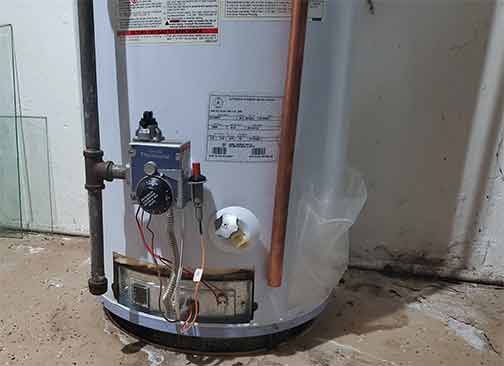
These continuously heat a tank of water to ensure a constant supply of hot water. The tank can contain between 30-60 gallons of water, with 50 gallons being the most common size. Because they heat water, even when you don’t need it, the cost of running a storage tank is slightly higher. 

Tankless water heaters

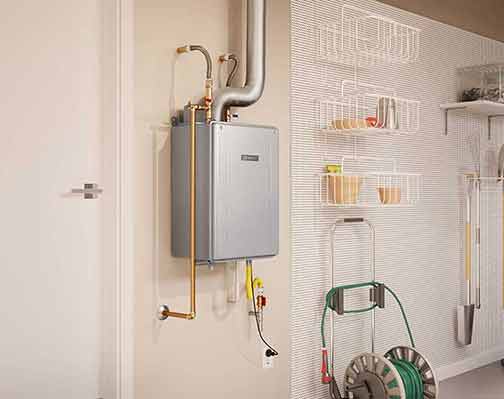
These don’t need to store water because water is rapidly heated as it passes through the heat exchanger inside the unit. Tankless water heaters heat water on demand. Unlike, a storage tank, you won’t have to deal with standby energy loss. However, if the demand for hot water is high a tankless system may not be able to keep up.

Purchase price and installation costs

Traditional water heater

Storage water heaters are more affordable than tankless water heaters. A standard 50-gallon tank-style water heater will cost $570 – 600, for electric and gas systems respectively. Installing the tankless water heater system is fairly straightforward and will cost you an extra $600 – 800 if you use the existing hookups.

Tankless water heater

Tankless water heaters, being newer technology, are costlier. The cost of a unit is between $525 and $1,150. Depending on the water usage in your home, you may need more than one unit. Installing a tankless water heater cost anywhere from $800 to $1,500. In addition to installation costs for the system, you may need to upgrade your home’s electrical service to 200 amps.

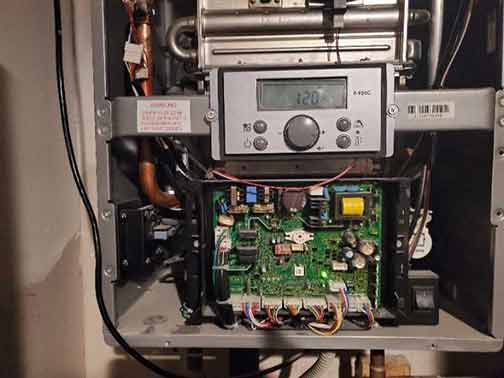
repair of a tankless water heater

Water heater energy usage and efficiency

Traditional water heater

For storage tanks that run on electricity, you can expect the unit to consume around $580 of electricity on average per year if the cost of electricity is $0.132 per kWh. Gas-powered storage tanks, on the other hand, has an annual operating cost of $245, whereas the average price of natural gas is $10.86 per 1,000 cubic feet. Gas-powered storage tanks are far more efficient than units that use electricity.

Tankless water heater

Generally, tankless water heaters are more efficient than storage tanks if both units use the same fuel type. Gas-operated tankless water heaters have lower operating costs than electric ones; with an annual cost of $195 versus $535. But this is really due to the higher cost of electricity; tankless water heaters that run on electricity are actually more efficient.

Water heater performance

Traditional water heater

Because storage tanks are constantly running, water is already hot by the time it is needed. There is no wait time when you use traditional water heaters. Regardless of whether the unit is gas or electricity-powered, a storage tank will always deliver a steady supply of water at your required temperature.

Tankless water heater

The rate at which a tankless water heater delivers hot water depends on the temperature of the groundwater and your home’s water demand. In most cases, it is not possible to run the dishwasher and washing machine at the same time that someone is taking a shower, when there is just one tankless water heater in the home.

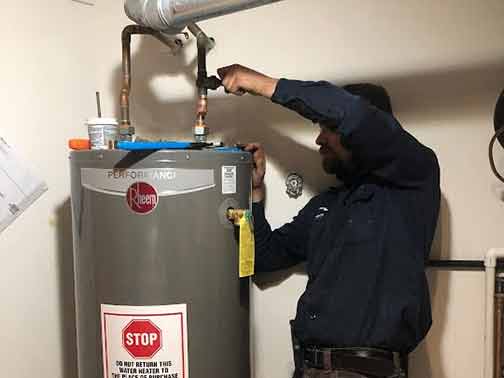
install tankless water heater

Photo Courtesy of mattexservice.com

Other considerations

Space

With a traditional water heater, you need space for the tank. Water heater tanks can be as high as 5 feet and 2 feet wide or more. Additionally, they must be installed in spaces with adequate ventilation. This is not a requirement for tankless water heater installations.

Safety and maintenance

Traditional water heaters need repairs and maintenance more often than tankless water heaters. With storage tanks, there is always a risk of corrosion, leaks, and safety issues due to overheating. These issues do not exist with a tankless water heater.

Which water heater should you buy?

Tankless systems cost more in the beginning but less going forward. The reverse is true for traditional water heaters. If space is an issue for you, a tankless system clearly makes more sense. Another thing tankless systems have going for them is their superior energy usage and efficiency.

5 Ways to Handle a Broken Sewer Line

5 Ways to Handle a Broken Sewer Line

The sewer line that runs beneath the ground in your home is the vital connection between your home’s plumbing system and the city’s main sewer line in the street, says State Property Management LLC. This pipe transports all the wastewater from your home into the municipal wastewater management system.

Sewer pipes are tough enough to withstand pressure and the other forces underground pipes are subject to. They can work for many years without any signs of trouble. But this is not to say that the sewer line or pipe in your home cannot get broken because they can.

Several things can break your home’s sewer line. Five of the most common ones are:

Soil movements

The soil surrounding the underground pipe may shift. This most common form of soil movement is called settling. When the soil around the pipe settles, it creates a dip along the line. Over time, the buildup can occur in this downward slope, leading the pipe to eventually break.

Poor installation

If the pipe is not installed with the proper downward slope, the possibility of clogs and blockages becomes higher. Sewer pipes with an inaccurate downward slope will ultimately break. Substandard piping materials will also lead to the failure of the sewer line.

Damage by tree roots

If there are trees or shrubs in the vicinity of the line, their roots can endanger the sewer pipes. Tree roots may penetrate sewer pipes in a bid to access the nutrient-rich water inside them. If this happens, the pipe will not only break but will be blocked by plant roots.

Aging pipes

Pipes become more predisposed to damage with age. This is the accumulated result of years of wear and tear. Some kinds of pipe materials such as metal pipes are more prone to damage than others. Old sewer lines will leak and clog more often than newer ones.

Abusing the sewer line

Homeowners often assume the sewer line is capable of handling anything they throw at it. As a result, they dump grease, fats, oils, and other materials into the line. Anything other than human waste and toilet paper inside your sewer lines can result in the pipes breaking.

How can you tell if your sewer line is broken and what should you do to solve the problem?

Common signs of a damaged sewer line include:

  • The odor of sewer from the drain or around the yard.
  • Lush green areas in the yard, distinct from other parts of the yard.
  • Puddles of water or soft spots in the yard that are not caused by rain or irrigation.

If you notice these problems in your home, you may suspect a crack in your sewer line. What can you do if the sewer pipe is broken?

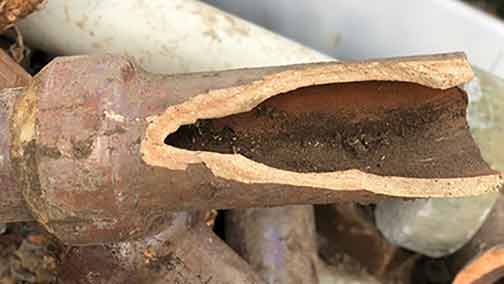
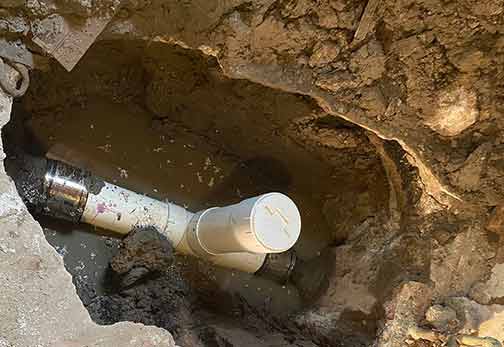
sewer line repair chicago

Having Your Sewer Line Repaired by a Professional Plumbing Company is Your Best Bet

How to handle a broken sewer pipe

A broken sewer pipe will not only interfere with your use of the home’s plumbing, but it can also endanger the health of your family. If left unattended, the damage will become more extensive and more costly to repair. Eventually, it can even compromise the city’s sewer lines.

Here are ways to handle a broken sewer line:

Locate the damaged pipe

Pinpointing the location of the damaged pipe makes it easier to assess the damage and determine the best way to solve the problem. If the pipe is in the crawlspace or basement, finding the damaged section is easier. Otherwise, you will need a professional plumber to conduct a video camera inspection of the sewer line.

Evaluate the damage

The camera inspection will tell you the extent of the damage. If you are lucky, and a small section of the sewer line is damaged and the damaged portion is within easy reach. The evaluation will also identify the root cause of the pipe damage and recommend the best way to repair or replace the sewer line.

Repair or replace the sewer line

Depending on the cause of the problem and how far it has gone, you have two courses of action open to you. On one hand, you may only have to repair the damaged section of the pipe. On the other hand, you may need to replace your entire sewer line.

Fix the pipe

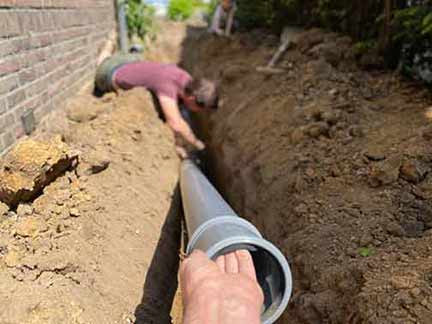
To repair the damaged pipe, you have two options. The first method involves excavation: digging a trench in your yard to reach, retrieve, and replace the damaged pipe. This method is invasive, time-consuming, and expensive. You will also have to fix your damaged landscaping afterward.

The second option is a trenchless method that does not involve excavation. Instead of digging up your lawn, the section of the damaged pipe is repaired by relining it. This method is quick and effective. It is the recommended fix for your broken sewer line.

Replace the sewer line

This is the final and costliest option. This solution should only be applied if it is not possible to fix the broken line. Most times you will only need to replace an entire sewer line if the pipes are old and deteriorating or there have been significant shifts in the soil surrounding the pipes.

Is Your Main Sewer Line in Need of Repair?

Is Your Main Sewer Line in Need of Repair

Your sewer system is a very essential component of your home and an everyday requirement of life. It is essential to the operation of your plumbing. As such, a damaged or clogged sewage line is a very concerning plumbing problem that must be addressed quickly. Sewer line repair is hard labor. Therefore, it is very essential to get professional assistance immediately rather than doing it yourself. Get your drainage system tested and serviced regularly to avoid expensive repairs and sewage line removal. It also helps if you know how to spot a problem head. That is why we have set out a handy guide on whether you have a main sewer line that should be repaired.

Is your main sewer line in need of repair – Let’s find out

Having a slow draining water line or clogged pipe is common. Many homeowners struggle to distinguish between times when you can fix a small problem yourself without calling for professional help and when there is obvious evidence that a serious problem is fermenting. While no article can possibly discuss all plumbing matters, the following are signs your main sewer line needs fixing. You don’t wish to wait and give yourself an even bigger issue in the future. Calling an emergency plumber isn’t a nice experience.

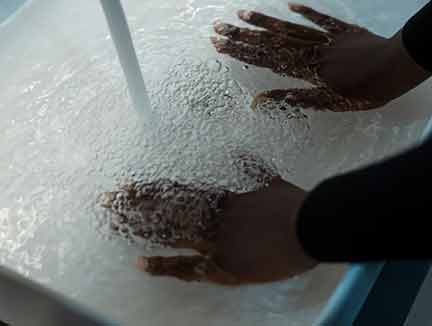
woman checking water

If you’re wondering if your main sewer line is in need of repair, then you should start looking for the warning signs.

The smell is the indicator

Homeowners needn’t be licensed plumbers to recognize when things are fishy with their main sewer line. If you smell sewage gas anyplace in your house or nearby, it might indicate a severe problem with your sewer system. Healthy sewer lines ventilate gas through roof outlets while the liquids follow a path downwards. However, if a smell appears in your home, there must be a hole or a leak somewhere. 

What is sewage gas composed of, and why is it hazardous?

Sewage gas is a complex combination of airborne chemicals from rotting household trash and biological waste. The noticeable odor of most sewage gas is caused by sulfur dioxide and methane. Everyone who smells the fumes of sewage gas in their house should look for plumbing help, partly due to the potentially toxic gasses and the bad smell. 

Sewage gas is something to look into 

 Suppose sewage gas is left unmanaged in significant amounts within the residence. In that case, there is a risk of fire or explosion because decomposing biological matter creates various forms of highly combustible gas. Of course, it’s a severe issue. However, it’s not as serious as to require contacting a moving company to remove you from the house. Although according to Best Long Distance Movers, it’s not uncommon for families to move out when they have plumbing issues. Still, you needn’t relocate just yet. You can fix the problem; it doesn’t need to be that serious. 

Your toilet bowl water level varies

Your toilet bowl may be filled one day and empty the next. It’s not only an oddity; it’s a warning sign of a problem. It might indicate a blockage in your sewer system, which could lead to a backup. Living with bad indoor plumbing can be irritating, and it’s even worse to wonder whether you can rely on your plumbing. If you have issues with your sewer line that give you daily troubles, it may even be time for you to take more drastic measures. One of them would be to ask around for a camera inspection of your sewer line. The problem may be more serious than you think. 

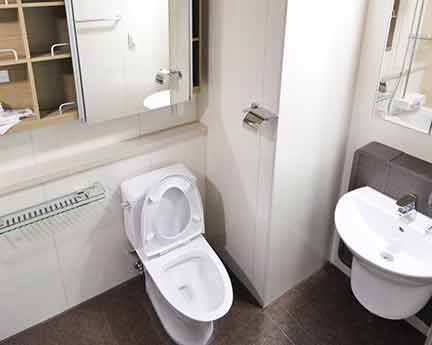
a toilet

There are steps you can take to prevent plumbing issues. However, if they already exist, you should get to work and try to fix them as soon as possible.

Causing trouble at the most inconvenient time is the worst part

Sudden leakages when you don’t expect them, and those loud gurgling sounds keeping you awake long at night can be a real annoyance. It’s not necessarily something that can cause a big issue. However, you can’t know that for sure. Not unless you contact plumbers and hire sewer services. Then you’ll know. Having a problematic sewer line can leave you restless.

A slow drain might also indicate a blockage, which could eventually lead to a clog and sewage overflow. If your bathtub, sink, or toilet is draining slowly, attempt to resolve the problem as soon as possible. If you have poor drainage in all your drains, you are undoubtedly dealing with a more significant issue than a simple blockage.

a roll of toilet paper

No need to worry, every problem has a solution. However, it’s always better to prevent the problem if you can.

It’s better to be safe than sorry

Generally speaking, it’s always better to prevent a problem than try to solve it. People tend to neglect the importance of having a sound plumbing system in their homes, especially when looking for a new house. They seek good location, spacious rooms and a wide variety of other important things. However, a functional sewer line can be just as important. For example, it can be hard to find a home that has it all in large cities like Chicago. If planning on buying here, there are things you should prioritize, especially if you are house-hunting long-distance. Buying a house is a significant investment. Trust us; you need to have good plumbing. Try to find a good plumber to camera inspect the sewer pipes before you decide to buy real estate!

If you can see the warning signs, try to find the solution quickly

If you are still unsure whether your main sewer line is in need of repair, perform all the checks and try to find someone to fix all those minor issues that are causing problems. Furthermore, it would be best to look for the warning signs before they become apparent. And once you do notice them, do all in your power to minimize the damage.

How Can Hydro Jetting Benefit Your Restaurant?

How Can Hydro Jetting Benefit Your Restaurant

For buildings of all kinds – commercial as well as residential – periodic hydro-jetting is one of the most effective ways to maintain the function and structural integrity of the drain systems. This is especially true when that building is a restaurant or commercial kitchen.

In a typical day’s work, massive amounts of broth, grease, and food waste find their way into your restaurant’s drain system. But just because the grease and food you flush into the drain disappear from view don’t mean they actually go away.

Most times these materials settle inside the drainpipes and eventually clog them, making it hard for water and other materials to pass through. As the Chicago Plumbing Experts team explains, short and long term effects of clogged pipes are drain blockages, unsanitary conditions, and pipe damage.

The buildup of grease and other materials inside your restaurant’s drains will cause the following problems:

Inefficient drains

The drains in a restaurant will become slow and make strange noises when they are clogged. This doesn’t do any good to the image of your restaurant because customers view such things as signs that a business is not well-managed.

Sanitary problems

Clogged drains draw pests – rats, mice, roaches, and ants – into the building. The possibility of bad odors from the drains also increases with clogs. The worst sanitary issue from clogged drains is when you start to have drain backups.

Clogged drainpipes hurt your business because you may eventually have to close shop to deal with the issue. If that doesn’t happen, you may get into trouble with the authorities if customers complain about your restaurant. Either way, you lose time, money, and customers.

professional hydro jetting services

Hydro jetting your pipes on a schedule can help you avoid everything from slow-running drains to sewer line blockages.

Hydro jetting your restaurant’s drains

It is a good practice to clean the restaurant’s drain on a schedule, even when there are no visible signs of problems with your drain system. But when cleaning your restaurant’s drains, you will be faced with the option of using drain cleaners, drain snakes, or hydro-jetting.

What is hydro jetting and why should you use hydro jetting in place of these other methods of drain cleaning such as a sewer rodding service? There are several reasons why drain snakes and liquid drain cleaners will not work when cleaning your restaurant drains.

Drain snakes are ineffective

Drain snakes are only useful for removing obstructions that are near the opening of the drain. If the problems lie deep inside the drain system, drain snakes are often useless for solving the problem. Moreover, drain snakes cannot remove drain clogs caused by sludge. The most the drain snake will do is poke a hole in the grease.

Liquid drain cleaners are dangerous

When dealing with minor problems in the home, liquid drain cleaners may work, but they are completely useless when you are trying to remove heavy grease buildup inside restaurant drains. Moreover, drain cleaning solutions will damage your drainpipes and the toxic fumes they emit can cause health problems for your staff and customers.

Hydro jetting, on the other hand, is ideal for dealing with the heavy grease buildup found in restaurant and commercial kitchen drains. This method will clean your drains without subjecting your pipes to the risk of damage. The way hydro jetting works makes it the best method for cleaning restaurant drains sustainably.

Benefits of hydro jetting your restaurant’s drain

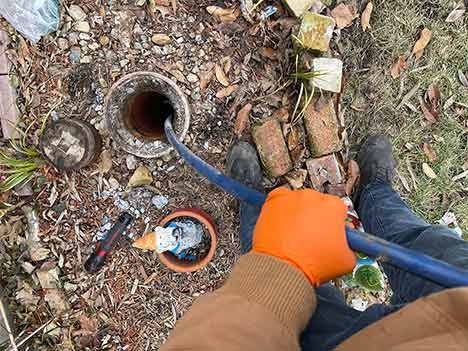
Hydro jetting uses a stream of high-pressure water to blast debris away from inside your drains. To hydro-jet, the drain, a high-pressure hose with a special nozzle is fed into the pipes. One end is attached to a pressurizing machine that sends a jet of water – up to 8,000 PSI – to directly blast away grease, sludge, soap scum, and even tree roots from the pipes.

Hydro jetting can benefit your restaurant business in the following ways:

Saves you money

Hydro-jetting your drain prevents plumbing failure. Small problems that are easily solved by hydro jetting pipes can escalate until they result in sewer line blockages and plumbing failure. Hydro jetting makes it easier for your plumber to spot problems with a sewer camera inspection service and deal with them quickly.

Augments your waste management system

Even with the best waste management protocol in place, your drain systems will struggle to deal with certain types of waste. This can happen despite a grease trap installed in the system. Hydro jetting your drains improves the efficiency of your existing system by preventing malfunctions and complications.

Resolve neglected grease traps

If your grease trap has been neglected for a long time, removing the accumulated debris at the bottom of the grease trap will not solve the problem. This is because the drain lines connecting to the trap would also have become clogged with debris and will need hydro jetting to clear out the obstructions.

Easy preventative maintenance 

Hydro-jetting your drain at least twice a year is the most cost-effective program for protecting your drain system. Hydro jetting your pipes on a schedule can help you avoid everything from slow-running drains to sewer line blockages.

Common Water Line Problems That Require Repair or Replacement

common water line problems

Have you ever imagined what life would be like if you did not have potable water running in your home? Would modern life exist if you had to dig a well and every time you needed water, go to the well and manually fetch water from it?

The water that flows in your home is a lifesaver and the pipes that make it possible for that water to reach your home are a lifeline. Without those pipes, you would not have the convenience of a modern home with water on demand, explains Keyrenter Hampton Roads.

But this fact is not always obvious because your home’s water line is out of sight. Homeowners tend to forget that this vital part of the home’s plumbing also requires attention. Your water line is subject to many of the same issues that the rest of your plumbing is.

The water line can get damaged. It can get old or the very water that runs through the water line can corrode the pipes and make them less efficient. If your water line collapses, your ability to do simple household tasks will come to an abrupt end.

But this doesn’t happen often because water lines are designed to be sturdy and can go for many years without any signs of trouble. But this is also why water line issues are costly to fix. The problem can build up for years, only to be discovered after it has done maximum damage.

This is why it is important to always make sure your water line is in good condition. You need a local plumber to inspect the system periodically and make sure everything is as it should be. You should also know the potential problems that can happen with your water line. in some cases it makes more sense to replace your main water line than to have it spot repaired.

What are the common water line problems that require repair or replacement?

Old pipes or regular wear and tear

If your home is old and the pipes have not been replaced since the house was built, you can expect more water line problems. Firstly, your water line may have metal pipes that are more prone to corrosion. Secondly, a lot of the other factors listed below may be affecting the pipes.

Tree roots intrusion

Tree roots can damage your water line either by dislodging it or by penetrating the pipes. The latter problem is more common when the pipe already has a leak or weak point. But pipes that are dislodged by tree roots may eventually start to leak also.

Poor installation and human error

If pipes are not installed by a professional or according to the proper procedures, you will have issues with the water line. Water lines may also be damaged if heavy equipment is driven over the ground where pipes are buried. This can also happen if someone digs in the yard and accidentally damages the pipe.

High water pressure

Excessively high water pressure is more damaging to your plumbing than low water pressure, although the latter problem is more likely to get your attention. High water pressure causes vibrations inside pipes that can damage the water line or home appliances and cause leaks.

Soil movements

Upward or downward movement of the soil surrounding your water line can dislodge the pipes and cause you all kinds of problems. These movements are often unforeseen at the time the pipes were laid. Also, there may be no practical way to predict or prevent these ground movements or seismic activity.

Sediment buildup and mineral deposit

If the water in your city is hard, the water line will be more susceptible to this particular issue. The mineral content of water, along with other impurities, will be deposited inside your pipes as water travels through them. Over time this can narrow the diameter of the pipes and make them more likely to burst and leak.

Accumulation of dirt inside the water line

This does not typically happen unless the water line is broken. If the line is cracked anywhere along its length, dirt from the surrounding soil can find its way into the pipes. You can usually tell when you have this problem because the water coming into your home will be discolored.

Frozen water

This is a common issue in areas with harsh winters. If the water line has ever frozen or come close to freezing, the structural integrity of the pipes may be compromised. Freezing water will stress the pipe as the water inside the pipe expands, making the chance of a burst pipe emergency more likely.

Water leaks

The water line can leak as a result of the problems listed above or for unknown reasons. Water line leaks are not as easy to detect as leaks inside your home. If you notice spikes in your water bill without any changes in your water usage, you may have a leak in your plumbing systems, possibly in the water line.

Rodent damage

Burrowing animals, especially rodents, can damage your water line. They will damage the water line not just by digging around the pipes and dislodging them, but also by chewing on the pipes.

How to Get Rid of Fruit Flies in Your Kitchen

How to Get Rid of Fruit Flies in Your Kitchen

Few things are so annoying and pervasive as fruit flies during the summer. Sometimes it seems even impossible to eliminate all of them. To help cope with this issue, here’s how to eliminate fruit flies from your kitchen quickly and effectively!

Wash all produce thoroughly

Fruit fly elimination starts with washing the fruits and vegetables you buy and bring home immediately. Even if there weren’t any flies that ever entered your house through windows and doors, odds were overwhelmingly high you’d brought their eggs or larvae along with whatever else you’d shopped for. This would cause you to actually be causing the problem you were trying to solve. Luckily, it is quite easy to prevent this. All you need to do is clean their surface very nicely and gently with a stream of cold water. This should be more than enough if the fruit is not already on its way to becoming too ripe or bruised.

Throw away any fruit going bad immediately to get rid of fruit flies in your kitchen

On the subject of fruit going too ripe, you definitely want to throw away any you are not planning to eat immediately. There are few breeding grounds as good for fruit flies as fruit that’s starting to rot. In fact, the only thing that comes close is if your basement gets flooded during summer. Fruit flies love their humidity. Once again, though, so long as you are careful and pay attention to your fruit bowl, this is something that is relatively easy to stay ahead of. Alternatively, you can scale down the amount of fruit you are buying so you actually eat it quickly enough not to have to worry about it rotting.

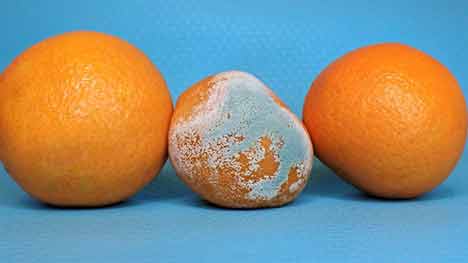
spoiled oranges

Spoiled fruit attracts absolutely crazy amounts of fruit flies!

Keep your fruit in sealed dishes

Of course, fruit flies can be attracted even to the fruit which is not starting to go bad. In order to get rid of fruit flies in your kitchen completely, it is very much recommended to keep your fruit in sealed containers. There are plenty of interesting and pretty plastic dishes which can be used for this purpose. Just make sure to get transparent ones so you can easily keep an eye on the fruit’s condition. Note that the experts from verifiedmovers.com also strongly recommend this if you’re moving and planning to take some of your food with you. Fruit can easily get damaged during a move, not to mention get exposed to all sorts of insects. You would be guaranteed to take a ton of fruit flies into your home if you treat this process carelessly. Of course, it is better to just not take food with you during a move.

Just keep your kitchen clean

A very good way to discourage the presence of fruit flies is to just keep your kitchen spick and span. Any sort of leftovers, especially sweet ones or even breadcrumbs, can attract fruit flies if they lack more appealing targets. You especially need to carefully and quickly deal with any spills involving juice or alcohol. It is best to take care of them immediately since it is easy to forget they had happened if they’re minor and invite disaster in the form of a fruit fly swarm. It is equally important to regularly take out trash and never let it start to get smelly. Note that if you have issues with sewer exhaust getting into your home, it is best to immediately contact a reliable plumber. This problem can be fixed, and the smell can also attract fruit flies.

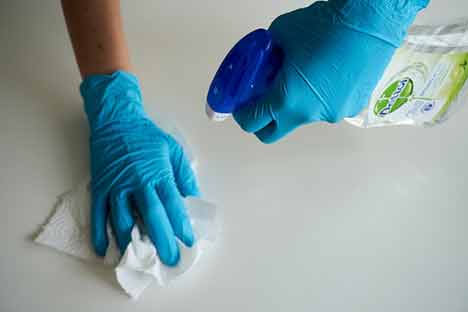
cleaning kitchen

Cleaning is a surprisingly good way to get rid of all kinds of undesirable insects in your home.

Get rid of fruit flies in your kitchen with specialized products

Of course, if you are already swarmed by fruit flies and just want to decimate their population, there is nothing wrong with using store-bought products made for that exact purpose. There are plenty of very effective chemicals which can quickly kill off any fruit flies in your home. Unfortunately, most of them are rather toxic for humans too. This means that you want to either carefully follow instructions or do the same time you would if looking to move: Look up top movers in Chicago and rely on experts for this. Sometimes, calling an exterminator is preferable to trying to wing it on your own.

Try making a cunning trap

You may be surprised by how easy it is to get rid of fruit flies in your kitchen using homemade traps. In fact, the most straightforward and most recommended fruit fly trap requires just apple cider vinegar and plastic wrap. Well, and a rubber band. All you need to do is pour the sweet cider into a container, cover it with plastic wrap that you’ve poked a few very small holes in, and secure it in place with a rubber band. The flies will be attracted by the scent and squirm their way in, then either get drowned or get stuck. You can catch practically all the fruit flies buzzing around your kitchen this way. And there are also a ton of other traps you can try your hand at making. Just look them up online, and you’ll be all set to go! Of course, you can buy a pre-made trap too.

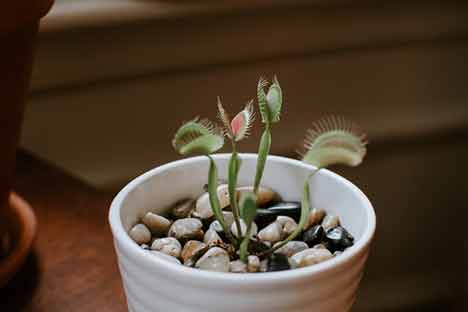
A Venus flytrap, a way to get rid of fruit flies in your kitchen

You can even raise a tiny little helpful plant to get rid of fruit flies in your kitchen

How often do I need to act?

One of the most frequent questions posed by people trying to get rid of fruit flies is: how quickly do they come back? Well, the depressing news is that fruit flies only take around twenty-four hours to hatch. Once you experience your first infestation, you will go through more frustrating than trying to figure out sewer backup causes and fixes on your own. So, it can seem like a bit of an uphill battle.

Final words

Learning how to get rid of fruit flies in your kitchen may seem a bit frustrating. And the process itself is infuriating. Still, you may be relieved to know that it is possible to eradicate them all! By following the advice we have laid out, you will eliminate their breeding grounds. You will stop attracting new fruit flies to your home. And you will even have reliable means of getting rid of the adult fruit flies. All you’ll need is a bit of time and patience.

Reasons Why Your Toilet Keeps Clogging

Reasons Why Your Toilet Keeps Clogging

The bathroom is a high-traffic area in any establishment. If there are issues with your bathroom plumbing system, it can affect the whole functionality and comfort of the room. 

A toilet isn’t just an amenity; it’s a necessity. When the bathroom is experiencing problems, it’s essential to find the cause and repair it as quickly as possible. If no amount of flushing clears the issue, then there might be a more significant issue. It’s also possible that your routine is interfering with the functionality of your toilet.  

A recurring toilet issue may be caused by flushing foreign objects, the toilet, or the plumbing system. If you have chronic problems with your toilet, it may be due to one of the following issues:  

Older Low Flow Toilets   

Many older products do not perform as well in modern times. To address this need, manufacturing companies continue to innovate by producing new designs or adding features to their existing lineup. Whether designing a new high-efficiency toilet or adding new features to roof hatches, the manufacturing world continues to adapt to the changing needs of the modern world. 

If your building still has early model low-flow toilets, this may be the problem. Older low-flow toilets do not have enough pressure to push through the trap and drain. Weak flushing pressure can leave some material behind, which causes clogs. Sometimes, you need to fully open the supply valve so that there is enough water in the toilet tank, and the pressure can then clear the bowl. Check for leaks in the waterline and cracks in the fill valve and replace these if you notice they are worn. 

 To fix this, replacing your old low-flow toilet with a new model with high flush pressure is a sure-fire way to eliminate constant clogs. In the meantime, decrease the amount of toilet paper that’s flushed. 

Flushing Non-Flushable Items  

Using the toilet to dispose of non-flushable items is also a leading cause of clogs. You should never flush baby wipes, cotton balls, diapers, or other hygiene products down the toilet. Otherwise, drain clogs will form, and you will need to call on a local plumber to deal with the situation. 

Excessive Use of Toilet Paper

Although it is safe to flush away toilet paper, using too much will clog the drain. Excess toilet paper or some two or three-ply varieties won’t dissolve and will stick in the pipes.  

Clogged Sewer Line  

In some cases, there is no issue with your plumbing fixtures or individual drain lines; instead, the problem is with the main sewer line. Clogs in the sewer line are a hassle because they can impact the drainage and plumbing system’s ability to move waste, causing problems across your entire property. When this happens, you will need to call a plumber or a professional drain cleaning service to address outside factors, such as tree root penetrations, sewer line infiltrations, or breaks in the sewer line that needs repair.

 By following these simple suggestions, you can keep your toilets and plumbing systems in good working order, so you don’t have to keep calling your plumber for repairs.  

Sewer Back Up Causes and Quick Fixes

Sewer Back Up Causes and Quick Fixes

The sewer system is necessary for urban infrastructure because it helps maintain a healthy and safe environment. Carrying away wastewater helps keep the environment secure from flooding and helps stop the spread of water-borne diseases. Therefore, it could be troublesome if a sewer backup is in your home.   

The sewage system is a vital component of your commercial building since it is responsible for adequately disposing of wastewater away from the property. By strategically discarding waste, it is crucial to keep it well-maintained to avoid issues affecting its functionality. 

Although the primary function of a sewer is to circulate wastewater, a commercial system is complex and requires maintenance and professional services. Installing plastic access doors and panels will allow convenient access to these critical fixtures whenever there is a need for repairs and maintenance. 

But what are the common causes of backed-up sewers, and what can we do to fix and prevent it from happening again? Keep on reading to find out more!  

Cause #1 Clogs or Blockages  

Does your sink drain water slowly? Are there unfamiliar gurgling noises when you flush the toilet? These common signs could indicate clogged drains. Clogs mainly develop over time and are a product of a blockage that restricts the water flow from your drainpipes, impacting the plumbing throughout your entire home or establishment.   

Clogged drains can affect multiple fixtures such as sinks, toilets, showers, bathtubs, and sprinkler systems. Raw sewage could travel back into your drainpipes and your plumbing fixtures from the septic tank or the main sewer lines if the clogs become severe. The situation can get messy, and you would want to contact a plumber right away for professional hydro jetting service.

Drain clogs are usually a long process of material buildup in your drains. Here are some of the common materials that can clog your pipes: 

  • Hair  
  • Solidified grease  
  • Baby wipes and feminine hygiene products  
  • Extra-thick toilet paper, facial tissues, towels, and other wiping products.   
  • Dental floss and cotton swabs  
  • Products labeled non-flushable 

You can place a drain strainer in your bathroom drains or sinks to prevent materials from falling into your drainpipes to prevent clogs from occurring. Also, make sure to dispose of hygienic products properly and, as much as possible, minimize the amount of toilet paper that you flush down your toilet.  

Cause #2 Tree Roots  

Tree root invasion happens when trees roots penetrate your sewage lines, growing through your plumbing pipes or crawling around and crushing the lines, searching for the water that flows inside.  

The tree root invasion process is usually slow, but it could speed up if your lines are in bad condition, with holes or cracks that conveniently allow the roots to enter the drain. 

To prevent yourself from dealing with this situation, you should estimate the suitable area if you’re planning to plant a tree within your property. It will vary depending on the type of plant and its growth rate. Ensure that the site you choose will not interfere with your plumbing pipes.  

Cause #3 Main Sewer Line Blockage 

A blockage in your sewer system usually occurs in the main sewer line owned and maintained by your city. The sudden backup caused by a clog is similar to what you experience during a household blockage. It can also be due to insufficient design capacity if your area encounters serious growth.  

The problem becomes prominent if a community has difficulties with the sewers after heavy rainfall. The main sewer blockage will continuously affect your plumbing in the entire house or establishment, rather than affecting just one drain.   

To decrease the damage, once there is a block in your main sewer line, shut off all water supplies in your home or establishment and shield drain openings with material that can absorb the liquid.  

Final Thoughts 

Although these valuable tips are practical and helpful, you should immediately contact a professional sewer line cleaning service if nothing changes. There could potentially be a more severe cause for the blockage, which would require a possible sewer line repair or replacement.