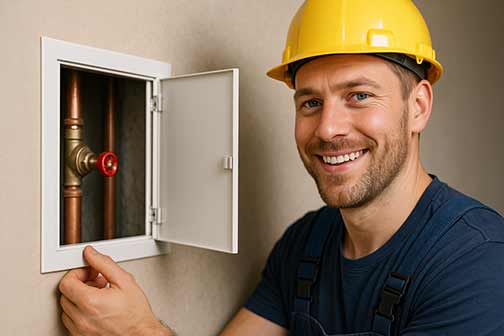
Many systems—like plumbing, electrical, and HVAC—are hidden behind walls, ceilings, and floors when building a new property. While this helps keep everything neat, it can also make it hard to reach important parts of the plumbing system when they need service or inspection.
This makes plumbing access doors an important consideration in the design phase.
They provide easy entry to plumbing components like shut-off valves and cleanouts. When need arises, plumbing contractors can reach these systems easily for repairs or maintenance.
Easy access also has several upsides for general contractors and building owners alike.
Top 6 Benefits of Plumbing Access Doors
Here’s why every new building needs quality plumbing access doors.
1. Enables Faster Inspection and Maintenance
Think about all the pipes, valves, and fittings hidden behind walls and ceilings in a new building. Without a plan for getting to them, checking or fixing anything later becomes a destructive mess.
Access doors save time and prevent contractors from having to rip apart brand-new walls. For plumbers, it means less hassle and more focus on doing the job right.
Installing them in key spots, such as along main water supply lines, near water heaters, or main shut-offs, allows inspectors to do their job faster. This protects the building’s new finishes and shows the contractor’s professionalism.
3. Saves Time and Labor Costs
Time is invaluable in any new construction; delays can impact budgets and schedules. Plumbing access doors help speed things up during the initial setup and any future fixes.
During installation, plumbers can reach connections, test systems, and sort out any issues without guesswork.
Down the road, if there’s ever a leak or a broken part, an access door turns a potentially huge, messy repair into a simple service call. This smart planning saves future owners money and a lot of headaches, proving the quality of the original installation.
With easy access, property owners are more inclined to perform regular checks. They can catch problems early, preventing expensive replacements later.
4. Keeps Projects on Track
A tidy worksite is a productive worksite. Having plumbing access doors means clear spots for service, which helps with planning and keeping things organized.
All the benefits mentioned earlier, less damage, quicker work, easier inspections, add up to keeping new construction projects on schedule.
Delays from unexpected access problems can throw off an entire project. Contractors reduce these risks by using plumbing access doors, leading to smoother projects and hitting deadlines.
5. Maintains a Clean Professional Look
Today’s buildings often feature clean, modern looks and high-quality finishes. The good news is, most plumbing access doors have evolved to blend right in.
They come in many materials, sizes, and finishes, including ones you can paint or tile over. So these panels practically disappear into the wall or ceiling, whether tiled or made from stonework.
This means contractors don’t have to choose between good looks and practical function. They can maintain the building’s design while ensuring easy, efficient access to plumbing.
6. Builds Professional Reputation and Trust
For all contractors, the goal is a happy client. Including plumbing access doors earlier on shows attention to detail and long-term thinking. It shows consideration, not just for the installation of plumbing pipes, but also for maintenance.
When building owners know their plumbing systems are easy to get to, it builds trust and peace of mind. This attention to detail improves how clients see your work, leading to good reviews and a solid reputation in the industry.
Choosing the Right Plumbing Access Door
Selecting the right access doors and panels isn’t only about functionality. Factors like durability, aesthetics, and meeting specific building requirements also come into play.
Here are the key factors plumbing and general contractors should consider:
Material
The environment where the access door goes plays a big role in material choice.
- Metal Access Doors: These are typically made from steel and aluminum and are suitable for areas requiring higher durability and security. Steel is robust, while aluminum offers corrosion resistance, making it ideal for certain commercial applications. Many metal doors come pre-primed, ready for painting to match the surrounding wall.
- Gypsum/Drywall Inlay: These doors accept a piece of drywall directly into their panel, allowing them to become virtually invisible once taped, mudded, and painted to match the surrounding wall.
- Plastic Panels: Lightweight, cost-effective, and moisture-resistant, these are ideal for general-purpose use in low-traffic areas, like residential bathrooms or utility closets. They’re easy to install and often paintable.
- Specialty Materials: Some projects might call for specific needs, like stainless steel for highly corrosive environments (e.g., certain industrial kitchens or labs).
Size and Location
Before installing, consider planning for future access. What’s behind the door? Is it a single shut-off valve, a complex manifold, a mixing valve for a shower, or a drain cleanout?
The components’ size will dictate the access door’s minimum clearance. Always opt for a size that allows comfortable working space, not just barely enough to see.
Strategic placement also matters. Work with your team (including the architect and MEP engineers) to identify important access points early in the design phase. Think about areas prone to future maintenance or inspection, such as:
- Above ceiling-mounted cleanouts
- Water heater shut-off valves and expansion tanks
- Pump systems or backflow preventers
- Shower and tub mixing valves
- Wall-mounted toilets for access to carrier systems
Fire Rating and Building Codes
Fire-rated doors are non-negotiable for fire-rated walls and ceilings. Building codes often require fire-rated access doors in specific wall or ceiling assemblies (e.g., corridors, stairwells, or walls separating different fire compartments).
Fire-rated access doors come with specific hour ratings (e.g., 1-hour, 2-hour) that match the fire rating of the wall or ceiling they’re installed in.
Always ensure fire-rated doors are certified by recognized testing agencies (like UL). Follow the manufacturer’s guide during installation to maintain the integrity of the fire barrier.
Aesthetic Integration
While functionality is primary, a well-chosen access door should also look good. Aesthetic considerations include paintable surfaces, recessed doors that can hold tile, masonry, ceramic, etc., and doors with flush mount designs.
Security and Locking Mechanisms
The access door locking mechanism can be essential depending on the location’s security needs. Here are the features to look for:
- Latches: Simple latches are fine for residential use where general access is acceptable.
- Screwdriver Cams/Knobs: These offer a basic level of security, requiring a tool or specific knob.
- Keyed Locks: They provide advanced security for commercial buildings, multi-family units, or areas with sensitive equipment, restricting access to authorized personnel only.
Wrapping It Up
Including plumbing access doors in new construction projects offers practical benefits. They make plumbing work easier, help meet code requirements, and reduce future maintenance problems.
For plumbing contractors, these access solutions streamline operations, reduce potential liabilities, and enhance their reputation. For general contractors, they represent a commitment to building durable structures that are practical and easy to maintain for years to come.