Are you looking for ways to make your home more energy-efficient and cut your monthly energy bill? Do you want to do this without needing to make huge sacrifices? Is it possible to make your home more energy-efficient without making major lifestyle changes?
The answer is YES. But to get that outcome, you must employ the right strategies. Minor changes to how you use your home appliances and plumbing system can help. However, the impact of these small actions is tiny compared to the work you have to do to get the results.
If you are serious about energy efficiency in your home, what you need is a clear understanding of how home appliances affect your energy bill, says Keyrenter Premier team. Appliances, especially older ones, can use up more energy than they need to. These inefficiencies add up to hundreds of dollars every year.
This is why it makes sense, when trying to cut your home’s energy consumption, to start the process by taking a closer look at your home appliances. Your number one priority should be to replace the old energy-guzzling appliances with newer energy-efficient models.
The first appliance you want to replace is the storage water heater. Storage water heaters are the most common type of water heater found in homes. They come with a large tank that is used to store heated water until the water is needed inside the home.
The trouble with storage water heaters
Storage water heaters are a bad choice if you want an energy-efficient home. The number one issue with storage water heaters, as far as energy efficiency is concerned, is standby heat loss. This problem stems from how storage water heaters are designed to work.
These water heaters come with tanks that let them hold large volumes of water at all times, and the water must be kept at the preset temperature throughout the day. The problem is the heated water inside the tank is always losing temperature as heat escapes through the tank’s walls.
To maintain the temperature of the already-heated water, it must be reheated nonstop all day long. This happens even when no hot water is being used inside the home, with the result that at every moment, there is a constant flow of heat from your water heater tank into the surroundings.
At the same time, your water heater needs a steady flow of electricity or gas to help it maintain the temperature of the water inside the tank. This is wasted energy that can have a huge impact on your home’s energy bills. Thankfully, there is an alternative: tankless water heaters.
Tankless water heaters and how they can help you save money
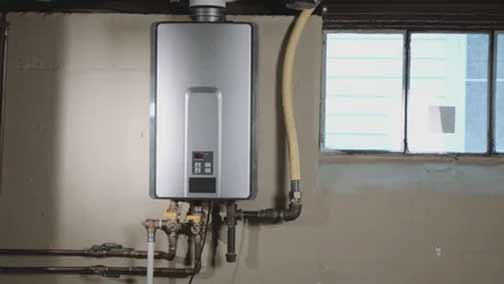
Because they have what is known as an “on-demand heating system,” tankless water heaters let you save money. They heat water only when you need it. They do not need to hold large volumes of water in storage or constantly reheat water in anticipation of when it will be needed.
This eliminates standby heat loss along with a host of other issues. The only energy used by a tankless water heater is the energy used to heat the water. Also, there is no excess hot water because the water heater heats just the right amount of hot water for the task.
How much energy can you save by installing a tankless water heater?
Switching to a tankless water heater can result in energy savings of up to 30%. Assuming that your family spends an average of $700 a year on water heating, installing a tankless water heater will let you shave $210 off that annual energy bill, bringing your energy costs to $490.
How much money a tankless water heater saves you depends on the size of your family and your home’s water demand. Large families that use a lot of water will see more substantial savings, and these savings will last throughout the lifespan of the tankless water heater.
In addition to saving money, there are other reasons to switch to tankless water:
- Longer life span
Tankless water heaters last longer than traditional water heaters because they are not susceptible to many of the problems that plague storage water heaters. While a hot water tank lasts 10-15 years, a tankless water heater can easily last over 20 years.
- Saves space
Storage water heaters are bulky, and there are few places in your home where you can install them. It is not so with tankless water heaters. Because of their size, tankless water heaters are more versatile; you can install them almost anywhere inside your home.
- Environmentally friendly
If you want to reduce your home’s environmental footprint, a tankless water heater will help you achieve that. Their minimal energy requirement means they are not a burden to nature.
Finally, before replacing your storage water heater, remember that tankless water heaters come in different sizes. To ensure that the tankless water heater is able to meet your home’s water demands, make sure to have a plumber estimate your home’s needs before buying a tankless water heater.