Tag Archives: sewer line repair

5 Ways to Handle a Broken Sewer Line

5 Ways to Handle a Broken Sewer Line

The sewer line that runs beneath the ground in your home is the vital connection between your home’s plumbing system and the city’s main sewer line in the street, says State Property Management LLC. This pipe transports all the wastewater from your home into the municipal wastewater management system.

Sewer pipes are tough enough to withstand pressure and the other forces underground pipes are subject to. They can work for many years without any signs of trouble. But this is not to say that the sewer line or pipe in your home cannot get broken because they can.

Several things can break your home’s sewer line. Five of the most common ones are:

Soil movements

The soil surrounding the underground pipe may shift. This most common form of soil movement is called settling. When the soil around the pipe settles, it creates a dip along the line. Over time, the buildup can occur in this downward slope, leading the pipe to eventually break.

Poor installation

If the pipe is not installed with the proper downward slope, the possibility of clogs and blockages becomes higher. Sewer pipes with an inaccurate downward slope will ultimately break. Substandard piping materials will also lead to the failure of the sewer line.

Damage by tree roots

If there are trees or shrubs in the vicinity of the line, their roots can endanger the sewer pipes. Tree roots may penetrate sewer pipes in a bid to access the nutrient-rich water inside them. If this happens, the pipe will not only break but will be blocked by plant roots.

Aging pipes

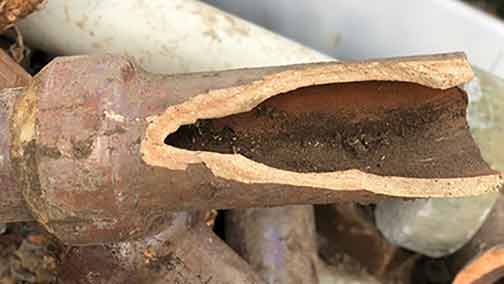
Pipes become more predisposed to damage with age. This is the accumulated result of years of wear and tear. Some kinds of pipe materials such as metal pipes are more prone to damage than others. Old sewer lines will leak and clog more often than newer ones.

Abusing the sewer line

Homeowners often assume the sewer line is capable of handling anything they throw at it. As a result, they dump grease, fats, oils, and other materials into the line. Anything other than human waste and toilet paper inside your sewer lines can result in the pipes breaking.

How can you tell if your sewer line is broken and what should you do to solve the problem?

Common signs of a damaged sewer line include:

  • The odor of sewer from the drain or around the yard.
  • Lush green areas in the yard, distinct from other parts of the yard.
  • Puddles of water or soft spots in the yard that are not caused by rain or irrigation.

If you notice these problems in your home, you may suspect a crack in your sewer line. What can you do if the sewer pipe is broken?
sewer line repair chicago

Having Your Sewer Line Repaired by a Professional Plumbing Company is Your Best Bet

How to handle a broken sewer pipe

A broken sewer pipe will not only interfere with your use of the home’s plumbing, but it can also endanger the health of your family. If left unattended, the damage will become more extensive and more costly to repair. Eventually, it can even compromise the city’s sewer lines.

Here are ways to handle a broken sewer line:

Locate the damaged pipe

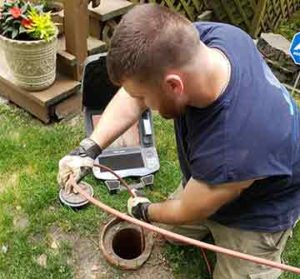
Pinpointing the location of the damaged pipe makes it easier to assess the damage and determine the best way to solve the problem. If the pipe is in the crawlspace or basement, finding the damaged section is easier. Otherwise, you will need a professional plumber to conduct a video camera inspection of the sewer line.

Evaluate the damage

The camera inspection will tell you the extent of the damage. If you are lucky, and a small section of the sewer line is damaged and the damaged portion is within easy reach. The evaluation will also identify the root cause of the pipe damage and recommend the best way to repair or replace the sewer line.

Repair or replace the sewer line

Depending on the cause of the problem and how far it has gone, you have two courses of action open to you. On one hand, you may only have to repair the damaged section of the pipe. On the other hand, you may need to replace your entire sewer line.

Fix the pipe

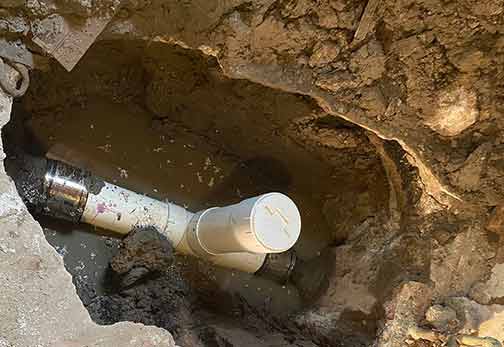
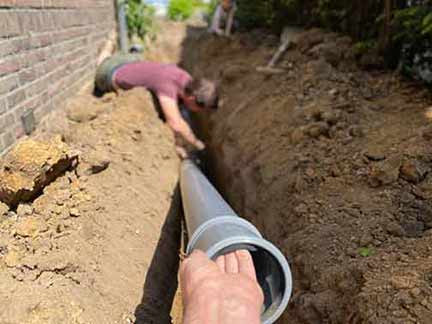
To repair the damaged pipe, you have two options. The first method involves excavation: digging a trench in your yard to reach, retrieve, and replace the damaged pipe. This method is invasive, time-consuming, and expensive. You will also have to fix your damaged landscaping afterward.

The second option is a trenchless method that does not involve excavation. Instead of digging up your lawn, the section of the damaged pipe is repaired by relining it. This method is quick and effective. It is the recommended fix for your broken sewer line.

Replace the sewer line

This is the final and costliest option. This solution should only be applied if it is not possible to fix the broken line. Most times you will only need to replace an entire sewer line if the pipes are old and deteriorating or there have been significant shifts in the soil surrounding the pipes.
Is Your Main Sewer Line in Need of Repair?

Is Your Main Sewer Line in Need of Repair

Your sewer system is a very essential component of your home and an everyday requirement of life. It is essential to the operation of your plumbing. As such, a damaged or clogged sewage line is a very concerning plumbing problem that must be addressed quickly. Sewer line repair is hard labor. Therefore, it is very essential to get professional assistance immediately rather than doing it yourself. Get your drainage system tested and serviced regularly to avoid expensive repairs and sewage line removal. It also helps if you know how to spot a problem head. That is why we have set out a handy guide on whether you have a main sewer line that should be repaired.

Is your main sewer line in need of repair – Let’s find out

Having a slow draining water line or clogged pipe is common. Many homeowners struggle to distinguish between times when you can fix a small problem yourself without calling for professional help and when there is obvious evidence that a serious problem is fermenting. While no article can possibly discuss all plumbing matters, the following are signs your main sewer line needs fixing. You don’t wish to wait and give yourself an even bigger issue in the future. Calling an emergency plumber isn’t a nice experience.

woman checking water

If you’re wondering if your main sewer line is in need of repair, then you should start looking for the warning signs.

The smell is the indicator

Homeowners needn’t be licensed plumbers to recognize when things are fishy with their main sewer line. If you smell sewage gas anyplace in your house or nearby, it might indicate a severe problem with your sewer system. Healthy sewer lines ventilate gas through roof outlets while the liquids follow a path downwards. However, if a smell appears in your home, there must be a hole or a leak somewhere. 

What is sewage gas composed of, and why is it hazardous?

Sewage gas is a complex combination of airborne chemicals from rotting household trash and biological waste. The noticeable odor of most sewage gas is caused by sulfur dioxide and methane. Everyone who smells the fumes of sewage gas in their house should look for plumbing help, partly due to the potentially toxic gasses and the bad smell. 

Sewage gas is something to look into 

 Suppose sewage gas is left unmanaged in significant amounts within the residence. In that case, there is a risk of fire or explosion because decomposing biological matter creates various forms of highly combustible gas. Of course, it’s a severe issue. However, it’s not as serious as to require contacting a moving company to remove you from the house. Although according to Best Long Distance Movers, it’s not uncommon for families to move out when they have plumbing issues. Still, you needn’t relocate just yet. You can fix the problem; it doesn’t need to be that serious. 

Your toilet bowl water level varies

Your toilet bowl may be filled one day and empty the next. It’s not only an oddity; it’s a warning sign of a problem. It might indicate a blockage in your sewer system, which could lead to a backup. Living with bad indoor plumbing can be irritating, and it’s even worse to wonder whether you can rely on your plumbing. If you have issues with your sewer line that give you daily troubles, it may even be time for you to take more drastic measures. One of them would be to ask around for a camera inspection of your sewer line. The problem may be more serious than you think. 

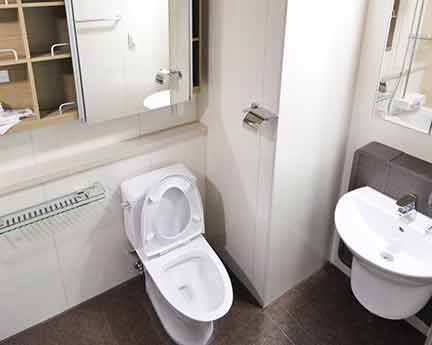
a toilet

There are steps you can take to prevent plumbing issues. However, if they already exist, you should get to work and try to fix them as soon as possible.

Causing trouble at the most inconvenient time is the worst part

Sudden leakages when you don’t expect them, and those loud gurgling sounds keeping you awake long at night can be a real annoyance. It’s not necessarily something that can cause a big issue. However, you can’t know that for sure. Not unless you contact plumbers and hire sewer services. Then you’ll know. Having a problematic sewer line can leave you restless.

A slow drain might also indicate a blockage, which could eventually lead to a clog and sewage overflow. If your bathtub, sink, or toilet is draining slowly, attempt to resolve the problem as soon as possible. If you have poor drainage in all your drains, you are undoubtedly dealing with a more significant issue than a simple blockage.

a roll of toilet paper

No need to worry, every problem has a solution. However, it’s always better to prevent the problem if you can.

It’s better to be safe than sorry

Generally speaking, it’s always better to prevent a problem than try to solve it. People tend to neglect the importance of having a sound plumbing system in their homes, especially when looking for a new house. They seek good location, spacious rooms and a wide variety of other important things. However, a functional sewer line can be just as important. For example, it can be hard to find a home that has it all in large cities like Chicago. If planning on buying here, there are things you should prioritize, especially if you are house-hunting long-distance. Buying a house is a significant investment. Trust us; you need to have good plumbing. Try to find a good plumber to camera inspect the sewer pipes before you decide to buy real estate!

If you can see the warning signs, try to find the solution quickly

If you are still unsure whether your main sewer line is in need of repair, perform all the checks and try to find someone to fix all those minor issues that are causing problems. Furthermore, it would be best to look for the warning signs before they become apparent. And once you do notice them, do all in your power to minimize the damage.

Why Hydro Jetting is Important Before a Sewer Line Repair

The sewer lines in your home are designed to last a long time. It is not uncommon to find fully functional sewer lines that are twenty years old and over. This is because sewer systems, due to the type of content that passes through them, are designed to be sturdy.

Why Hydro-Jetting is Important Before a Sewer Line Repair

However, even the most well built sewer line will eventually have problems. These issues can come from several sources. The sewer line in your home can get damaged because of misuse, warns Jilsa Management. Or it can lose some of its function through wear and tear or a natural accident.

Regardless of the origin of the issues in your sewer lines, you want to solve the problem and make sure it does not return. To get this result, you should know the best practice for fixing a damaged sewer line; the sewer line repair should be preceded by hydro-jetting.

What is hydro-jetting? What does it do? And why is hydro-jetting important during sewer line repair?

What Is hydro-jetting?

Hydro-jetting is a drain cleaning method that uses high-pressure water to blast away clogs and blockages inside the sewer lines. Water is delivered at a pressure of up to 6000 PSI, which is enough force to remove tree roots, sludge, and other materials lodged inside the pipes.

The process of hydro-jetting is as follows:

  1. As a first step, the plumber conducts a sewer camera inspection by installing a small camera on one end of a cable and inserting it into the sewer line.

  2. The camera travels through the sewer line and sends back images of the interior of the pipes to a computer screen monitored by the plumber.

  3. This initial process helps the plumber pinpoint the location of the problem and determine its severity. The inspection also tells the plumber if it is safe to go on with the next step.

  4. If it is safe to proceed – that is, there is no possibility of the sewer line collapsing – the actual hydro-jetting process can now begin.

  5. Hydro-jetting equipment consists of a large tank filled with water, a specialized high-pressure water hose, a super-strong nozzle, and equipment for pushing the water through the nozzle at high pressure.

  6. The high-pressure water hose, with the nozzle at its head, is inserted into the sewer line until it reaches the point of the blockage.

  7. The clog is blasted with just enough water pressure to break up the obstruction inside the pipe. Hydro-jetting can deliver enough water pressure to shear away plant roots.

  8. The dislodged material is washed down the pipe and into the city’s main sewer lines.

  9. Finally, another sewer camera inspection is done to view the results of the process and determine the condition of the pipes.

Hydro-jetting lets your plumber clear blockages inside the pipes without digging up the yard or exposing your pipes to the risk of damage. Hydro-jetting can be used to effectively remove the following kinds of blockage from a sewer line.

  • Sludge or grease, fat, and oil build: When you flush grease, fats, and oil into the drain, these materials cling to the sides of the pipes and trap dirt. A hydro jet will remove buildup.

  • Intruding tree roots:  In a bid to find water and nutrients, the roots of nearby shrubs or trees can find their way into the sewer line. Hydro-jetting will solve this problem.

  • Pipe scale: Dissolved minerals in hard water are deposited on the interior surface of pipes, where they reduce the diameter of the pipe. Hydro-jetting will remove pipe scale.

  • Non-flushable objects: A range of items we use in the home find their way into the sewer line. Hydro-jetting can blast away these troublesome items.

Hydro-jetting is a powerful yet gentle method for cleaning drains. But why is it necessary to carry out this procedure before a sewer line repair service?

hydro jetting a sewer line

Why hydro-jetting is done before sewer line repair

  • To detect problems: Hydro-jetting the sewer line washes away the layers of filth inside the sewer line and exposes the actual surface of the pipes. This allows the plumber to see the true extent of the damage to the sewer line.

  • Improves the accuracy of repairs: By combining sewer camera inspection with hydro-jetting, the plumber can pinpoint the location of a problem. Hydro-jetting injects a high level of accuracy into sewer repair. It ensures the finished job is well done and long- lasting.

  • Reduce costs: There are other ways to clean a sewer line before it is repaired, but hydro-jetting is the quickest and most-effective method. Other methods will cost more in labor and time.

Improves sanitation and indoor air quality: Hydro-jetting the sewer before repairing helps the plumber do a more complete job. Hydro-jetting gets rid of the bacteria inside the drain that cause bad odors. Unless the sewer line is cleaned with hydro jetting, the bacteria inside them are not easily removed.

Who Replaces a Damaged Sewer Line: the Homeowner or the City?

Who is responsible for managing – repairing and replacing – the sewer lines on your property when they get damaged? Most property owners never ask this question until they have a sewer line emergency and are looking at thousands of dollars in sewer line replacement costs.

Who Replaces a Damaged Sewer Line

Sewer lines are a critical part of the underlying structures that make a modern home functional. Even though nobody likes to think of sewer lines because of the foul-smelling liquids they carry, you must know what your sewer line responsibilities are as a homeowner.

The sewer line system is jointly owned and managed by homeowners and the city. Each party has the specific parts of the sewer line that they manage. For homeowners, their responsibilities include the upper and lateral sewer lines. The city is responsible for the main sewer lines.

Understanding the structure of the sewer system

Water and waste from the various drains and water-using appliances in your home all eventually find their way to the drain lines that lead from your home to the main sewer line. But to get to this final destination, waste, and water from your home must go through three sections of drain lines, namely:

The upper lateral sewer line 

This is the section of pipe that runs from your home and all the way to your property line or the sidewalk. From that point, it attaches to the lower lateral line. The upper lateral line is completely within the boundaries of your property and maintaining it is your sole responsibility.

The lower lateral sewer line

The lower lateral sewer line or private sewer line, (as it is sometimes called) starts at your property line and connects to the city’s main sewer line. It connects to the upper lateral line on one end and the city’s main sewer line on the other end. The lower lateral line is also the homeowner’s responsibility.

The city’s main sewer line

The lower lateral line connects to and empties all its content into the city’s main sewer line. The city’s main sewer line runs under the public street and goes all the way to the city’s sewers. This pipe is unusually large, compared to the other two sections, since it collects and transports all the local sewage and wastewater to the sewers. The city’s main sewer line is the city’s responsibility.

Landlord’s vs the city’s responsibility for damaged sewer line replacement

From the above, it would appear as if responsibility for the maintenance of each section of the sewer system is neatly divided between the city and the property owner, without overlaps. But this is not completely true. Although the city is never responsible for the section that is under your jurisdiction, you may be liable for damage to the city’s main sewer line.

If the drain line from your home gets clogged and somehow causes problems in the city’s main sewer lines, you are responsible for the damage. The city, however, is never responsible for any damage to the sections of the sewer system under your responsibility. As far as the sewer line from your home is concerned, the city’s only responsibility is to connect your drain to the city’s lines.

Preventative sewer line maintenance

Based on this and given the fact that sewer line repairs can be very expensive, it makes sense to take good care of your sewer lines. It is a lot cheaper to implement a program of proactive sewer line maintenance than to try to solve problems retroactively. To get you started on preventative sewer line maintenance, here are some of the critical things to pay attention to.

Know the forbidden items

Contrary to what you think, your sewer lines cannot handle everything you throw at them. Avoid flushing oil, grease, coffee grinds, eggshells, starchy foods (like rice and potato), paint, so-called flushable items, and hard objects down the drain.

Cut tree roots

Tree roots can easily rupture or dislodge your sewer lines. Tree roots penetrating sewer lines in search of water is one of the most common causes of sewer line clogs. Tree roots may also cause sewer line blockages by going over or under the pipes and shifting them out of place.

Update your pipes

The cost of replacing old sewer lines before they create problems is not the same as the cost of replacing them after they have caused problems. The difference in cost is often due to the additional damage that occurs when you let your outdated drain pipes fail before you change them.

Have your sewer lines camera inspected annually

sewer-camera-inspection

Every year (or every two years at least) have a professional plumber do a thorough camera inspection of the sewer lines. These inspections do not cost a lot of money but they can save you a ton of trouble. The primary goal of these inspections is to catch problems at their early stage. Timely sewer scope inspections will detect things like improper connections that can become huge issues later.