Tag Archives: plumbing access panels

Everything You Need To Know About Functional Bathroom Design With Flush Access Doors

Functional Bathroom Design With Flush Access Doors

Sleek, minimalist designs with clean lines and uninterrupted surfaces are considered the ideal standard in modern design. But what happens when design meets the reality of plumbing maintenance and potential emergencies? 

Traditionally, the solution has been bulky, visible access panels. These have long been considered a functional necessity, which, while functional, were often unsightly. But today’s property owners want access points that do not compromise appearance. 

As such, remodeling and plumbing contractors need a more professional solution: the flush access door. This access door allows them to deliver on both aesthetics and long-term functionality.  

How Flush Access Doors Enhance Bathroom Aesthetics 

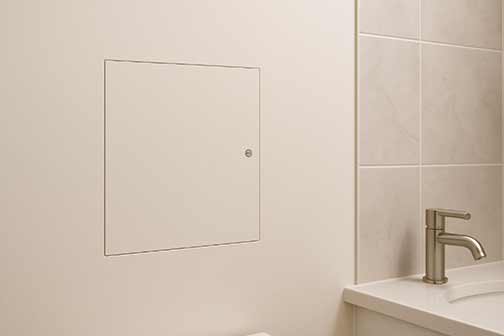
Modern property owners want a bathroom that feels like a spa—calm, clutter-free, and serene. A flush access door has features that make it virtually disappear, contributing to this design preference. 

  • Minimalistic Design and Hidden Hardware: Many flush doors sit level with the surrounding wall, have hidden hinges. Some models eliminate handles entirely. They also have minimalistic locking and latch mechanisms, like screwdriver-operated cam latches. This ensures nothing protrudes beyond the wall, except the panel, when opened.  

  • Paintable Surface: Some flush access panels are made from materials like moisture-resistant drywall and smooth metals that can be painted to blend with the surrounding wall.  

  • Recessed Panels: Certain flush door designs have recessed panels that can hold finishing material to match the surrounding wall. For bathrooms, tile-ready recessed doors are a popular choice. The door then becomes an extension of the wall with only a thin, neat gap to help identify it. 

Benefits of Flush Access Doors in Bathroom Design 

The true value of invisible access solutions shines through in their practical benefits for everyone involved in a bathroom project. 

Provides Discreet Access To Plumbing Systems  

These doors provide quick, easy, and discreet access to essential plumbing components like cleanouts, shut-off valves, and mixing valves. This makes repairs and maintenance easy for plumbers.  

Instead of searching for the source of a problem, a plumber can immediately get to work, saving valuable time, especially during an emergency. 

Saves Time and Money 

Consider a burst pipe or a leaking valve. Without a flush access door, a plumber may need to cut into a finished wall, damaging expensive tile, drywall, or wallpaper. The repair would require a drywall professional and a painter to restore the wall.  

An invisible access door eliminates this process, potentially saving hundreds of dollars in expensive repair costs and preventing significant disruption. 

Protects Against Damage 

It’s a simple, yet powerful, benefit. By having a designated, easy-to-open access point, plumbers inspect and repair without risking damage to the surrounding finished surfaces.  

Also, unlike traditional panels that can be scuffed, dented, or warped over time, flush access doors are protected by their recessed design. Their recessed design prevents  bump or damage in a high-traffic area, ensuring it maintains its pristine appearance for many years. 

This not only protects the owner’s investment but also ensures a cleaner and more efficient repair process. 

Improves Daily Life and Supports Universal Design 

Beyond emergencies, these doors offer daily advantages. Their smooth, flat surface is far easier to wipe clean than a traditional panel with protruding edges and seams that trap dirt.  

This hygienic, seamless design is also a perfect fit for universal design principles. It eliminates potential tripping hazards or obstructions for people with mobility issues. 

Increases Property Value 

A clean, uncluttered design with functional features like flush access doors can increase a property’s appeal to potential buyers. They represent a functional space, and this ultimately enhances its perceived value. 

Offers Flexibility for Future Upgrades 

Plumbers can easily access and replace or upgrade components without having to dismantle a whole system or tear down a wall. This is particularly useful for things like flush valves. 

Selection and Installation of Bathroom Access Doors 

Bathrooms are constantly exposed to moisture, steam, and the risk of water leaks. As such, choosing materials and proper installation are key to preventing future problems. 

Materials  

Look for doors made from moisture-resistant materials such as steel. The best models also include gaskets that create a tight seal, preventing steam from seeping into the wall cavity and protecting against potential mold and mildew growth.  

 In particular, stainless steel is resistant to corrosion and has a non-porous surface that is easy to clean, promoting a more sanitary environment.  

This attention to detail is a proactive measure that protects a contractor’s work and their client’s investment. 

Choosing a moisture-resistant flush access panel helps plumbing contractors deliver professional finishes, preventing expensive callbacks and building their reputation. 

Size and Placement 

Functionality is key. The door’s size should be based on the components it needs to conceal. A shower mixing valve, for instance, requires enough clearance for a plumber to work comfortably.  

Place the door in a location that is easy to access but doesn’t interrupt the main focal points of the bathroom. For example, placing it behind a door or in a lower corner can make it virtually invisible but still fully functional. 

Installation Best Practices 

Proper installation brings it all together. To ensure a seamless look, securely anchor the frame to the wall studs and confirm the door panel is perfectly flush with the surface.  

This guarantees a seamless look and ensures the door can easily open and close without any issues for years to come. 

Conclusion 

The flush access door proves that smart design and functional innovation can solve a common problem. It is ideal for any modern bathroom remodel, offering a superior alternative to outdated, bulky access panels. 

Including them in plumbing projects shows a commitment to quality, aesthetics, and long-term value.  

This attention to detail sets plumbing contractors apart as professionals who understand how important it is to balance stunning design with practical, long-lasting functionality. 

How Do Access Panels Simplify Plumbing Maintenance and Repairs?

How Do Access Panels Simplify Plumbing Maintenance and Repairs

Dealing with a clogged drain or a leaky pipe is frustrating enough. But constantly ripping out walls or ceilings to solve the problem? That’s even worse. Plumbing systems can be concealed to maintain a room’s aesthetics but keeping them hidden can quickly be problematic when it’s time for service or repairs. 

Fortunately, plumbing access panels offer a simple, cost-effective, and reliable solution. These access doors and panels make plumbing maintenance and repairs quicker, cleaner, and less disruptive, benefiting contractors and property owners alike. 

What Are Access Panels and How Are They Used in Plumbing? 

Access doors and panels are prefabricated doors or hatches designed to easily reach building systems behind walls, above ceilings, and even beneath floors. 

In plumbing applications, these panels are typically installed to allow easy access to pipes, shut-off valves, clean-outs, pressure regulators, or other components that require regular inspection or repair. 

General access panels and doors can be used for various systems, such as HVAC and electrical. But plumbing access panel models often have specific features—such as corrosion resistance or airtight seals—that withstand moisture-prone environments. Some models may even include insulation for added performance. 

These panels are commonly installed beside showers and tubs, under bathroom or kitchen sinks, near water heaters, or in ceilings that house pipes. In commercial settings, they can be found in public restrooms, utility closets, or service corridors. 

Whether in a residential home or commercial building, access panels make plumbing systems reachable without the mess of demolition. 

Key Benefits for Plumbing Maintenance and Repairs 

1. Gives Direct Access to Hidden Plumbing Lines 

A plumbing access panel significantly reduces the time and effort needed to find and repair important components. 

Whether reaching for a water shut-off valve or inspecting a drain line, a well-placed access door and panel lets you do the job without damaging the walls, ceilings, or floors. This convenience makes emergency work less stressful and speeds up routine tasks like winterizing pipes or inspecting pressure regulators. 

2. Protects Property and Aesthetics 

Without access panels, many plumbing repairs require cutting through drywall, removing tiles, or tearing down ceilings, only to patch them back up later. With plumbing access doors already in place, you avoid unnecessary property damage and preserve the overall look of your space. 

Plus, most wall access panels and ceiling access doors are available in flush, recessed, or paintable designs to match any aesthetic. These features are important for luxury condos or high-end retail stores that prioritize style.  

3. Saves Time for Plumbing and General Contractors 

Time is money, especially on job sites or during emergency service calls. A plumbing access panel can help plumbers and general contractors work more efficiently, meet tight deadlines, and avoid the delays often caused by opening up and patching walls. 

This is especially beneficial in commercial or multi-unit buildings, where repeat maintenance is common and speed is critical. Whether it’s an apartment, townhouse, hotel, or office, contractor-friendly solutions like access panels help keep operations running smoothly. 

4. Adds Long-Term Convenience for Property Owners 

Plumbing systems need regular maintenance and without proper access, even small issues can become expensive problems. A plumbing access panel supports faster inspections, simpler upgrades, and cost-effective repairs. This efficiency means fewer surprises and less trouble for homeowners, landlords, and facility managers. 

Types of Plumbing Access Panels to Consider 

1. Standard Wall and Ceiling Access Panels 

These are the most common options, ideal for residential and light commercial installations. A wall access panel can be installed behind fixtures, like sinks or tubs, while a ceiling access door can help you reach overhead piping in apartment buildings or offices. 

2. Watertight and Airtight Access Panels 

Bathrooms, kitchens, laundry rooms, and basements are usually wet and humid. And if you think installing just any access door and panel is fine, then expect problems like mold growth, rust, and water damage.  

Watertight and airtight access panels can withstand these areas and prevent moisture from infiltrating behind walls.  

3. Insulated Plumbing Access Panels 

Insulation is important when installing access doors and panels outdoors or in unconditioned spaces. Insulated access panels keep condensation at bay, maintain temperature control, and help prevent pipes from freezing.  

4. Lockable or Tamper-Proof Access Panels 

Access to plumbing systems may need to be restricted in public areas or multi-tenant buildings. Lockable or tamper-proof options offer extra security and ensure only authorized personnel can open the panel. 

Selection and Installation Tips for Best Results 

To get the most value out of your plumbing access panel, consider the following best practices: 

  • Think about the size of the plumbing access panel and where you’ll install it. Make sure it’s large enough and positioned so you can reach the pipes, valves, or fixtures you need to service. 

  • Keep moisture out. In areas like kitchens and bathrooms, choose panels with proper sealing to prevent water from getting behind your walls. 

  • Match your wall material. Pick a panel designed for your specific surface. Choose drywall panels for drywall walls, tile-ready panels for tiled areas, and so on. 

  • Install during construction when possible. Adding access doors and panels during building or remodeling is much easier and cheaper than cutting into finished walls later on. 

  • Check local building codes. Some areas have specific requirements for access panels, especially in commercial buildings, so verify compliance before installation. 

To Sum It Up 

Plumbing access panels are small additions that make a big difference. They offer clean, efficient, and reliable access to plumbing systems, reducing the mess and cost of traditional maintenance methods. 

These panels simplify job planning and speed up repair timelines for local plumbers and general contractors. For property owners, they offer convenience and peace of mind. 

If you want to work smarter—not harder—adding the right plumbing access panel is a decision that pays off with every inspection, repair, or upgrade.