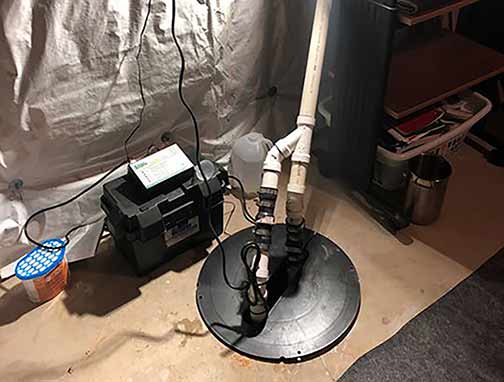
Tag Archives: does my sump pump need replacing

Sump Pump Health Check: When to Repair and When to Replace

Sump Pump Health Check

Your basement sump pump will not last forever; eventually, you must replace this vital equipment. The question is, do you know when to replace it versus when to repair it?

Vacation Los Cabos notes that one thing you don’t want to do is replace your sump pump when it can still be repaired. The other thing you don’t want is to keep trying to fix a sump pump that should be discarded. Both scenarios will take money out of your pocket unnecessarily.

This post explains how to prolong the life of your sump pump by fixing it. It will help you make the timely decision to replace your sump pump when it reaches the end of its service life. You will also learn things you should know before replacing a sump pump.

When to repair a sump pump

There are several things you should look at to determine if repairing your sump pump is the most financially sensible option. Below is a list of sump pump problems that can be fixed. If the sump pump suffers from these issues, don’t replace it; fix it.

  1. A sump pump makes strange noises

A loud humming, rattling, or banging noise is usually a sign of a damaged impeller. If the broken impeller is removed and replaced, the sump pump will be fine. Do not use your sump pump if you think the impeller is damaged.

  1. The sump pump does not power on

If the sump pump is connected to power but not working, the float switch could be stuck. Clean the pump to get rid of debris interfering with the movement of the float. If the bracket holding the float is broken, replace it.

  1. Sump pump cycles continuously

This can happen when the float switch is stuck in the ON position. It could be that the sump pump is not big enough for the water entering the basin. It could also be due to a broken check valve or a blocked discharge line.

  1. Tripped circuit

If the power supply to the sump pump stops because of a tripped circuit, you may want to check if the switch is damaged and if there are no wiring issues with your sump pump. Make sure the sump pump is connected to a GFCI outlet.

  1. Installation problems

A badly installed sump pump will malfunction. Bad installation can cause a wide range of sump pump problems. Replacing a badly installed sump pump will not solve the problems if those installation errors are repeated.

How do you know when it is time to replace your sump pump?

When to replace your sump pump

Here are the things to consider when thinking of replacing your sump pump.

  1. The age of the sump pump

The lifespan of a typical sump pump is 7 to 10 years. If your sump pump has reached or passed the end of its projected service life, it makes no sense to keep repairing it. Instead, it should be replaced.

  1. The kind of damage

Minor problems like a clogged discharge line or stuck float switch are not enough reasons to replace a sump pump. But if you have issues like a burned-out motor or a sump pump that is frequently overwhelmed, you may need to replace it.

  1. The cost of repair

The cost of fixing a broken sump pump should be no more than a small fraction of the cost of buying a new one. If the cost of fixing your sump pump is close to the price of a new sump pump, you should replace the sump pump.

  1. The sump pump is too small

If the home’s needs were not properly assessed before the sump pump was installed, your house will not be adequately protected. If your sump pump is too small, the only thing you can do is to replace it.
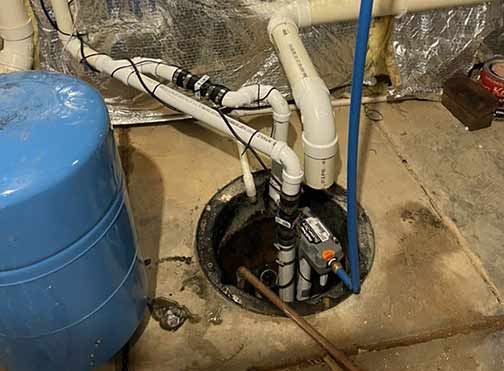
a freshly replaced sump pump
Installing a sump pump looks like an easy job until that badly-installed sump pump fails to protect your home from flooding.

Important considerations when replacing your sump pump

  1. Pump size and capacity

It is vital to have a professional plumber assess your home to determine the volume of water that is likely to flow into the sump basin. This determines the volume of the sump basin and the size and capacity of your sump pump.

  1. Discharge line length and location

Make sure the pumped water is discharged at a safe distance from your home. The ground should be properly graded to prevent backflow, and you don’t want plant, soil, or debris obstructing the opening of the discharge pipe.

  1. Think of maintenance

Ensure the different parts of the sump pump are easy to access for cleaning and maintenance. You may also want to install a sump pit cover to block debris from the sump basin.

Lastly, choose a professional installer. Installing a sump pump looks like an easy job until that badly-installed sump pump fails to protect your home from flooding. The cost of hiring a professional installer is far lower than the cost of fixing a water-damaged home. Choose wisely!
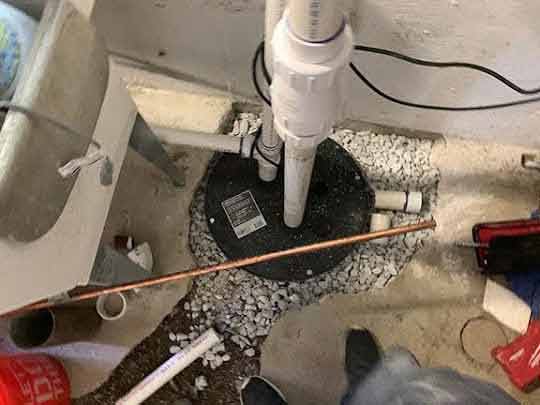
Signs You Need to Replace Your Sump Pump

Signs You Need to Replace Your Sump Pump

As a rule, sump pumps don’t get a lot of attention. They are part of the forgotten components of your home’s plumbing system. We only pay any attention to sump pumps when they stop working. In other words, most homeowners will wait until they have a flood in the basement before they realize their sump pump is no longer functioning.

That defeats the whole purpose of having a sump pump in your basement. Sump pumps are installed in the home for the unique reason that you do not want to wake up to a flooded basement. But as T-Square Properties warns, that is what you will get if the sump pump fails without your knowledge. To avoid this situation, always keep the sump pump ready.

Even if a sump pump has kept your home dry in the past, it is no reason to believe it will continue to do so into the future. Sump pumps may fail without warning. At times, you may have to replace a sump pump that is functional. That becomes necessary when the pump begins to show signs of failure, and you are afraid it might fail at the worst possible time.

How long do sump pumps last?

Sump pumps last between 7 and 10 years, depending on several factors. Some of the things that influence the performance and lifespan of a sump pump include; the frequency of usage, how long it works during each cycle, and the volume of water it displaces. Sumps pumps that see a lot of use will naturally wear out faster than those you use infrequently.

However, this is not the only factor that determines the lifespan of your sump pump. The quality of care the sump pump receives is a tremendous factor in its longevity. A sump pump that sees heavy use will outlast one you use less often if the heavily used one gets more attention than the other one. How do you know your sump pump is malfunctioning, and it is time to replace your sump pump?

There are five things you should look at to make this decision. If more than one of these problems applies to your sump pump, it is time to replace it. Even if you can fix a problematic sump pump, the cost of those repairs will often be enough to get you a new sump pump. Moreover, a sump pump you recently fixed may still fail you when you need it most.

Five signs it is time to replace your sump pump.

The sump pump is old

Although you would like your sump pump to last a decade, the truth is it might not. More sump pump failures are due to aging than from any other cause. That is because if a sump pump has worked well in the past, homeowners tend to expect it to keep working in the future. As a result, they do not pay enough attention to the sump pump until they deal with costly flood damage in their basement.

The sump pump runs constantly

Sump pumps automatically power up when the sump pit fills with water and goes off after discharging the water. You have a serious problem if your sump pump comes on but doesn’t go off. A sump pump that is running without water will overheat very fast. Sump pumps may act this way if there is a fault with the float switch, check valve, or the pump is too small for the basin.

The sump pump is clogged

Sump pumps handle a certain amount of debris in the water that flows through them. But a sump pump can be overwhelmed if there is too much sediment in the water. If this happens, the sump pump’s impeller fan blades can jam. The pump inlet and discharge line may also get clogged. Iron ochre in water will also clog the sump pump. All these interfere with the performance of your sump pump and damage it.

The sump pump works erratically

If a sump pump works for too long and then in short sporadic bursts, you have a problem. A constant eruption of activity from your sump pump means water isn’t making it to the discharge line. The pump is simply cycling the same water over and over again. A sump pump will do this if the float valve has failed, there is loose wiring, or the pump doesn’t have enough horsepower to do its job.

The sump pump is noisy 

A certain amount of noise is usual when your sump pump is working. But if the sump pump roars when it works, makes rattling noises, or you can hear the sound of metal against metal and gurgling noises from the equipment, you have a problem. Excessive noise from a sump pump could be due to a damaged impeller, malfunctioning backflow valves, or improper installation.