Garbage disposals are one of the most misunderstood appliances in homes, says Keyrenter Buxmont Group. People routinely dump all kinds of food scraps into their sink, hoping their garbage disposal will grind them. Consequently, garbage disposals are often a hugely problematic device in the kitchen.
However, most of these issues come from the wrong use and inadequate care of the appliance. If well-maintained, garbage disposals are one of the most beneficial appliances in your home. They help to prevent sewer line issues by minimizing the risk of clogs in your drainage system.
What are the common issues in garbage disposals? How should you use your garbage disposal to prevent these problems? Find the answers to these questions below. Here are five of the most common garbage disposal problems in homes, their causes, and what to do about them.
- Garbage disposal is jammed or clogged
Since its primary role is to crush food scraps into smaller bits that can easily pass through your drainage pipes, it should not be surprising that this is the most common garbage disposal problem. This issue originates mostly from the indiscriminate dumping of food scraps into the appliance.
Hard items that are not broken down by the appliance, such as large fruit seeds, bones, and shells, may lodge between the blades and prevent the free flow of water. Fats, oils, grease, and starch from a wide variety of food scraps can also stick to the blades of the appliance and clog it.
To fix this problem, turn off the unit from the circuit breaker box, remove the sink strainer, and reach into the pipe with a gloved hand or grasping tool to remove the offending material.
- Garbage disposal stinks
If your sink smells like trash, your garbage disposal is probably not grinding food scraps as efficiently as it could. The result is small pieces of food scraps left inside the unit. As the debris decays, the resulting bacterial growth will cause bad odors in your sink and pest infestation.
It’s also possible that the inside of the garbage disposal is coated with a thin layer of decaying food residue. To solve the problem, toss lime or lemon wedges into the disposal and run it for half a minute.
Pour ½ cup of baking soda and 1 cup of vinegar into the appliance, wait 5-10 minutes, and run cold water into the unit. To prevent this problem, clean the inside of your garbage disposal with a toothbrush, baking soda, and vinegar at least once a month.
- Garbage disposal makes strange noises
It is normal for the garbage disposal to make a low humming sound as it works. But if it makes a loud noise, that is not normal. Possible causes of the problem are: the blade is rubbing against a hard object within the appliance, or the blades of the unit are bent.
If there are objects stuck inside the unit, remove them by reaching into the appliance with a gloved hand or grasping tool. Remember to turn off the garbage disposal at the circuit breaker box before doing this.
Before running the appliance again, hit the reset button at the bottom of the unit. If the garbage disposal blade is bent, get a professional plumber to check the unit. The best solution might be to replace the entire unit.
- Garbage disposal is leaking
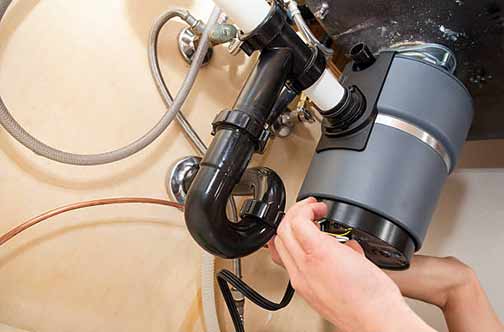
This problem is mostly the result of weak or broken seals. If the unit is leaking from the top, you may be dealing with brittle putty around the seal, a loose flange, a broken O-ring, or a worn-out rubber gasket. These problems don’t cost a lot to fix.
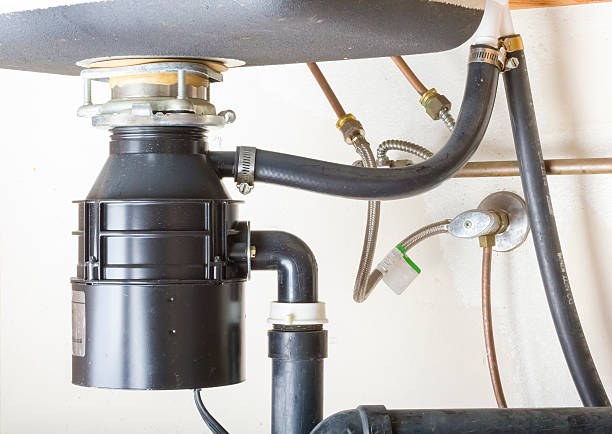
If the unit is leaking from its sides, the leak is probably from the supply line to the garbage disposal. Tightening the clamps and screws on this line should solve the problem. If the unit is leaking from the shell, you need a new appliance.
- Garbage disposal drains slowly
Sometimes the blades of a garbage disposal will become dull from years of use. If this happens, the unit will lose its ability to break down food particles efficiently, leading to food matter piling up inside the appliance. Typically, this buildup occurs on top of the blade.
However, sometimes the spinning blades of the garbage disposal will let fibrous, greasy, and other unbreakable material pass through. But they will lodge at a point below the blades, causing a clog in the system. In this case, you cannot remove the clog from inside the sink.
To sharpen the blades of your garbage disposal, put some rock salt and ice cubes in the unit and run it. Then use cold water to clean out the unit.
These are not the only garbage disposal issues that can happen in your home; these are the most common. If your garbage disposal problem is not listed here or you have tried some of the solutions in this post but the issue persists, it may be time to call in a local plumbing expert.