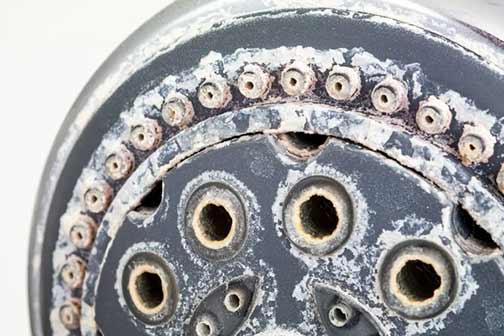
Every home experiences plumbing problems once in a while. But if your home has hard water, your plumbing problems never go away. Hard water transforms everyday tasks and activities, such as dish-washing or taking a shower, into grueling battles, explains RPM Reliance company.
What is hard water?
Hard water is when your home’s water supply contains high concentrations of dissolved minerals, mainly calcium and magnesium. Calcium and magnesium enter the water as it flows through bedrock or layers of soil rich in these minerals.
Because these dissolved minerals alter the normal behavior of water, they can affect almost everything in your home.
Effects of hard water on your home, health, and plumbing
The most notable impact of hard water is that it forces you to use more soap and detergent. Instead of foaming when you put it in water, soap reacts with hard water to form soap scum. To clean your items, you must use more soap and put in more effort.
Hard water leaves unsightly spots on items. This appears as blotches on drinking glasses, dishes, and silverware, making the items look dirty even after washing. Hard water also leaves a film of grime on tiles, shower curtains, sinks, and faucets.
The sticky residue from hard water can cause clothes to age and wear out faster. This is partly due to the caustic action of this residue and also because to clean those clothes and fabrics you must wash them harder.
Hard water can impact your hygiene. Stripping moisture from your hair and skin causes dryness and stiffness. In people with eczema, the effects of hard water can worsen their problems by causing skin irritations.
Hard water may also leave a buildup on hair follicles and the scalp. This can slow hair growth or even result in scalp problems, like dandruff. Some people will experience severe hair breakage as a result of being exposed to hard water.
Hard water has a massive impact on your home’s plumbing and household appliances. By leaving mineral deposits in water pipes, faucets, and water-using appliances, hard water exacts a heavy price on the plumbing.
These deposits clog pipes, limiting the water available for everyday use. By narrowing the pipe channels, hard water severely reduces your home’s water pressure. This creates a vicious cycle of plumbing issues in your home.
Hard water affects all water-using appliances in your home, but the impact is worse on your water heater. This is because when hard water is heated, the dissolved minerals in it are deposited inside the water heater tank, impairing its function and shortening its lifespan.
Dealing with hard water plumbing issues in your home
To stop the impact of hard water on your plumbing and appliances, you want to deal with the problem from the root. You can minimize the impact of hard water by boiling your drinking water or using cleaning aids when washing, but these solutions are not sustainable.
The best option for dealing with hard water in your home is to install a whole-house water softener. A water softening system is the most efficient way to treat hard water because it removes the hard water minerals from your water.
How does a water softener work?
The water softener is installed on your home’s main water supply line to ensure that every drop of water entering the home is treated. The system removes the calcium and magnesium in your hard water through a process known as ion exchange.
These are the components of a water softening system:
- A mineral tank with a bed of resin beads
- A control valve that regulates the amount of water flowing into the tank and your home
- A brine tank that holds a high concentration of salts to regenerate the bed of resin beads
The basic mechanism of a water softener is that hard water is passed over the resin bed to replace the hard water minerals with sodium. The direct and indirect benefits of installing this system in your home include:
- Water softeners reliably soften hard water before it reaches your plumbing fixtures and appliances. This is not a disjointed approach that tries to solve the problem at different points; you only need to install the water softener at one location.
- This effectively prevents the impact of hard water from spreading to your home’s plumbing fixtures and appliances. With a water softening system, your home doesn’t have a hard water problem.
- A good water softening system has an average lifespan of 15 years (up to 20 years if you buy a quality system). During that time, you only need to restock the system’s salt supply. This beats replacing your plumbing or appliances every few years.
Do you have hard water problems in your home? Will installing a hard water softening system solve those problems? The truth is, hard water is not a problem that will go away without addressing it. Without direct action to stop it, your home’s water harness issues will only get worse.
Without a water softening system, expect your appliances to keep failing prematurely. Scale will continue to build up inside your pipes, and your water heater will be damaged by mineral buildup. But all that can be avoided.