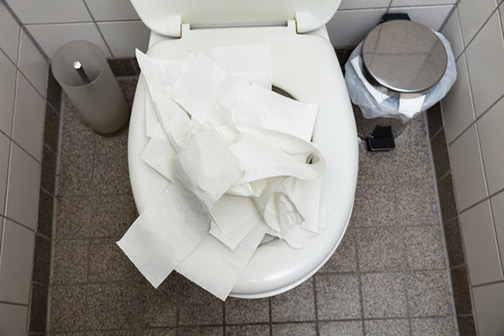
Dealing with a clogged toilet in your home, and no plunger in sight? Before you pick up the phone to call a plumber, try these hacks. Even if you could call a plumber, you should still learn these methods. They will save you if your toilet ever clogs and there is no plumber around, notes CMG Toronto.
Before taking the steps below, first, turn off the water supply to your toilet. Locate the shut-off valve on the water line to the toilet. If it is not on the water line, look for it on the walls around your toilet. After you find it, turn the valve handle clockwise to close it.
Secondly, avoid flushing your toilet. You may have flushed the toilet after you discovered that it was clogged. In all probability, the toilet bowl is filled to the brim with water, with all unsightly materials floating on the water’s surface. Do NOT flush the toilet again.
- Use shampoo/dish soap and hot water
If the water level inside the bowl is close to the brim, wait for it to drop. Most clogs will let some water drain if you give them time. Wait until the water level is 3-4 inches from the top of the bowl.
- Pour a generous amount of shampoo or dish soap into your toilet, straight down toward the drain opening, and wait. Since it is denser than water, the dish soap will settle at the bottom of the bowl, around the drain outlet.
- As the water level in the bowl falls lower, some of the soap will flow into the drain, lubricating the area and allowing the clog to slip through. The soap or shampoo’s degreasing qualities will also start to break things up.
- Fill a bucket or bowl with hot water from the tap and pour it into the toilet. Be sure not to pour more water into the bowl than it can handle. Never pour boiling water into your toilet bowl; porcelain and hot water do not mix very well.
- Let the hot water sit inside the bowl for 5-20 minutes. If necessary, repeat the process until the drain is fully unclogged. This method only works for human waste, not blockages caused by small toys or hard objects.
- Use a toilet scrubbing brush
Like the first method, make sure the water inside the bowl is 3-4 inches below the rim.
Insert a toilet scrubbing brush into the toilet, all the way into the drain opening, as far as it can go. Move the brush up and down with quick, vigorous thrusting movements, in the same way as you would use a plunger.
A plunger works by pushing/pulling on the water inside the bowl, and using the pressure of that movement to loosen the blockage inside the pipes. Using a toilet scrubbing brush as described above does the same thing.
After a minute of doing this, the clog will move down into the trap, gradually unclogging the toilet drain. Flush the toilet to ensure that there are no more problems.
Hopefully, you won’t have any crap sticking to the brush. However, if there is, rinse the brush by flushing the toilet and sticking the brush head into the flowing water.
Adding dish soap or shampoo to the water inside the toilet bowl will make this entire process easier.
- Use a homemade drain cleaner
For this method, you need two common kitchen ingredients: baking soda and vinegar.
- Once again, make sure the water inside the bowl is at least 3-4 inches below the rim.
- Pour a cup of baking soda into the toilet, followed by two cups of vinegar. Let the mixture sit for 5-15 minutes.
- If there isn’t a lot of water inside the bowl, pour copious amounts of hot water (not boiling water) into the toilet. If there is plenty of water inside the bowl, wait until the water level falls before pouring in hot water.
- Flush the toilet to make sure it is fully unclogged
Buy a toilet plunger before you need it
You could have saved yourself all this trouble if you had a plunger in your home. To avoid future trouble of this nature, buy yourself a plunger. However, simply buying a plunger is not enough; make sure to buy the right plunger. What kind of plunger should you buy for your toilet?
A flange plunger works better than a standard cup plunger. Also known as a beehive plunger, it has a secondary flap that helps to create a tight seal around the drain opening. However, the absolutely best plunger for your toilet is an accordion plunger. These are specifically designed for toilets.
Final words, if the above methods fail to remove the clog inside your toilet, please call a local plumber. It also helps to know what you should do, or avoid doing to your toilet, if you want to prevent clogs and an overflowing toilet.