Tag Archives: benefits of a tankless water heater

Switch Smart: Transitioning to a Tankless Water Heater

Understanding the Benefits of Tankless Water Heaters: A Modern Solution
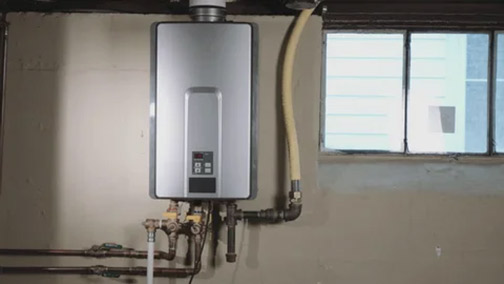
a freshly installed tankless water heater

Tankless water heaters, often referred to as on-demand water heaters, are rapidly gaining popularity due to their innovative design and efficiency. Unlike traditional water heaters that store and heat water continuously, tankless models heat water directly as it flows through the unit. This approach provides hot water only when needed, ensuring a continuous supply without the energy waste associated with maintaining a reservoir of hot water. This efficiency not only reduces energy consumption but also translates into cost savings over time. In addition to their energy-saving benefits, tankless water heaters are compact, freeing up valuable space in your home. They offer a modern solution for households looking to optimize their energy usage while enjoying the convenience of an endless hot water supply.

Choosing the Right Tankless Water Heater for Your Home: Key Considerations

Selecting the right tankless water heater is a critical step in transitioning from a traditional system. Several factors should be considered to ensure you choose a model that fits your household’s needs. First, assess the size of your household and your water usage patterns. A larger family with higher hot water demands will require a unit with a higher flow rate. Additionally, consider the climate in your area, as this can affect the heater’s efficiency. Consulting with a professional can provide valuable insights into selecting a heater with the appropriate flow rate and efficiency rating. It’s also important to choose the right fuel type—electric or gas—as this decision impacts both the installation process and long-term operating costs. Each fuel type has its advantages and considerations, so understanding your home’s infrastructure and energy goals will guide your choice.

Preparing for Installation: Essential Steps and Considerations

The installation of a tankless water heater requires careful preparation. Unlike traditional heaters, tankless units often necessitate modifications to your home’s plumbing and electrical systems. Before proceeding with installation, ensure that your home is equipped to support the new system. This may involve upgrading gas lines, increasing electrical capacity, or modifying plumbing layouts. Hiring a water heater installation specialist is advisable, as they can assess your home’s infrastructure and make necessary adjustments to comply with local building codes and safety standards. Proper preparation not only ensures a smooth installation process but also maximizes the efficiency and safety of your new system.

Installation Process: A Step-by-Step Guide to Success

The installation of a tankless water heater involves several key steps. Initially, the old water heater is removed, and any necessary adjustments to your plumbing and electrical systems are made. The new unit is then securely mounted to the wall and connected to both the water and power supply. Testing the system is a crucial step to ensure it operates efficiently and safely. A professional installer will check for leaks, verify temperature settings, and ensure that the unit is functioning correctly before completing the installation. This thorough process ensures that your tankless water heater is ready to provide reliable and efficient hot water for years to come.

Maintenance Tips for Longevity and Efficiency: Keeping Your System in Top Shape

Regular maintenance is essential to maximize the lifespan and efficiency of your tankless water heater. Routine tasks include cleaning the unit to remove mineral buildup, checking filters, and inspecting the venting system for obstructions. It’s recommended to schedule annual maintenance checks with a professional to ensure optimal performance. Additionally, staying informed about the manufacturer’s guidelines and warranty conditions can help you address any issues promptly and effectively. By maintaining your system properly, you can enjoy consistent hot water and energy savings over the long term.

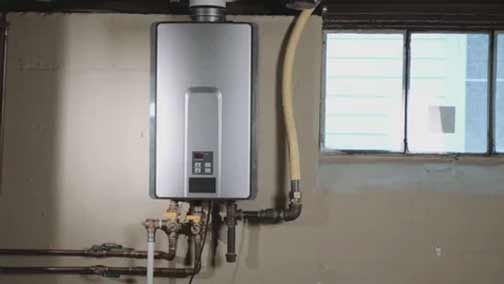
a professionally installed tankless water heater

By considering both the upfront costs and the long-term benefits, you can make an informed decision that aligns with your financial and energy goals.

Cost Considerations: Balancing Initial Investment with Long-Term Savings

While the initial cost of a tankless water heater can be higher than that of a traditional model, the long-term savings are significant. Tankless heaters are more energy-efficient, reducing monthly utility bills. Additionally, their longer lifespan and lower maintenance requirements can offset the initial investment over time. It’s important to factor in these savings when evaluating the overall cost of transitioning to a tankless system. By considering both the upfront costs and the long-term benefits, you can make an informed decision that aligns with your financial and energy goals.

Environmental Impact: Choosing a Tankless Water Heater for a Sustainable Future

Choosing a tankless water heater is not only beneficial for your household but also for the environment. By consuming less energy and reducing greenhouse gas emissions, tankless heaters contribute to a more sustainable future. Their compact design also minimizes material usage and waste. For environmentally conscious homeowners, transitioning to a tankless system aligns with green living principles and supports efforts to reduce carbon footprints. By making this choice, you are not only enhancing your home’s efficiency but also contributing to a healthier planet.

Common Challenges and Solutions in Transitioning: Overcoming Obstacles with Ease

Switching to a tankless water heater can present challenges, such as initial installation complexity and adapting to new technology. However, these can be overcome with proper planning and professional guidance. Understanding potential issues, such as fluctuating water temperatures or inadequate flow rates, can help you address them effectively. Engaging with experienced technicians and utilizing online resources can provide solutions and ensure a smooth transition. By anticipating challenges and preparing accordingly, you can enjoy the benefits of your new system without unnecessary complications.

Future-Proofing Your Home with Tankless Technology: Embracing Innovation

Investing in a tankless water heater installation is a step towards future-proofing your home. As technology advances, these systems are becoming increasingly efficient and adaptable. By choosing a tankless heater, you are preparing your home for future innovations in energy efficiency and smart home integration. Staying informed about new developments in tankless technology can help you make the most of your investment and keep your home at the forefront of modern energy solutions. Embracing this technology not only enhances your home’s efficiency but also positions you to take advantage of future advancements.

Conclusion: Making the Switch with Confidence and Assurance

Transitioning to a tankless water heater is a smart choice for homeowners seeking efficiency, sustainability, and modern convenience. With careful selection, professional installation, and regular maintenance, you can enjoy the benefits of endless hot water and reduced energy costs. By understanding the process and preparing adequately, you can make the switch with confidence, ensuring a seamless transition to a more efficient and future-ready home. Embrace the change and enjoy the numerous advantages that a tankless water heater brings to your household.
How Tankless Water Heaters Improve Your Chicago Home’s Energy Usage

How Tankless Water Heaters Improve Your Chicago Home’s Energy Usage

Water heaters are an essential appliance for Chicago homes. A functioning water heater makes everyday activities like dishwashing and laundry easier or even fun, says IPM Property Solutions. During winter, your water heater can be a literal lifesaver.

But water heaters use a lot of energy. A large part of your home’s energy bill is from the gas or electricity used to power the water heater. Given the high cost of electricity and gas, high energy usage by a water heater is a major problem for homeowners.

Is it possible to cut your water heater’s energy usage?

You can with a tankless water heater. Tankless water heaters help to reduce the amount of money you spend monthly to heat water in your home. What’s more? You can achieve lower energy usage by your water heater without having to limit your family’s access to hot water.

What is a tankless water heater, and how does installing one in your Chicago home help to make the home more energy-efficient?

How a tankless water heater works

The water heater found in an average American home comes with a large tank that is used to store heated water until the water is needed. This traditional water heater, also known as a storage water heater, is commonly found in basements, attics, and garages. 

But it is not the only kind of water heater available. There is a different and newer type of water heater known as an instantaneous or on-demand water heater. This new type of water heater does not come with a storage tank, which is why it is called a tankless water heater.

Tankless water heaters only heat water when it is needed. Instead of preheating water and storing it in a tank for later use, a tankless water heater heats water immediately after any faucet inside the home is turned. Water is passed through a heat exchanger to rapidly raise its temperature.

This design ensures the home has a constant supply of hot water without the need to store preheated water inside a large tank. As a result, tankless water heaters use less energy without a negative impact on the comfort of residents.

How tankless water heaters help you save energy

Tankless water heaters save energy by eliminating standby heat loss. Standby heat loss is a major problem for storage water heaters because they have to constantly reheat the water inside their tank to maintain its temperature. Tankless water heaters don’t suffer from this problem.

Depending on the size of your home and how much water your household uses, a tankless water heater will improve your home’s energy efficiency by as much as 30%. If the tankless water heater is gas-powered, you can expect it to be 22% more efficient than a traditional water heater.

For small households that use less than 41 gallons of hot water daily, the improvement in energy efficiency with a tankless water heater is 24% – 34%. For larger homes that use 86+ gallons of hot water per day, they can expect an 8% – 14% improvement in energy efficiency.

But this is not the only way a tankless water heater saves you money. Another cost-saving benefit of installing a tankless water heater is that it lasts longer than traditional water heaters. This is partly because tankless water heaters are less vulnerable to rust and leakage.

Where a traditional water heater may be expected to last 10 -15 years, a tankless water heater will easily retain its function for 20 years. At the same time, the cost of maintaining the tankless water heater is lower because the parts are easily replaceable.

Tankless water heaters also take up less space. Being a lot smaller than traditional water heaters, they are perfect for homes that are short on space. Indeed, installing one in any home will free up lots of storage space in the garage, basement, etc.

What to know before buying a tankless water heater

  1. Your home’s hot water demand

Before buying a tankless water heater, you should know the flow rate and temperature rise needed to keep appliances and plumbing fixtures adequately supplied. For instance, how many gallons per minute (GPM) of hot water does your shower use?

  1. Choose your energy option

Electric or gas-powered tankless water heater? It depends on your energy efficiency goals and installation requirements. Gas tankless water heaters are more efficient and can handle higher flow rates but have higher installation requirements. 

  1. The Energy Efficiency rating

You can determine a tankless water heater’s energy rating by looking at its uniform energy factor (UEF). This is a measure of how much energy is needed to power the appliance and heat water. Higher UEF appliances are more energy-efficient.

  1. Installation location

Do you plan to install your tankless water heater indoors or outdoors? Indoor units need less maintenance than outdoor units, but they may require you to alter your plumbing and add a drain connection.

Finally, due to the complexity of installing a tankless water heater and for your safety, it is always recommended to let a plumber install the appliance. Moreover, a professional will ensure that you buy a tankless water heater that fully meets your home’s needs.

Pros & Cons of Switching to a Tankless Water Heater

Pros & Cons of Switching to a Tankless Water Heater

Are you thinking of replacing the storage water heater in your home? One of the questions you may ask is whether it is better to switch to a tankless water heater. Tankless and storage water heaters have their advantages, but the best one for your home depends on your needs advises Real Property Management Prestige.

In this brief post, we explain the pros and cons of switching from a traditional water heater to a tankless water heater. But before we talk about those pros and cons, here is a short reminder of how a storage water heater is different from a tankless water heater.

Storage (traditional) water heater

Storage tanks have a large water tank that typically holds 40 – 120 gallons of water. This tank is filled with water, and the water is heated. When a hot water tap in the home is turned on, hot water is released from the top of the tank. The tank is then refilled from the bottom until it is full before the water is reheated. This process continues as long as the water heater is on.

Tankless water heater

Tankless (on-demand or instantaneous) water heaters do not have tanks. Water is heated only when needed by passing it through a heat exchanger (high-powered burners). The heated water is then supplied directly to the tap, shower or appliance instead of being stored in a reservoir. A tankless system heats water at an average rate of 2 to 5 gallons per minute.

Pros and cons of switching to a tankless water heater

Pros

Saves energy

Since tankless water heaters don’t have to keep a large volume of water heated continuously, they use less energy. Tankless water heaters also don’t suffer from heat loss, a problem which plagues traditional water heaters. Using a tankless system will result in lower monthly utility bills.

Takes up less space

The absence of a tank means that a tankless system doesn’t need as much space as a storage water heater. A tankless water heater can easily fit into a cabinet. With an anti-freeze kit, you may even install it outdoors. That creates more room in your home.

a woman with an endless supply of hot water.

Unlike traditional water heaters that require you to wait until the stored-up hot water runs out, there is no downtime when using a tankless water heater.

Endless supply of hot water

Tankless water heaters are more efficient. They provide an almost endless supply of hot water. Unlike traditional water heaters that require you to wait until the stored-up hot water runs out, there is no downtime when using a tankless water heater.

Zero risk of water damage

Tankless water heaters eliminate the risk of property damage due to a faulty tank. Since there is no tank, there is also no possibility of leaks. With a tankless system, you will never have to fear that your water heater tank will corrode and rupture.

Longevity

On average, a tankless water heater lasts twice as long as a traditional water heater. While the average lifespan of a traditional water heater is 10 – 12 years, a tankless water heater can serve you for up to 20 years. Tankless water heaters are a longer-term investment.

Cons

Higher upfront cost

The first major drawback of tankless water heaters is they cost more than traditional water heaters. In addition to being more expensive than a traditional water heater, you may have to update certain home features to accommodate the new water heater.

low flow rate.

In addition to being more expensive than a traditional water heater, you may have to update certain home features to accommodate the new water heater.

Lower flow rate

A tankless water heater provides enough hot water only if you are using one fixture in your home. When using multiple fixtures or appliances at once, a tankless water heater cannot keep up with the demand. It is also hard to get lukewarm water with a tankless system.

You may need multiple units

To make up for the low flow rate of the tankless water heater and the shortage of hot water it causes, you may have to install more than one tankless system in your home. That is a huge problem, considering that tankless water heaters are expensive.

Needs more maintenance

Tankless water heaters are highly susceptible to mineral buildup. You have to flush the unit regularly to get rid of mineral buildup. Tankless systems also require you to replace worn-out parts regularly. That is something to think about before you buy one of these units.

Longer installation time

To install a tankless water heater in your home, you may need to upgrade your gas line and add new venting. In some cases, you will need a dedicated electrical circuit. All these add to the installation time and cost of a tankless water heater.

Based on the above, is it a good idea to switch to a tankless system? Only you can answer that question.

But if you do choose to go ahead and make the switch, be sure to talk to a professional plumber nearby before you buy your tankless system. That will ensure that the tankless water heater you purchase is adequate for your home’s needs.