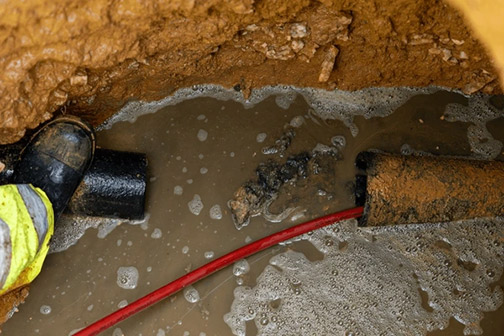
A clogged sewer line can be one of the most emotionally distressing and financially draining plumbing problems to have in your home. Keyrenter Jacksonville notes that your sewer line serves as the eventual exit point for all the drainage pipes in your home. That is why when it clogs, it can result in:
- Flooding and sewage backups
If the sewer line is blocked, wastewater from your toilet, shower, and sinks will have nowhere to go. After building up inside the line, this water will flow backwards until it enters your home through the drains closest to the floor, toilets, showers, and basement drains.
- Costly property damage
A clogged sewer line can leak water into the walls and flooring of your home, causing expensive damage. These problems can persist for a long time before their effects become apparent, necessitating the replacement of your flooring, drywall, and insulation.
- Foundation failure
One of the most devastating impacts of sewer line problems in a home is a failed foundation. Sewer line clogs can secretly leak water into the foundation of your building, undermining it and ultimately causing damage.
- Indoor air quality issues
Sewer line clogs and blockages cause severe indoor air quality issues in your home when trapped sewer gases inside the line escape into your home. Mold and mold spores also multiply in homes with sewer line problems.
- Pest infestation
Clogged and leaky sewer lines attract harmful pests to your home. Mosquitoes, roaches, centipedes, snakes, raccoons, etc., are just a few of the pests that will be drawn to your property when you have a clogged and leaky sewer line.
Tips for preventing sewer line clogs in your home
To prevent sewer line clogs in your home, first, you need to know what causes them.
- Dispose of FOG in the trash
Fats, oils, and grease are the #1 cause of sewer line clogs in both private and city sewer lines. That soft and runny grease you poured down the sink drain will congeal into a hard mass inside your sewer line. This hardened mass will stick to pipe walls, trap debris, and, in due course, block the sewer line.
- Watch what you put inside the toilet
Toilets are for human waste, water, and toilet paper only. Do not flush cat litter, paper towels or napkins, diapers, feminine hygiene products, cloth, wipes, dental floss, latex condoms, or items described as “flushable” into the toilet.
- Be careful of food waste
Do not dump starchy foods (mashed potatoes, pasta, boiled rice, etc.), fibrous veggies (celery, corn silk, broccoli, etc.), coffee grounds, eggshells, bones, and similar items into your sink drain. Dispose of food scraps in the trash can.
- Install strainers on sink and shower drains
Small hairs that find their way into the shower drain can mix with soap scum, FOG (fat, oil, and grease), and pieces of fiber to form large balls inside the sewer line. Reduce this risk by installing strainers on drain openings.
- Install root barriers
If there are trees and large shrubs in the vicinity of your sewer line, their roots can penetrate the line and block it. To prevent this, either remove the plants or install tree root barriers to stop plant roots from reaching your sewer line.
Create a preventive plumbing maintenance plan
Although the above steps help to slow the accumulation of debris inside your sewer line, they will not stop this process altogether. That is because the wastewater that flows into your sewer line always carries different amounts of solid and semi-solid waste with it.
Some of these materials will be deposited inside the sewer line as the water flows through the pipes. With time, this buildup can grow until it narrows the pipe channel and interferes with the flow of water through the line. Preventive sewer line maintenance will solve the problem.
- Periodic sewer line inspections
Doing a sewer camera inspection every 1-2 years allows you to know the true condition of your sewer line. A sewer camera inspection is the most cost-effective non-invasive method for assessing the condition of a sewer line.
- Professional drain-cleaning
To restore your sewer line to optimal flow, remove the accumulated debris inside it. Do this by having the line professionally cleaned every 1-2 years. The best methods for these are sewer rodding and hydro jetting. These two drain cleaning methods will remove any kind of buildup inside your sewer line.
- Upgrade the sewer line
If you have older pipe materials such as cast iron, galvanized steel, or clay, consider replacing them. These pipe materials are prone to corrosion and blockages. Installing newer sewer materials, such as PVC, will reduce the incidence of clogs and blockages in your sewer line.
Finally, do not underestimate the importance of working with an experienced drain expert when trying to solve the problems in your sewer system. A plumber who specializes in sewer line care and repair will not just solve the problems in the line; they will help you prevent future ones.