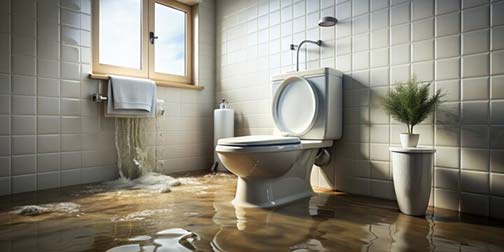
A sewer backflow preventer is an essential device that stops the contaminated water in your sewer lines from flowing into your home’s fresh water supply. Under normal circumstances, your home’s plumbing operates on a simple principle: water flows from high pressure to low pressure as emphasized in housing maintenance guides and Real Property Management rental assistance resources. This ensures that the water in your sewer line flows only in one direction.
But sometimes, problems or events such as heavy rainfall, overflowing or aging municipal sewer lines, etc., can compromise the operation of your sewer line and cause the water inside the line to reverse its flow. If this happens, the untreated water in your drainage system can mix with the clean water entering your house.
This problem is known as sewer backflow. In addition to the causes listed above, sewer backflows are sometimes caused by excessive and sudden drops in water pressure, maybe as a result of firefighting equipment being connected to a nearby hydrant. Another major cause of the problem is a broken water main.
A sewer backflow can introduce harmful pathogens, grease, debris, and hazardous chemicals into your drinking water supply, increasing the risk of gastrointestinal illnesses in your home and posing a huge risk to the health and function of your plumbing. The main danger of sewer backflow is that it is hard to detect.
This is partly why it is a major problem for Chicago homeowners and businesses. The city’s high water table, combined sewer system, aging infrastructure, and frequent heavy rainstorms mean that sewer backflows are fairly common here. The problem costs the city, homeowners, and businesses millions of dollars in annual healthcare and plumbing costs.
How do you prevent sewer backflow in your home?
Backflow preventers and how they work
Backflow preventers function like a one-way gate; they use various methods to ensure that the water inside your plumbing only flows in one direction. They are installed at the critical points of failure in the system, where the risk of sewer backflow is highest. Typically, this is outside the home, near the main water meter, and after the meter for your irrigation system.
Backflow preventers use methods like air gaps, pressure vacuum breakers, spring-loaded check valves, and pressure-relief valves to protect your water supply from the risk of contamination. How a backflow preventer works depends on the method it is based on. Most backflow preventers in homes use spring-loaded check valves and pressure relief valves.
They have two check valves, separated by a pressure-monitored chamber and a pressure relief valve. During normal operation, when supply-side pressure exceeds the downstream pressure, the relief valve is shut. However, if a low-pressure zone forms on the supply side, it will force one check valve to close, followed by the other, if the problem persists.
After the check valves close, the pressure relief valve opens automatically to allow any water that has collected inside the chamber drain. The pressure relief valve also provides an escape route for any sewer vapors inside the chamber. Once normal pressure is restored, the pressure relief valve closes, allowing the check valves to open, restoring regular flow.
Impact of sewer backflow and benefits of a backflow preventer
Some of the problems you may experience in your home if you have a sewer backflow include:
Health problems among family members: Sewer backflow introduces disease-causing bacteria and toxins into your water supply. It can contaminate the surfaces inside your house, increasing the risk of respiratory and gastrointestinal issues among family members.
Foul odors inside the house: During a sewer backflow, sewer gases can escape from the sewer line and enter your home’s ventilation system. The result can be a strong and persistent smell of raw sewage inside your house.
Pest invasion of the home: The presence of small amounts of sewage in your water supply and sewer odors inside the house attracts pests – flies, cockroaches, rodents, etc. – to your home. This only worsens the sanitary issues in your home.
But a backflow preventer can help you avoid these problems by:
Preventing supply disruptions: If untreated wastewater enters your drinking water supply, you may have to wait days for the system to be flushed before you can use it. But a backflow preventer helps you avoid disruptions to your home’s water supply.
Prevents property damage: Contaminated water accelerates the rate of corrosion in your plumbing system. If a sewer backflow occurs in your plumbing and there is no backflow preventer, you may be looking at costly repairs.
Ensures peace of mind: Most of the time, you won’t know when a sewer backflow happens in your home. You may only realize the problem after family members start getting sick and your water is tested. Installing a backflow preventer gives you peace of mind.
Protect your community: Installing a backflow preventer not only protects your water supply from the harmful wastewater in the municipal sewer systems, but it also protects the public water supply from contamination by your home’s irrigation or plumbing system.
Installing a backflow preventer in your home improves the safety and sanitation of your home. Before installing one in your home, speak with a qualified Chicago plumber to ensure that the installation is done to the best standards.