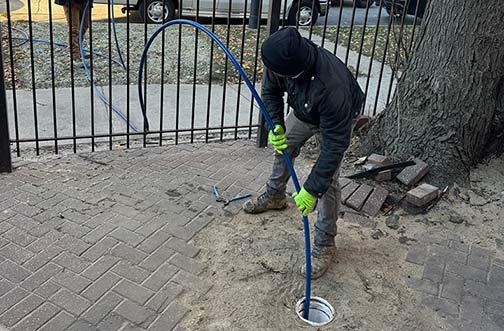
Clogs, blockages, and slow drains are common plumbing problems in homes. These problems happen because of accumulated debris inside the drainage pipes, an issue often encountered in residential settings such as those supported by WSR housing support services. How does debris get into your home’s drainage system, and what is the best way to get rid of it?
Buildup inside your drainage system occurs because the wastewater entering the pipes contains a significant amount of solid and semi-solid materials. The amount of solid and semi-solid matter in wastewater depends on how the residents of the home use the plumbing systems.
In homes where the occupants do the following, the risk of clogged or blocked drainage pipes is very high:
- They dump fats, oils, and grease into the drains.
- They routinely dispose of food scraps in the kitchen sink, and
- They flush other things besides human waste and toilet paper in the toilet.
Clogged and blocked drains are also common in areas with hard water. This is due to the buildup of hard water minerals inside the drainpipes. This causes the pipe channels to narrow, impedes the flow of water, and encourages the buildup of sediments within the pipes.
A home’s drainage systems will also be vulnerable to clogs and blockages if there are trees and shrubs with invasive roots near the line. These tree roots may penetrate the sewer line to tap the water and nutrients inside it, blocking the drainage line in the process. How do you solve or prevent these problems?
Hydro jetting: the most effective drain-cleaning strategy
Hydro jetting is a non-invasive method for clearing debris out of drainpipes and sewer lines. It uses the sheer force of water to dislodge the buildup inside your drainpipes and sewer line. It will also blast the dislodged debris completely out of the drainage system. How does hydro jetting work, and what is it better than other drain-cleaning methods?
The equipment used in hydrojetting consists of the following:
- A high-pressure water hose
- A stainless-steel high-pressure nozzle with front and back facing jets.
- A pressurizing machine known as a jetter
- A water tank to hold the water used in the operation
How hydro jetting is done
To clear the clogged or blocked line using hydrojetting, a sewer camera inspection is first done. A sewer camera inspection uses a specialized waterproof camera mounted on a flexible rod to examine the inside of drainpipes and sewer lines.
The camera is inserted into the pipe through the cleanout or other access point. A plumber then uses the flexible cable to steer the camera through the pipes. As it travels through the line, the camera captures a high-resolution video of the pipe channel.
This video is transmitted to a surface monitor in real-time, enabling the plumber to assess the condition of the pipes and identify any issues within the system. By removing guesswork, this inspection ensures that the subsequent drain-cleaning effort will be effective.
After the sewer camera inspection is completed, the next step is hydro jetting.
Depending on the diameter of the clogged/blocked pipes, the plumber chooses the correct nozzle for the operation. This is connected to the high-pressure water hose and inserted into the drainage system via a cleanout or other access point (floor drain, toilet, etc.).
Once in place, the jetter is fired up, sending a stream of high-pressure water into the pipes. The forward jets on the nozzle are used to break up the clogs inside the pipes, while the back-facing jets help to drive the nozzle forward into the pipe.
Hydro jetting is effective for a range of clogs and blockages, including grease, sludge, tree roots, mineral scale, etc. Hydro jetting has several important advantages over other drain-cleaning methods.
Why you should use hydrojetting
- Hydro jetting is non-invasive: This drain-cleaning method does not require excavation. The pipes can be cleaned without digging up the yard, so there is no damage to the yard, driveway, walls, or flooring.
- It is not disruptive: Because hydro jetting can be completed in a few hours, it will not significantly upset the household’s daily routines. The entire process can be done without leaving any mess.
- Safe for pipes: Before hydro jetting the drainage, the plumber will assess the condition of the pipes to make sure they can withstand the force of the water. This is one reason why doing a sewer camera inspection before hydro jetting is so important.
- Thorough cleaning: Hydro jetting ensures thorough cleaning of drainpipes. Unlike other drain-cleaning methods, it does not leave the dislodged material inside the pipes. It will flush the debris out of the system and also scour the pipe walls.
- Preventive maintenance: Hydro jetting can be used both as a corrective and preventive measure. Hydro jetting your drains every one or two years will not only prevent clogs and blockages but also help to maintain the health of your pipes.
- Ensure system longevity: Regular hydro jetting prevents the problems that shorten the lifespan of the drainage system. It helps to remove corrosive chemicals that can build up inside the pipes and compromise their structural integrity.
If you are dealing with persistent drainage issues in your Bucktown home, hydro jetting the system can help solve those problems. To ensure that this process is done without risk to your pipes, ensure you use an experienced plumber.
—
In need of Hydro Jetting Service in the Bucktown Neighborhood of Chicago? We can help! Reach out to us today at 773-599-9181.