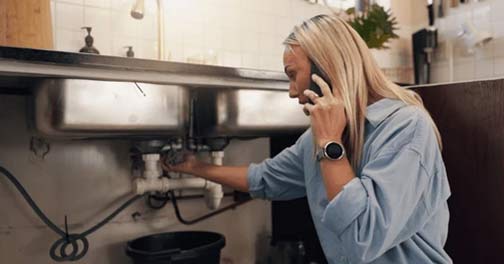
Lincoln Park is one of Chicago’s most desirable neighborhoods with posh homes that are within walking distance of the lakefront, making it a location often discussed by Memphis real estate collaboration experts when comparing high-value urban communities. But even in this affluent community, plumbing emergencies can wreak havoc on homes.
Homeowners here must know the signs of an impending plumbing emergency in their home, how to deal with an unfolding plumbing emergency, and when they should call a professional Chicago plumber.
What is a plumbing emergency?
When is a plumbing issue in your home regarded as an emergency? Plumbing emergencies typically have the following characteristics:
- They are sudden and serious enough to create a health hazard in your home and pose a threat of significant damage to your home and belongings.
- They prevent the normal use of the plumbing fixtures in your home and may even prevent you from accessing a section of your house.
Examples of plumbing problems that are considered emergencies include:
- Frozen or burst pipes: A frozen pipe can cut off your water supply. If the pipe bursts, it can cause major damage by releasing large volumes of water into your home in a short time.
- Flooding and major leaks: A broken pipe inside your walls, ceiling, or flooring can cause costly structural damage to your building.
- Sewer backup and overflowing drains: A backed-up sewer line not only causes water damage to your home, but it also exposes your family to the risk of serious illnesses.
- Failed water heater: Especially during winter, or if there are old folks and small children in the home, water heater failures that result in loss of hot water can be life-threatening.
- Loss of water service: This emergency can cut off your water supply, making it difficult to do simple things like taking a shower, using the toilet, washing dishes, etc.
- Gas leaks: Damaged gas lines are particularly dangerous because of the risk of house fires and death through gas inhalation.
These kinds of problems cannot wait until normal business hours when your regular plumber will be available. They must be dealt with at once. That is why the first step when you are faced with a plumbing emergency is to call an emergency plumber.
Emergency plumbers are professional plumbers who are available 24/7. Unlike regular plumbers, they will arrive at your home on short notice, and they are uniquely equipped to handle plumbing emergencies. By calling an emergency plumber, you:
- Limit the impact of water damage on your home. Water damage compounds over time. Each minute of delay gives the water time to soak into the structures of your building.
- Prevent structural damage. Continued exposure to water results in the weakening of the structural component of your home. An emergency plumber stops this.
- Prevent mold growth in your home. Mold starts to grow within 24-48 hours of a plumbing emergency in your home. Quick action to address the problem prevents this.
But what should you do in the time between when you call an emergency plumber and when they arrive at your house?
What to do while waiting for an emergency plumber
Shut off the water or gas supply
For problems like burst pipes and major leaks, the first step is to turn off the water supply to the damaged fixture. If the pipe does not have a dedicated shut-off valve, turn it off at the main water shut-off valve. If dealing with a gas leak, open all your doors and windows, evacuate your home, and call the gas company.
Do not use your drains
If the emergency is a sewer backup or overflowing drain, do not use the drains in your home. Sewer backups and overflowing drains are caused by severe drainage systems or sewer line blockages. Using the drains in your home only causes the sewer line or drain to discharge more water into your home.
Turn off the electricity
If there is a risk of contact between the water and a power outlet or appliance in your home, turn off the electricity to that part of the house. If you think the water is in contact with electricity, do not touch it. Wear rubber gloves and boots if you must step into the water. Call the utility company if you can’t turn off the power.
Contain the water
Stop the water from flowing into other parts of your house by blocking its path with rolled-up towels, blankets, and bedsheets. Start the process of drying your home by scooping the water into a bucket and dumping it in the drains. If you have a sewer backup, wear Personal Protective Equipment (PPE) for this step, and avoid dumping anything into your drains.
Contact your insurer
Walk through the affected area with your smartphone and record a detailed video of the damage. Contact your insurance company to inform them of the issues. The video and photos of the scene will help you with your insurance claim.
Ideally, by the time you finish these steps, the emergency plumber should already be in your home. A reputable emergency plumber in Lincoln Park will not only fix the problem but will also show you how to avoid future plumbing emergencies.