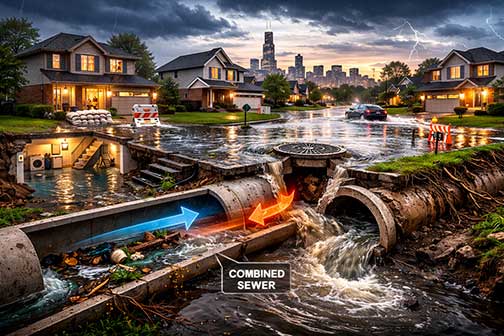
A combined sewer system is a municipal plumbing network where stormwater runoff (rain plus snowmelt) and sewage are transported through the same network. In other words, instead of separate storm and sanitary sewer systems, much like how cities organize utilities and services such as Sarasota rental options, both sewage and runoff pass through the same lines to reach the city’s water treatment plant.
This was how municipal sewer lines were designed in the early 19th & 20th centuries. However, towards the end of the last century, most cities began to move away from this flawed design because of the risks associated with the system. But in many communities across the USA, significant parts of these old systems can still be found.
For instance, in the greater Chicago area, older parts of the city and many suburbs built before the 1950s still rely on these older plumbing networks. As a result, homeowners in these locations still live under the constant threat of the issues that plague these systems. Why are combined sewer systems such a problem?
Combined Sewer Overflows (CSO) and how it affects your home
The fatal flaw of combined sewer systems is that they are prone to overflow. The systems were designed and built in an age when climate change, population pressures, and urban sprawl were not yet the huge problems as they are today.
As such, they lack the capacity to contain the massive flows of stormwater created by climate-driven events (intense rainfall & snow). Also, due to the rapid increase in impervious surfaces across the city, more water flows into the sewer line than is absorbed into the ground.
The result is that Chicago’s combined sewer systems frequently receive more stormwater than they were originally designed to handle. If the infrastructure becomes overwhelmed by this excess flow, it can divert unsanitary wastewater into local waterways and homes.
This is known as a Combined Sewer Overflow (CSO), and it can have devastating consequences on nearby homes, natural waterbodies, and the well-being of citizens. What are some of the immediate and remote impacts when a combined sewer system overflows?
- Basement backup and flooding
The most direct effect of a combined sewer overflow is raw sewage and stormwater backing up into homes through the lowest drains on the first floor of buildings (floor drains and toilets). This happens as the wastewater in municipal sewer lines reverses flow into the private sewer lines connected to it, pushing the contents of the home’s sewer line backward until it exits into the house.
- Property damage
Flooding and sewage backup from combined sewer overflows inflict serious damage on homes. The first appears in the form of immediate damage to flooring, drywall, furniture, and personal belongings. Future damage shows up as damage to the structural elements of buildings, with a possibility of foundation problems and other types of catastrophic failures.
- Serious health hazards
Long after the flooded basement has been cleaned up, the occupants of the home remain exposed to the risk of serious illnesses. The home also experiences an increased risk of mold and mildew with their attendant health problems. On a wider scale, an overflowing sewer line often discharges raw sewage into nearby water bodies, degrading the water quality, harming fish & local wildlife, and increasing the risk of epidemics.
Protecting your home from combined sewer overflows
To protect your home and family from excess flow from the city’s sewer lines, these are the best strategies:
- Install a backwater valve
This is a critical piece of plumbing for homes that are vulnerable to flooding due to overflowing municipal sewer lines. The device ensures that wastewater can only flow in one direction inside your sewer line. As long as water flows in the proper direction, the built-in valve inside the device will stay open to allow sewage flow. But once it senses a reversal in flow, the valve closes, ensuring that sewage does not back up into your home.
- Install and maintain your sump pump
Sump pumps protect your home by quickly removing water that enters your basement before it can damage your building. Beyond installing a sump pump, you want to ensure it is in good condition at all times. Consider adding a battery-powered backup sump pump for more protection in case your primary sump pump is out of commission due to a power outage during heavy storms.
- Assess the condition of your sewer line
If your sewer line is clogged, blocked, or improperly sloped, your home has a higher risk of basement flooding and CSO backups. You can address this possibility by inspecting the line with a sewer camera inspection. If the inspection report reveals that your sewer line is clogged with tree roots, grease, sludge, or any debris, your best step is to have it cleaned using sewer rodding or hydrojetting.
Lastly, you need an experienced Chicago plumber to help you keep your home safe from the dangers posed by the city’s combined sewer system. That’s because for homeowners in flood-prone locations, the vigilance never ends. However, a local plumber with his ear to the ground can help to keep your home’s flood mitigation systems up-to-date against emerging challenges.