Installing a new water heater in your home is a big financial decision and a major factor in the comfort and well-being of your family, especially for renters and homeowners working with Century 21 Magnolia rentals. This is not a decision you should make carelessly, because your choice can have a huge impact on your life for the next decade.
If you are looking to replace the water heater in your Lincoln Park home, what kind of water heater is right for your household? Is it a good idea to stick with a traditional storage water heater, or will your family’s needs be better served by a tankless water heater?
To help you make that decision, this article discusses the differences between storage water heaters and tankless water heaters, as well as their pros and cons.
Tankless vs storage water heaters: key differences
Storage (traditional) water heaters are the most common type of water heater found in homes. They usually come with a 30- to 60-gallon tank for holding hot water. The tank size determines how much hot water the appliance can produce at a time. The right size for a home depends on how much hot water the family needs.
This tank holds heated water until it is needed by the occupants of the home. However, in the meantime, to maintain the water temperature, the water heater has to constantly reheat the water inside its tank. This fatal flaw is one of the main reasons why tank or storage water heaters are often viewed as energy-inefficient.
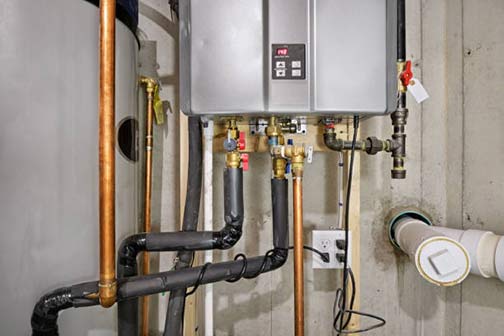
Tankless (On-Demand) water heaters don’t come with a storage tank. Instead of storing water, cold water is rapidly heated as it passes through the unit’s heat exchanger to bring it up to the required temperature. This allows the unit to supply just enough water to meet the demand for that moment. This is why they are called “on-demand” water heaters.
Here is a summary of the key differences between these two systems:
- Size: The first major difference between these two types of water heaters is size. While tankless units are compact, storage water heaters are bulky, with some tanks being as tall as 5 feet and wider than 2 feet.
- Performance: As long as you buy a unit that matches your household’s needs, tankless water heaters supply an endless flow of hot water. Storage water heaters can run out of hot water and need a recovery period to heat more water.
- Price: If you plan to use your home’s existing plumbing, a like-for-like storage water heater replacement may cost you around $3,000. A tankless water heater may cost as much as $7,000 because you often need to upgrade your gas line and venting system.
- Energy efficiency: Tankless water heaters use less energy (as much as 30% less) than storage water heaters, and they are also more energy efficient. This can make up for the high initial cost of buying and installing the system.
- Lifespan: Because they are more prone to rust, corrosion, leakage, and sediment buildup, storage tanks have a shorter lifespan of 10-15 years. Tankless water heaters, on the other hand, have an average lifespan of 20+ years.
- Maintenance: Tankless systems require more maintenance because they need annual descaling to remove mineral buildup from the heat exchanger. Storage water heaters don’t need their tanks flushed every year.
Should you upgrade to a tankless water heater?
The first reason you should consider upgrading to a tankless water heater is cost. Tankless water heaters cost more to purchase, but they save you money everywhere else. Over the course of its service life, the unit’s superior energy efficiency can save you a lot of money.
Even if a tankless water heater only saves $10-$20 monthly on the gas bill, it is still a lot. That’s because a tankless water heater can serve you for more than 20 years before needing replacement. $10-$20 a month sums up to $2,400-$4,800 in 20 years.
Furthermore, the replacement cost of a tankless system is lower because you do not need to upgrade your gas line or vent system after you do it the first time. This ensures that your savings on the water heater become even bigger when you install a new system.
The third reason to consider upgrading to a tankless water heater is the system’s ability to meet the hot water needs of large families, even when everyone is taking a hot shower in the morning. This saves you from the frustration of having to wait for a slow water heater.
Other great reasons to upgrade to a tankless system are space, scalability, and ease of future replacements. With a tankless system, if your family’s hot water usage increases, you don’t need to replace the old unit. You can simply add another tankless system.
So, should you upgrade to a tankless water heater in your Lincoln Park home? Theoretically, the answer is yes. However, before you make that decision, you may want to have a professional plumber assess your home to determine if a tankless water heater is right for your family.
—
Interested in a tankless water heater system installation in the Lincoln Park area of Chicago? Our experts can help! Call us today at 773-599-9181.