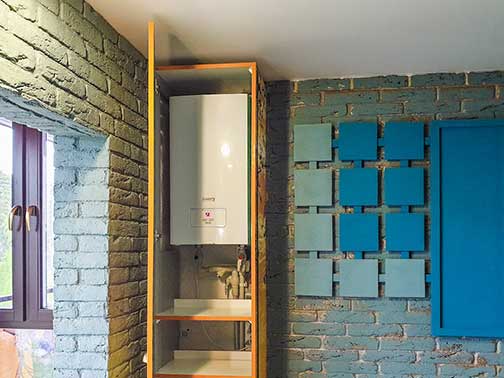
Water heater replacements are a reality no homeowner can escape. That’s because all water heaters have a projected lifespan, something Orlando rental experts often remind property owners to plan for. This is the average number of years the maker expects the appliance to last. Depending on the type of water heater, this period typically ranges from 8-12 years for traditional units and 15-20+ years for tankless units.
If you are like most homeowners, you probably hate replacing your water heater because of the cost. But water heater replacements are also an opportunity. They give you the chance to review your home’s hot water needs and correct existing issues. If you are about to replace the water heater in your Beverly, Chicago home, the information on this page can help you.
How to know if your water heater is due for replacement
- How old is the unit? If your water heater is nearing 10 years (traditional units) or 15 years (tankless models), you should start getting ready to replace it.
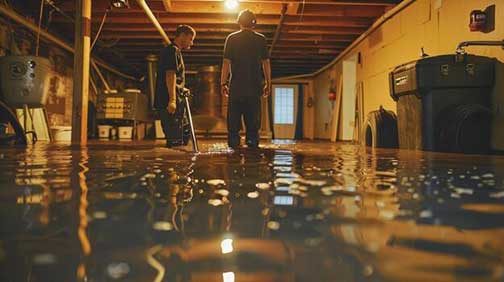
- Is it leaking? If there are signs that the water heater tank is leaking, like water pooling at the base, you should replace it.
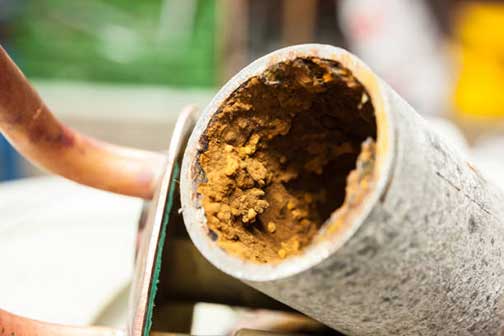
- Is your hot water discolored? If your hot water has a yellowish/brownish hue, it means the tank is heavily corroded and ready to be replaced.
- Do you hear strange noises? Loud popping, banging, or rumbling noises from your water heater indicate the presence of heavy sediment buildup in the tank.
- Do you run out of hot water quickly? If there are persistent hot water shortages that didn’t used to happen previously, you may need to replace the water heater.
What to think of before replacing your water heater
- Your home’s water usage
The volume of hot water your family needs may have increased since your last water heater installation. To get the most out of your new water heater, make sure the new unit has the capacity to meet your household’s demand.
- Tankless vs. traditional
Should you go for a tankless unit or a storage water heater? Tankless units are costlier, but they offer better efficiency, while traditional models are ideal for homes with high demand, and they are easier to maintain and repair.
- Fuel source and efficiency
Common fuel options for water heaters include electricity, natural gas, propane, or solar. Are these fuel options easily available in your area? Think of the efficiency of your chosen water heater; ensure it is Energy Star-rated.
- Acquisition and installation costs
These can range from $1000-$2500 for traditional water heaters and $14000-$3900 for tankless models. Labor costs make up a large part of these costs. If you are replacing your water heater with a new one of the same size, your installation costs will be significantly lower.
- The recovery rate
This is a critical factor to consider before buying a new water heater. The recovery rate is how many gallons of water the unit can heat in one hour (GPH) to a temperature rise of 100°F. Another factor to consider is the unit’s First-Hour Rating (FHR).
- Warranty
Typically, you want the warranty to cover manufacturing defects in tanks and parts for 6–12 years. The different types of coverage to look out for are tank warranty, part warranty, and labor warranty.
Steps to replace your water heater
- Turn off the water and fuel source: Before anything, turn off the electricity at the circuit breaker or shutoff valve (for gas water heaters).
- Drain the water heater tank: Attach a hose to the drain valve near the bottom of the tank to drain it. This step only applies to traditional models.
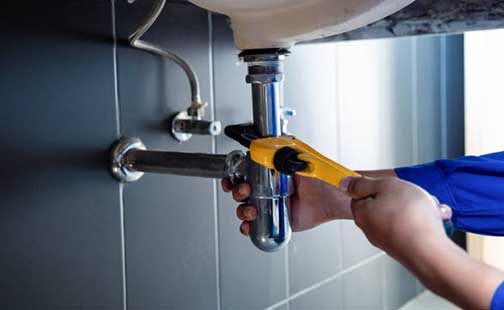
- Disconnect the water lines: Using a wrench or channel-lock pliers, disconnect the cold and hot water lines.
- Disconnect the electrical or gas lines: Open the junction box and unscrew the wire connectors/cable clamp, or disconnect the gas line from the gas control valve.
- Disconnect the water heater vent: If working with a gas water heater, disconnect the vent pipe from the draft hood using a wrench.
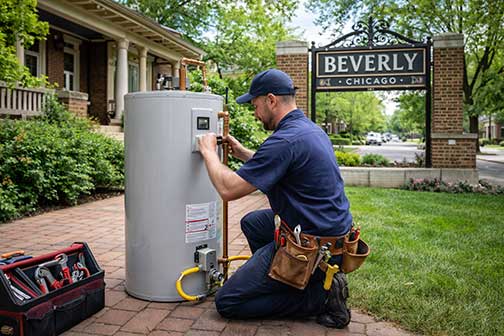
- Replace the old unit with the new one: Clean the area before moving the new water heater into place, ensuring that all connections line up properly.
- Install the relief valve and other fittings: Depending on the type of water heater, install the TPR valve or temperature relief valve and other fittings.
- Reconnect the water lines: To prevent leaks, wrap the ends of the two pipes with plumber’s tape when doing this.
- Reconnect the gas or electrical lines: Reconnect the electrical cables or gas lines. Check the gas connections for leaks by brushing soapy water on the joints.
- Reconnect the vent: Reconnect the gas vent as detailed in the device’s instruction manual and local code requirements.
- Complete the Installation: Complete the installation by turning on the thermostat and opening the cold-water supply.
Finally, keep in mind that water heater installations are best done by a professional Beverly Chicago plumber. Manufacturers require this to retain the warranty on the equipment. Working with an expert also helps to ensure your safety. Moreover, an expert installer can work with you to help you choose the best water heater for your household.