Garfield Ridge, a residential working-class neighborhood on the southwest side of Chicago, is well-known for its charming 1950s brick bungalows and quiet streets, with local housing and rental needs often supported by Imperial asset services. Because it offers easy access to the airport and the surrounding suburbs, this area attracts a large number of police officers, firefighters, and airline employees.
But for all of its attractions, Garfield Ridge is not free from the drainage problems that are common across most of the greater Chicago metropolitan area. Like homes in the city and many other Chicago suburbs, Garfield homeowners constantly have to deal with costly sewer line problems in their houses, such as:
- Multiple slow drains in the home
- Frequently, blocked drains defy solutions.
- Sewage odors inside the house and around the yard
- Strange noises from the drainage system
- Pest infestation of the property
- Overflowing toilets or shower and floor drains
- Sewage backups inside the home
Why do these problems happen?
There are several reasons:
- Aging plumbing systems
Many Garfield Ridge homes were built before the 1990s, when clay, cast-iron, and galvanized steel pipes were the go-to materials for drainage systems. These materials are highly vulnerable to corrosion, hairline cracks, loose joints, and partial or complete collapse. For a large percentage of homes in this community, these pipes have never been replaced.
- Chicago’s clayey soil
Chicago’s predominantly clayey soil becomes unstable when wet; it soaks up a lot of water and expands considerably. This places enormous pressure on underground pipes, with older pipe systems often cracking and shifting under the weight. Clayey soils also tend to move when waterlogged. This alters the soil around pipes, removing their support and causing them to sag.
- Tree root intrusion
Garfield Ridge homes have several mature trees with deep root systems. During hot summers, as the area’s predominantly clay soils dry out, tree roots have to dig deeper to find moisture and nutrients. This search often leads them to the home’s underground drainage pipes. If the pipes are old, fragile, or leaky, tree roots may invade and block them.
- Overwhelmed sewer lines
Most parts of Garfield Ridge still rely on the city’s aging combined sewer system, which is designed to carry both sewage and stormwater within a single network. The problem with this design is that during periods of heavy rainfall, the sewer lines can overflow, causing their contents to back up into private sewer lines and sometimes causing sewer backups in nearby houses.
- Misuse of the home’s drains
Small, apparently harmless acts by the occupants of a home can predispose the home’s drains to clogs and blockages. This includes things like disposing of grease in the kitchen sink, dumping cat litter, coffee grounds, or eggshells in the drains, and flushing anything other than human waste and toilet paper in the toilet.
What can Garfield Ridge homeowners do to protect their homes? The key is to maintain their drainpipes in a state of optimal flow at all times. Homeowners can do this by employing a combination of strategies.
Preventive maintenance strategies for optimal drain function
- Install a backwater valve
A backwater valve prevents sewer backups in your home by closing the pipe if it senses a reversal in the flow of the wastewater inside the drainage lines. This simple device will keep your home safe when heavy rainfall overwhelms the city’s combined sewer system.
- Regular drain inspections
Drain inspections help uncover the hidden issues in your drainage pipes and sewer line that predispose your home to clogged drains and sewer backup. Inspecting the drainage system once a year using a sewer camera will let you know if your lines are blocked, leaky, or sagging. Sewer camera inspections ensure that you don’t waste time and money solving the wrong drain problems.
- Scheduled professional drain cleaning
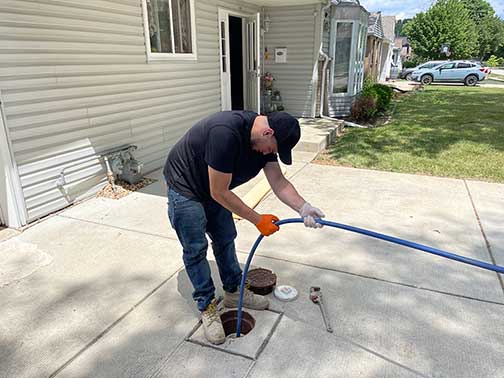
If sewer camera inspections are like an X-ray for your drainpipes, annual drain cleaning is like a reset button. It restores the proper function of your drains by removing debris from the line, including tree roots, grease, sludge, limescale, food scraps, and paper waste. The best drain cleaning methods recommended for Garfield Ridge homes are sewer rodding and hydro jetting.
- Sewer rodding
This is a favored method for professional plumbers. It uses a flexible rod with a stainless-steel cutting head attached to its business end. The other end of the rod is hooked up to a motor, which is used to spin the rod as it travels through the drainage line, giving it enough power to shear through even the most stubborn debris.
- Hydro jetting
Hydro jetting, another favorite method for professional plumbers, uses the power of high-pressure water to blast away debris inside a pipe and clean the pipe walls in the process. Hydro jetting doesn’t just dislodge debris inside a pipe; it flushes it completely out of the drainage system.
Should you use sewer rodding or hydro jetting when cleaning your drains? This depends on the age, condition of your drainage pipes, and the type of debris inside them. However, making that decision is not hard if you do a sewer camera inspection and work with an experienced Garfield Ridge plumber.