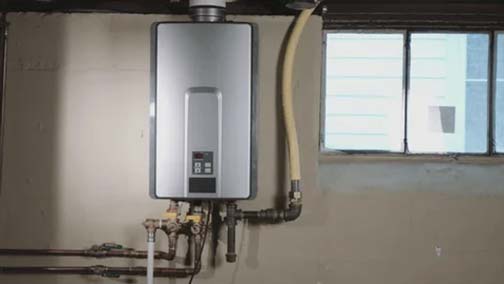
Are you thinking of replacing the water heater in your Chicago home, but are stuck between installing a tankless water heater versus a traditional water heater? In this post, we explore the differences between these two types of water heaters and what to consider when choosing a water heater for your home as noted by Keyrenter Highlands Ranch.
Before discussing the critical factors to consider when selecting a water heater, let’s talk about the good and the bad of these two types of water heaters.
Pros and cons of a tankless water heater
Pros
- Better energy efficiency: Because they heat water on demand instead of storing it, there is no standby heat loss. This makes a tankless water heater more energy-efficient.
- Unlimited hot water supply: Unlike traditional water heaters, tankless water heaters don’t have a tank, so your hot water supply is not limited to the size of the tank.
- Needs less space: Due to the absence of a storage tank, tankless water heaters are more compact, making them ideal for smaller homes and apartments.
- Longer service life: Since they are less susceptible to leaks, rust, and corrosion, tankless water heaters have a longer lifespan (15-20 years) than traditional water heaters.
Cons
- Higher upfront cost: Tankless water heaters typically have higher acquisition and installation costs than traditional water heaters.
- Potential for delays: Due to the absence of a storage tank, there is no ready supply of hot water. This can lead to delays as the appliance heats the water.
- Requires more maintenance: Tankless water heaters are sometimes harder to maintain than traditional water heaters because of their complex mechanisms.
Pros and cons of a traditional water heater
Pros
- Lower upfront costs: Traditional water heaters have lower acquisition costs. Since most homes already have the infrastructure to make them work, installation is cheaper.
- Consistent water supply: Because they store water, hot water is readily available in sufficient volumes. This is ideal for homes where multiple fixtures use hot water at once.
- Compatible with most fuels: You can find a traditional water heater that will work with the fuel type available in your area: natural gas, propane, oil, or electricity.
- Easier to maintain: Their simpler mechanism means that traditional water heaters are easier to service than tankless water heaters.
Cons
- Lower energy inefficiency: Standby heat loss is a major problem in traditional units. The water inside the tank must be heated and reheated continuously until it is needed.
- Requires more space: Because of their tanks, traditional water heaters need a lot of space. This is a problem when trying to install one in a small house or apartment.
- Shorter lifespan: Traditional water heaters are prone to rust, sediment buildup, and corrosion. This means a shorter lifespan for tanked water heaters (8 to 12 years).
Things to consider when choosing a water heater for your Chicago home
Chicago winters are very cold (some would say extremely cold), and that is a major consideration in the type of water heater you should buy. To decide on the right water heater for your Chicago home, think of the following:
- Cold incoming water
During winter, because the water entering a tankless water heater is very cold, the appliance may struggle to heat the water. This can impact the unit’s ability to meet your home’s hot water needs as well as its energy efficiency.
- High hot water demand
Hot water demand is naturally higher in winter compared to other times of the year. Given that even in the best conditions, a tankless unit will take time to heat water, a traditional unit will often handle this demand better.
- Installation difficulties
For older homes, converting the house to a tankless water heater is complicated. The cost of adding new gas lines, venting, and electrical wiring makes a traditional water heater a more attractive option.
- Hard water
Chicago’s well-known hard water problems mean that both traditional and tankless units will face challenges in this environment. You must weigh the relative difficulty of descaling the heat exchanger in a tankless unit versus flushing the tank of a traditional unit.
- Space constraints
Many Chicago houses and apartments have limited space, which makes a tankless water heater a better option. However, this is not a problem if you already have a traditional water heater installed in the home, unless, of course, you plan to buy a new unit with a bigger tank.
Here is the final verdict. If you have limited space and value long-term energy savings, a tankless water heater may be the right choice for your household. If you are worried about the unit’s ability to meet your home’s hot water needs, consider installing more than one unit.
On the other hand, if you have a lot of space in your home and a large family, your hot water needs will be better served by a traditional water heater. To minimize the energy usage of the unit, install a model with a very high energy efficiency rating.
Finally, before buying that new water heater, you will be well-advised to contact a local plumber. An expert sees and knows things you don’t, and they can help you make a selection that will benefit you many years into the future.