Home Repiping Services in Chicago, IL
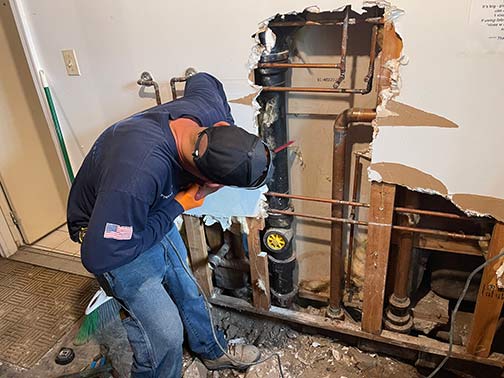
Home repiping in Chicago can become the right solution when aging pipes are causing repeated leaks, declining water pressure, discolored water, or plumbing problems throughout your house. Replacing one failed section at a time may keep an immediate leak under control, but it does not address a plumbing system that is deteriorating from end to end.
Chicago Plumbing Experts provides whole-home and partial repiping services for Chicago properties with aging, corroded, damaged, or outdated water piping. We evaluate the condition of the existing system, determine where the problems are coming from, and develop a repiping plan around the home’s layout, plumbing needs, and existing infrastructure.
For some homes, replacing a few problem sections may be enough. For others, continuing to repair old pipes simply postpones the next failure. Knowing the difference is an important part of deciding whether repiping makes sense.
When Replacing the Pipes Makes More Sense Than Another Repair
A single leaking pipe does not automatically mean your entire plumbing system needs to be replaced. Repiping becomes more relevant when problems are recurring or when the condition of the existing piping indicates that more failures are likely to follow.
Leaks Keep Appearing in Different Parts of the House
One leak can be an isolated problem. Several leaks occurring in different areas over a relatively short period can tell a different story.
When pipes are deteriorating throughout the home, repairing each leak individually can become a cycle of repeated service calls. Replacing the affected plumbing may provide a more practical long-term solution.
Water Pressure Has Gradually Declined
Older metal pipes can develop internal corrosion and buildup that restrict the passage of water. Over time, the restriction can become severe enough to affect pressure at multiple fixtures.
If cleaning a faucet aerator or replacing a fixture does not solve the problem, the piping itself may need to be investigated.
Your Water Looks Yellow, Brown, or Rusty
Discolored water can have several possible causes, but corrosion inside aging water pipes is one possibility.
If rusty or discolored water repeatedly appears at multiple fixtures, particularly after the water has been sitting in the pipes, the condition of the home’s water piping deserves attention.
Pipes Are Showing Visible Corrosion
Exposed piping can sometimes provide an early indication of a larger problem. Flaking, corrosion, rust, mineral deposits, or deteriorating connections may indicate that the plumbing has reached an advanced stage of wear.
What can be seen outside the pipe does not necessarily reveal the full condition of the piping inside the walls, so visible deterioration should be evaluated rather than treated as an isolated cosmetic issue.
Plumbing Repairs Are Becoming Routine
When a homeowner starts recognizing the plumber’s truck more often than they would like, the cost of repeated repairs can become an important part of the repiping decision.
Replacing an aging system is a significant project, but continually repairing failing sections can also become expensive without solving the underlying problem.
Why Older Chicago Homes Can Be More Vulnerable to Pipe Problems
Chicago has a large inventory of older housing, and the plumbing inside those homes can be just as old as the buildings themselves.
Vintage bungalows, Greystones, two-flats, older single-family homes, and properties that have gone through multiple renovations can contain plumbing installed during very different eras. Some systems have been repaired or modified repeatedly, leaving a mixture of original and newer piping throughout the home.
Older galvanized water piping is one example of a material that can develop significant internal corrosion as it ages. The outside of the pipe may still appear intact while the interior passage becomes increasingly restricted.
Previous remodeling can create another challenge. A home may have new fixtures connected to old supply piping, meaning the visible plumbing looks modern while much of the underlying system remains decades old.
That is why repiping decisions should be based on the condition of the actual plumbing system rather than simply the age of the house.
What Problems Can Aging Water Pipes Cause?
Failing water pipes can affect much more than the fixture where the problem first becomes visible.
Restricted Water Flow
Corrosion and mineral buildup can reduce the internal diameter of aging pipes. As the restriction becomes more severe, water flow can decline throughout the home.
This can be particularly noticeable when multiple fixtures are being used at the same time.
Recurring Leaks
As pipes deteriorate, weak points can develop around fittings, connections, joints, and sections of damaged material.
A repair may stop one leak while another develops somewhere else later. When failures become widespread, replacing the aging system can be more practical than continuing with isolated repairs.
Hidden Water Damage
A pipe leaking inside a wall, ceiling, floor, or cabinet may go unnoticed until moisture has already damaged surrounding materials.
If you suspect a hidden plumbing leak, leak detection can help identify the source before deciding what type of repair is needed.
Unexpected Plumbing Emergencies
A severely deteriorated pipe can eventually fail without much warning.
When an aging system has already experienced multiple failures, the possibility of another leak or pipe break becomes an important consideration when deciding whether to continue repairing individual sections.
Whole-Home Repiping vs. Replacing Only a Section
Repiping does not always mean replacing every piece of plumbing in the house.
The right scope depends on the condition of the system.
Partial Repiping
If most of the plumbing is in good condition but a specific section has deteriorated, replacing that portion may be the most sensible approach.
Partial repiping can address localized problems without turning a limited repair into a much larger project.
Whole-Home Repiping
When aging or deteriorating pipes are present throughout the property, a whole-home repipe may provide a more comprehensive solution.
Instead of waiting for individual sections to fail, the home’s water distribution piping is replaced according to a coordinated plan.
This can be especially useful when the existing system has widespread corrosion, recurring leaks, significant restrictions, or a history of repeated repairs.
How We Determine Which Approach Makes Sense
The goal is not to recommend the largest possible project.
Chicago Plumbing Experts evaluates the existing plumbing, considers the pattern of failures, looks at accessible piping and connections, and determines whether the problem appears localized or widespread.
That evaluation helps distinguish between a home that needs a targeted repair and one where continued repairs are becoming difficult to justify.
What Materials Can Be Used for a Repiping Project?
The replacement material matters because the new piping becomes part of the home’s plumbing infrastructure for many years.
The appropriate material depends on the property’s existing plumbing, installation requirements, layout, and project goals.
PEX Piping
PEX is flexible and can be useful when installing new water distribution lines through existing structures. Its flexibility can also provide advantages when routing replacement piping through areas where rigid pipe would be more difficult to install.
Copper Piping
Copper has been used in residential plumbing for generations and remains an established option for water distribution systems.
Its suitability depends on the project, existing plumbing configuration, installation conditions, and the homeowner’s goals.
Choosing the Right Replacement Material
There is no single pipe material that is automatically correct for every Chicago home.
The condition of the existing system, accessibility, installation method, property layout, and long-term objectives should all be considered before deciding what material to use.
What Happens During a Home Repiping Project?
A repiping project involves considerably more planning than a typical plumbing repair.
The exact process varies from one home to another, but the project generally starts with understanding the existing system and ends with testing the new plumbing throughout the property.
Evaluating the Existing Plumbing
The first step is determining what is currently installed and where the problems are occurring.
We look at accessible piping, connections, fixture locations, water pressure concerns, leak history, and other conditions that can affect the scope of the project.
Mapping Out the Replacement
Once the existing plumbing has been evaluated, a replacement plan can be developed around the home’s layout.
The goal is to create an efficient route for the new water lines while minimizing unnecessary disruption to finished areas.
Preparing the Work Areas
Repiping can require access to walls, ceilings, floors, cabinets, utility areas, or other portions of the home depending on how the existing plumbing is configured.
Careful preparation helps keep the work organized and reduces unnecessary disruption.
Installing the New Water Lines
The deteriorated piping is removed or bypassed as appropriate, and new water distribution lines are installed according to the project plan.
Connections, shutoffs, fixture supplies, and other components need to be properly configured so the new system works as a complete network rather than a collection of isolated repairs.
Testing the New System
Once the installation is complete, the new plumbing is checked for leaks and proper operation.
Water pressure and fixture performance are evaluated, and the system is inspected to make sure the new piping is functioning as intended.
How Much of My Home Will Need to Be Opened?
This is one of the biggest questions homeowners have before agreeing to a repiping project.
The answer depends heavily on the home’s construction and where the existing water lines are located.
Some homes provide relatively accessible pathways through basements, utility spaces, crawlspaces, or unfinished areas. Other properties may require more access through finished walls, ceilings, floors, or cabinets.
The scope should be discussed before work begins so homeowners understand where access may be required and what restoration considerations could be involved.
How Repiping Can Change Everyday Plumbing Performance
A successful repiping project should do more than eliminate the leak that triggered the project.
More Consistent Water Flow
Replacing heavily restricted water lines can improve the amount of water reaching fixtures throughout the home.
The actual improvement depends on the condition of the existing system, the incoming water supply, fixture demand, and the design of the replacement piping.
Fewer Recurring Pipe Repairs
If the existing plumbing has widespread deterioration, replacing it can eliminate many of the aging sections responsible for repeated leaks.
That can reduce the cycle of repairing one problem only to discover another later.
A More Predictable Plumbing System
Knowing that the home’s major water distribution piping has been replaced can provide a different level of confidence than continuing to patch an aging system.
Instead of waiting for another section to fail, homeowners can have a coordinated plumbing system designed around the current property.
Repiping After a Major Pipe Failure
Sometimes a major leak is what finally reveals that a home’s plumbing system has reached the point where replacement should be considered.
If a pipe has already failed, the immediate priority is stopping the leak and protecting the property.
For serious pipe breaks, burst pipe repair can address the immediate failure. Once the situation is under control, the broader condition of the home’s plumbing can be evaluated.
If multiple sections are showing signs of deterioration, the emergency repair may be the event that prompts a larger conversation about repiping.
Repiping and Home Remodeling
A renovation can be an ideal time to address aging plumbing because walls, ceilings, cabinets, and other finished areas may already be opened as part of the project.
Replacing old water lines before new finishes are installed can help avoid having to disturb those finished areas later when another plumbing failure occurs.
If your remodeling project involves new plumbing before walls and finishes are closed, our rough-in plumbing services can address the plumbing infrastructure as part of the larger project.
What Makes a Repiping Project Different From Ordinary Plumbing Repair?
A typical plumbing repair focuses on one problem.
Repiping looks at the larger system.
That distinction matters because a home with one failed fitting may need nothing more than a repair. A home with recurring leaks, restricted flow, corrosion, and deteriorating piping throughout the property may need a fundamentally different solution.
The goal of repiping is to address the aging plumbing infrastructure rather than repeatedly respond to individual failures.
Questions Chicago Homeowners Ask About Repiping
How do I know if my house needs repiping?
Recurring leaks, widespread low water pressure, rusty or discolored water, visible corrosion, and repeated pipe failures can all indicate that the home’s water piping should be evaluated. The presence of one problem does not automatically mean the entire system needs replacement, so the condition and extent of the deterioration should be assessed first.
How long does a whole-house repiping project take?
The timeline varies based on the size and layout of the home, the accessibility of the existing pipes, the number of fixtures involved, the replacement material, and the amount of access required. A straightforward project may move quickly, while a larger home with difficult access can take longer.
Do I have to leave my home during repiping?
Not necessarily. Many repiping projects can be completed while homeowners remain in the property, although portions of the home may be temporarily inaccessible and the water may need to be shut off during portions of the work. The specific disruption depends on the scope and layout of the project.
Will repiping improve my water pressure?
It can when restricted or heavily corroded pipes are contributing to poor flow. However, water pressure can also be affected by the municipal supply, service line, pressure-reducing equipment, fixtures, and other plumbing components. Repiping should therefore be considered as part of the larger system rather than an automatic solution for every low-pressure problem.
Is repiping better than repairing individual leaks?
When the plumbing system is otherwise in good condition, individual repairs may make sense. When leaks are recurring throughout an aging system, continuing to repair individual sections can become expensive and disruptive. In that situation, repiping may provide a more comprehensive solution.
What type of pipe is best for a home repipe?
The best material depends on the property and project. PEX and copper are both used for residential water distribution, but the right choice depends on the home’s layout, existing plumbing, installation requirements, accessibility, and long-term goals.
Can you repipe only part of my house?
Yes. Partial repiping can make sense when deterioration is limited to a specific section or portion of the home’s plumbing. The decision depends on the condition of the remaining pipes and whether replacing only the damaged section is likely to provide a practical long-term solution.
Can old galvanized pipes be replaced?
Yes. Aging galvanized water piping can be replaced as part of a partial or whole-home repiping project when its condition has deteriorated or is causing recurring plumbing problems. The appropriate replacement approach depends on the home’s existing plumbing configuration.
Will repiping stop rusty water?
If deteriorating interior water piping is the source of the discoloration, replacing that piping can address the underlying cause. However, discolored water can originate from other parts of the plumbing system or from conditions outside the home’s internal piping, so the source should be determined before assuming repiping is necessary.
Can repiping prevent future leaks?
Replacing deteriorated water piping can substantially reduce the likelihood of leaks from those old sections. No plumbing system can be guaranteed never to develop a leak, but replacing aging and failing pipes removes many of the weak points responsible for recurring failures.
Is repiping worth it for an older Chicago home?
It can be, particularly when the home has widespread aging piping, recurring leaks, poor water flow, or significant corrosion. The value depends on the condition of the existing system, the cost of continued repairs, the home’s long-term use, and the scope of the proposed replacement.
A Repipe Should Solve the Bigger Plumbing Problem
Replacing the pipes in a home is a major plumbing project, so it should not be recommended simply because a house is old.
The more important questions are what condition the existing pipes are in, how often problems are occurring, whether water flow has been affected, and whether continued repairs are becoming an ongoing expense.
Chicago Plumbing Experts evaluates those factors before developing a repiping plan. If only one section needs attention, a targeted repair may be appropriate. If the home’s water piping has reached a point where failures are becoming widespread, a whole-home repipe may provide a more practical path forward.
The objective is to give the homeowner a clear understanding of what is happening inside the plumbing system and what options make sense for the property.
Give Your Chicago Home a Fresh Start With New Water Piping
Aging plumbing does not have to remain a source of recurring leaks, poor water flow, and unexpected repairs.
Chicago Plumbing Experts provides home repiping services for Chicago properties with deteriorating water piping, recurring leaks, corrosion, restricted flow, and other signs of an aging plumbing system.
Whether your home needs a partial repipe or a complete replacement of its water distribution lines, we can evaluate the existing system, explain the condition of the plumbing, and develop a replacement approach based on the actual needs of the property.
A repiping project is a significant investment, but when an aging plumbing system has become a constant source of problems, replacing the underlying infrastructure can be a far more comprehensive solution than continuing to repair one failure at a time.
Chicago Plumbing Experts
Call us at: 708-775-2566
Email us at: chicagoplumbingexpert@gmail.com
Hours: Monday – Friday 7AM – 6PM | Saturday 7AM – 4PM
After Hours Emergency Plumbing Services: 708-518-7765
We would love to hear from you! Please fill out the quick contact form and we will get in touch with you shortly.