Sewer Line Cleaning Services in Chicago, IL
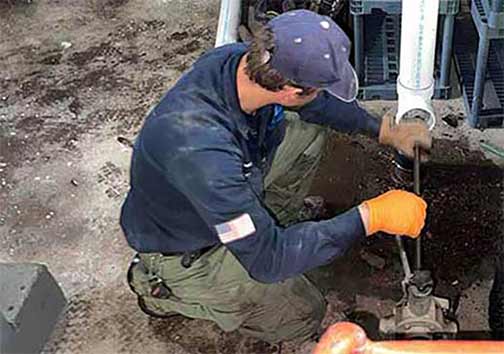
Sewer line cleaning in Chicago removes the buildup and obstructions that can gradually restrict the main sewer line serving your home or business. Grease, sludge, sediment, debris, mineral deposits, and tree roots can all reduce the usable opening inside a sewer pipe and eventually cause slow drainage or a backup.
A sewer line does not always fail suddenly. In many cases, the problem develops gradually. Drains may become slower, toilets may gurgle, backups may become more frequent, or a sewer that was recently cleared may begin causing trouble again.
Professional cleaning can restore flow when buildup or an obstruction is the problem. When the pipe itself is damaged, however, cleaning alone is not the answer. That is why understanding the condition of the sewer line matters before deciding how aggressively it should be cleaned.
What Builds Up Inside a Main Sewer Line?
Your home’s sewer line carries wastewater, but everything that enters the drainage system eventually travels through the main line.
Over time, material can collect along the inside of the pipe and reduce its effective diameter.
Common causes of sewer restrictions include:
- Grease and fats
- Sludge and organic waste
- Dirt and sediment
- Mineral deposits
- Paper and other debris
- Tree roots
- Scale and pipe-wall buildup
- Material left behind by recurring blockages
The longer buildup remains inside the line, the more opportunity it has to catch additional debris and create a larger restriction.
Signs Your Sewer Line May Need Cleaning
A sewer line problem can start with symptoms that seem minor. Paying attention to those early warning signs can help prevent a complete blockage.
Several Drains Are Slow at the Same Time
A single slow sink often points to a localized drain problem. When several fixtures throughout the property begin draining slowly, the main sewer line becomes more likely to be involved.
Toilets Gurgle or Drain Slowly
Gurgling can occur when wastewater and air are struggling to move normally through a restricted drainage system.
If more than one fixture is affected, the problem may be farther downstream than an individual toilet or sink.
Backups Keep Returning
If a sewer line has been cleared and the same backup returns, there may be additional buildup, roots, or another restriction farther inside the line.
Repeated cleaning can temporarily restore flow, but recurring problems deserve a closer look at what is causing them.
Sewage Odors Appear
Persistent sewer odors around drains, basement areas, or portions of the property can sometimes accompany restricted or poorly flowing sewer lines.
Odors alone do not prove that the main sewer needs cleaning, but they are worth investigating when they occur alongside drainage problems.
The Property Has a History of Sewer Problems
Some properties simply have more demanding sewer systems because of age, pipe material, mature trees, or previous damage.
If a property has required repeated sewer cleaning, a proactive maintenance approach may be more appropriate than waiting for the next backup.
How Professional Sewer Line Cleaning Works
Sewer cleaning is not simply a matter of pushing equipment through a pipe until water begins moving again.
The method should match the condition of the sewer line and the type of material restricting the flow.
Start With the Condition of the Line
When there is uncertainty about what is happening inside the sewer, a sewer camera inspection that reveals the condition of the underground pipe can provide valuable information before cleaning begins.
A camera can help identify roots, heavy buildup, structural damage, offsets, cracks, and other conditions that may affect the cleaning approach.
Choose the Appropriate Cleaning Method
Different restrictions require different equipment.
A line with a localized obstruction may respond well to mechanical sewer cleaning. Heavy internal buildup may require a more aggressive cleaning method.
Break Through the Restriction
Professional sewer cleaning equipment is used to remove or break apart material restricting wastewater flow.
The goal is not simply to create a small opening through the blockage. When conditions allow, the objective is to remove enough buildup to restore reliable flow through the affected portion of the line.
Restore Proper Wastewater Flow
Once the restriction has been addressed, wastewater should be able to move more freely through the sewer line.
If the line continues to back up after cleaning, the problem may involve structural damage, recurring root intrusion, or another condition that cleaning alone cannot correct.
Sewer Rodding for Stubborn Blockages
Mechanical sewer rodding is one method used to clear certain types of sewer obstructions.
A rotating cable and appropriate cutting or clearing equipment can break through material restricting the pipe and reopen the passageway.
Professional sewer rodding for stubborn main-line blockages can be particularly useful when the obstruction needs to be mechanically broken apart or cleared from the line.
Rodding is not automatically the best choice for every sewer. The condition and material of the pipe should be considered before aggressive mechanical cleaning is performed.
Hydro Jetting for Heavy Sewer Buildup
Some sewer lines have buildup that mechanical rodding may not fully remove.
Grease, sludge, scale, and other material can adhere to the interior walls of a pipe and continue catching debris even after a passage has been opened.
High-pressure hydro jetting for heavy sewer buildup uses pressurized water to clean the interior of the pipe and remove material from the pipe walls.
Hydro jetting can be particularly useful when the goal is to clean more than a narrow path through an obstruction.
The appropriate pressure and equipment depend on the condition of the sewer line. Older or damaged piping should be evaluated before aggressive cleaning is performed.
Sewer Cleaning Does Not Repair a Damaged Pipe
This is an important distinction.
Cleaning can remove an obstruction, but it cannot rebuild a cracked, collapsed, severely deteriorated, or structurally compromised sewer line.
For example, if tree roots are entering through a cracked pipe, removing the roots may restore flow temporarily. The opening that allowed the roots into the pipe remains.
Likewise, if a sewer line has collapsed, there is no amount of cleaning that can restore the missing section of pipe.
When recurring problems continue after cleaning, the next step may need to be diagnosis and repairing a damaged sewer line instead of repeatedly clearing the same failure.
Tree Roots and Sewer Line Cleaning
Tree roots are one of the most persistent causes of sewer restrictions.
Roots do not usually appear inside an otherwise perfect pipe without a reason. They often enter through cracks, deteriorated joints, or other openings where moisture is available.
Once inside, roots can grow and collect paper, grease, and other debris.
Cleaning can restore flow by removing the roots from the passageway, but recurring root intrusion may indicate that the sewer line has a structural weakness.
If roots return repeatedly, simply scheduling another cleaning may not be the best long-term answer. The condition of the pipe should be evaluated to determine why the roots are getting inside.
Sewer Line Cleaning for Older Chicago Properties
Chicago has a large number of older homes and buildings with sewer systems that have been underground for decades.
Older clay and cast iron sewer lines can develop problems over time, including:
- Deteriorated joints
- Cracks
- Root intrusion
- Internal buildup
- Shifting sections
- Restricted flow
- Structural deterioration
That does not mean every older sewer line needs frequent cleaning or replacement.
What matters is the actual condition of the line, the property’s history, and whether there are recurring restrictions or other warning signs.
How Often Should a Sewer Line Be Cleaned?
There is no single cleaning schedule that applies to every Chicago property.
A newer sewer line with no history of blockages may not need routine cleaning simply because a certain amount of time has passed.
An older property with mature trees, recurring backups, heavy buildup, or a history of sewer problems may benefit from more proactive maintenance.
Factors that can influence cleaning frequency include:
- Age and material of the sewer line
- Previous blockage history
- Tree roots near the sewer route
- Household or building usage
- Grease and organic waste entering the system
- Condition of the pipe
- Previous sewer repairs
- Whether the property has experienced recurring backups
The goal should be to establish a maintenance approach based on the actual sewer system rather than following an arbitrary calendar.
Residential Sewer Line Cleaning
A home’s main sewer line handles wastewater from multiple fixtures throughout the property.
When that line becomes restricted, the symptoms can appear in several parts of the house at once.
Residential sewer cleaning may be appropriate when a homeowner is dealing with recurring backups, slow drainage throughout the property, root intrusion, heavy buildup, or a known sewer restriction.
For homes with older sewer systems, periodic inspection and cleaning can also provide an opportunity to identify developing problems before they become a major failure.
Commercial Sewer Line Cleaning
Commercial properties can place substantially greater demands on sewer systems than many residential properties.
Restaurants, multi-unit buildings, offices, and other businesses may have higher wastewater volumes and different types of material entering the drainage system.
Restaurants in particular can deal with grease and organic waste that eventually reaches the sewer system if not properly controlled.
Commercial sewer cleaning can help reduce the risk of backups and interruptions that affect employees, tenants, customers, and daily operations.
Sewer Cleaning After a Backup
A sewer backup should not automatically be treated as a one-time event.
If the line has been completely obstructed, clearing it may restore drainage, but it does not necessarily explain why the backup happened.
The cause could be:
- Grease buildup
- Roots
- Debris
- Heavy sediment
- A damaged pipe
- A collapsed section
- An offset joint
- Another structural restriction
If the same backup has happened more than once, determining the underlying cause becomes increasingly important.
What You Should Not Put Down Your Drains
What enters the plumbing system eventually becomes part of the wastewater moving through the sewer line.
Homeowners can reduce the amount of material entering the sewer by avoiding improper disposal of:
- Cooking grease and oils
- Wipes
- Paper products not designed to break down in wastewater
- Food scraps
- Harsh chemicals
- Other materials that can accumulate inside the drainage system
Even products marketed as flushable can contribute to plumbing problems in some systems.
Good disposal habits do not eliminate the need for professional sewer maintenance, but they can reduce unnecessary buildup.
Sewer Cleaning vs. Drain Cleaning
A drain cleaning service and a sewer line cleaning service are not necessarily addressing the same part of the plumbing system.
Drain cleaning generally focuses on an individual branch drain serving a sink, tub, toilet, floor drain, or similar fixture.
Sewer line cleaning addresses the larger line carrying wastewater away from the property.
The distinction matters when multiple fixtures are affected. If several drains are backing up at the same time, repeatedly treating each individual fixture may miss a restriction farther downstream in the main sewer.
When Cleaning Is Not Enough
There are situations where cleaning is only part of the solution.
If the sewer line has:
- A collapsed section
- Severe cracking
- Extensive deterioration
- Repeated root intrusion
- Major pipe displacement
- A structural defect
- A recurring failure that returns shortly after cleaning
then continued cleaning may become a temporary solution rather than a true repair.
In those cases, a camera inspection can help determine the condition of the pipe and whether additional sewer work is warranted.
Sewer Line Cleaning FAQs
What causes sewer lines to clog?
Grease, sludge, sediment, debris, mineral buildup, roots, and other materials can gradually restrict the inside of a sewer pipe.
How do I know if the main sewer line is clogged?
Multiple slow drains, recurring backups, toilet problems in several areas of the home, and wastewater appearing at low points can indicate a main sewer restriction.
Is sewer rodding the same as sewer cleaning?
Rodding is one method of mechanically clearing a sewer line. Other cleaning methods, including hydro jetting, may be more appropriate depending on the type of buildup and condition of the pipe.
Is hydro jetting better than sewer rodding?
Neither method is automatically better for every sewer. The appropriate method depends on the type of obstruction, the amount of buildup, and the condition of the existing pipe.
Can sewer cleaning remove tree roots?
Professional sewer cleaning can remove or cut back roots that are restricting the inside of a sewer line. If roots repeatedly return, however, the pipe should be evaluated for cracks or damaged joints that are allowing the roots to enter.
How often should my sewer line be cleaned?
It depends on the property. Age, pipe condition, tree roots, usage, previous blockages, and buildup can all affect how frequently cleaning may be appropriate.
Can sewer cleaning prevent backups?
Cleaning can reduce the risk of backups caused by buildup and obstructions. It cannot prevent a backup caused by a collapsed or severely damaged pipe.
Does sewer cleaning damage old pipes?
The appropriate cleaning method and equipment should be selected based on the condition of the sewer line. Older or deteriorated pipes should be evaluated before aggressive cleaning methods are used.
Can sewer cleaning fix a cracked pipe?
No. Cleaning can remove material restricting the pipe, but it does not repair structural damage. A cracked or otherwise damaged sewer line may require repair.
Why does my sewer keep clogging after it has been cleaned?
Recurring blockages can be caused by roots, heavy buildup, pipe damage, offsets, collapsed sections, or other conditions. A sewer camera inspection can help determine why the problem keeps returning.
Should I have my sewer cleaned before a problem happens?
Preventive cleaning can make sense for properties with known buildup, recurring blockages, root intrusion, or other risk factors. Properties without a history of sewer problems may not need routine cleaning on a fixed schedule.
Keep Your Main Sewer Line Moving
A sewer line that drains properly is easy to take for granted until wastewater stops moving.
Grease, roots, sludge, sediment, debris, and other buildup can gradually restrict the line and turn a minor flow problem into a serious backup. Professional cleaning can remove those restrictions and restore the usable opening inside the pipe when buildup is the underlying problem.
The key is knowing what you are dealing with. If the pipe is structurally sound, cleaning may be all that is needed. If the line is damaged, recurring cleaning may only postpone the real repair.
Chicago Plumbing Experts provides sewer line cleaning for residential and commercial properties throughout Chicago, with cleaning methods selected according to the type of restriction and condition of the sewer system.
Chicago Plumbing Experts
Call us at: 708-775-2566
Email us at: chicagoplumbingexpert@gmail.com
Hours: Monday – Friday 7AM – 6PM | Saturday 7AM – 4PM
After Hours Emergency Plumbing Services: 708-518-7765
We would love to hear from you! Please fill out the quick contact form and we will get in touch with you shortly.