Tankless Water Heater Installation in Chicago, IL
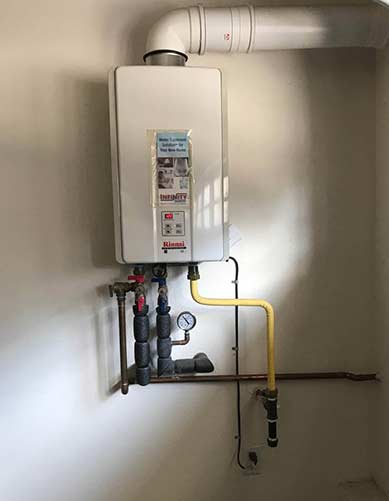
Tankless water heater installation in Chicago can be a smart option for homeowners who want on-demand hot water, a smaller equipment footprint, and a different approach to heating water than a traditional storage tank. Instead of keeping a large volume of water heated inside a tank, a tankless system heats water as it is needed.
That does not mean a tankless water heater is automatically the right choice for every Chicago home. The property, hot water demand, available gas or electrical capacity, installation location, water conditions, and existing plumbing all matter. Choosing the right system and having it installed correctly are just as important as the equipment itself.
Chicago Plumbing Experts provides tankless water heater installation, replacement, repair, and maintenance for residential and commercial properties throughout Chicago. We help property owners determine whether tankless technology makes sense for their needs, properly size the system, and complete the plumbing work required for reliable operation.
Is a Tankless Water Heater Right for Your Chicago Home?
The biggest mistake homeowners can make is choosing a tankless system simply because it sounds more efficient or modern.
Tankless water heaters can offer significant advantages, but they also have different installation requirements and operating characteristics than traditional tank systems. Your household’s hot water usage should be considered before choosing the equipment.
You Want Hot Water Without Storing a Large Tank
A tankless system heats water when a fixture calls for hot water rather than storing a large volume of heated water.
That can be particularly appealing for homeowners who regularly use hot water throughout the day and want to avoid exhausting the supply stored inside a conventional tank.
You Need to Make Better Use of Limited Space
Traditional water heaters can take up considerable floor space. Tankless units are much more compact and can provide additional flexibility when planning a utility room, basement, or other mechanical area.
For Chicago homes where usable space is limited, reducing the footprint of the water heater can be a meaningful advantage.
You Are Replacing an Aging Water Heater
A failing storage tank does not necessarily need to be replaced with another tank.
If your existing system is nearing the end of its useful life, it may be a good time to compare a conventional replacement with a tankless installation. The decision should take into account the existing plumbing, fuel source, household demand, and installation requirements.
Your Household Has High or Changing Hot Water Demand
Tankless systems can continuously heat water as it is needed, but the system still has a maximum flow rate.
That means proper sizing matters. A system that is too small may struggle when multiple fixtures are demanding hot water at the same time. A properly selected unit should be matched to the property’s peak demand rather than simply the number of people living there.
How Tankless Water Heaters Work
A traditional water heater stores heated water in a tank. A tankless system takes a different approach.
When a hot water fixture is opened, water flows through the tankless unit. The system activates its heating components and transfers heat to the incoming water as it passes through the heat exchanger.
Because there is no large storage tank constantly maintaining a reservoir of hot water, tankless systems can reduce standby heat loss and use space more efficiently.
The actual performance of the system depends on factors such as incoming water temperature, water flow, system capacity, energy source, and how many fixtures are operating at once.
The Advantages of Going Tankless
Tankless water heaters can make sense for many properties, but their benefits depend on how the system is selected and installed.
Continuous Hot Water
A properly sized tankless system can continue heating water as long as there is an adequate supply of water and the system has enough capacity for the demand.
That can be useful for households where hot water demand frequently exceeds the capacity of a traditional storage tank.
Less Space Required
Without a large storage tank, a tankless water heater can occupy substantially less space.
That can open up room in a utility area, basement, garage, or other mechanical space where every square foot matters.
Reduced Standby Heat Loss
Traditional storage systems continually use energy to maintain the temperature of the water inside the tank. Tankless systems do not need to maintain a large reservoir of stored hot water.
That can improve operating efficiency, although actual energy savings depend on the equipment, usage patterns, fuel source, water demand, and other property-specific factors.
No Large Tank Holding Dozens of Gallons
A conventional storage water heater contains a substantial volume of water at all times. Tankless equipment does not have that same large storage reservoir.
This can reduce the risk associated with a tank eventually corroding and leaking large amounts of stored water into the surrounding area.
Long-Term Equipment Potential
Tankless systems can provide a long service life when properly installed and maintained.
Routine maintenance is particularly important in areas where mineral buildup can affect the heat exchanger and other internal components.
Gas vs. Electric Tankless Water Heaters
One of the most important decisions during a tankless installation is the energy source.
Gas and electric tankless systems have different installation requirements, capacities, and property considerations. The right option depends on the existing infrastructure and the hot water demand the system needs to handle.
Gas Tankless Water Heaters
Gas-fired tankless systems can provide substantial heating capacity and may be well suited to properties with significant hot water demand.
However, installation can involve more than connecting the new water heater to an existing gas line. Gas capacity, venting, combustion requirements, water flow, and the condition of the existing installation all need to be considered.
If the existing gas infrastructure was designed around a conventional water heater, it may need to be evaluated before a tankless system is installed.
Electric Tankless Water Heaters
Electric tankless systems do not require gas combustion or gas venting, but they can have significant electrical requirements depending on the equipment and the property’s hot water demand.
The home’s electrical service and available capacity need to be evaluated before selecting an electric tankless unit. Installing equipment without considering those requirements can result in an impractical or underperforming system.
Proper Sizing Makes a Huge Difference
A tankless water heater should not be selected simply by looking at the size of your existing storage tank.
Tankless systems are sized according to factors such as:
- Peak hot water demand
- Number of fixtures used at the same time
- Desired water temperature
- Incoming water temperature
- Required flow rate
- Gas or electrical capacity
- Installation location
- Property usage patterns
For example, a household that regularly runs a shower while a dishwasher and another fixture are operating may require substantially more capacity than a property with lighter simultaneous demand.
Proper sizing helps prevent one of the most common tankless complaints, inadequate hot water performance during periods of heavy use.
What Happens When You Convert From a Tank to Tankless?
Replacing a traditional water heater with a tankless system is not always a simple equipment swap.
The existing installation was designed around a storage tank, while the new system may have different gas, electrical, venting, water flow, mounting, and clearance requirements.
Evaluating the Existing Plumbing
Before installation, the existing water and gas or electrical connections should be evaluated to determine what can be reused and what needs to be modified.
Older shutoff valves, deteriorated connections, and other surrounding components may also need attention while the installation area is accessible.
Preparing for Gas or Electrical Requirements
A tankless system may have different energy requirements from the water heater it replaces.
Gas installations can require appropriate gas capacity and venting. Electric models may require substantial electrical capacity.
Those requirements should be determined before the equipment is selected, not after the installation has already started.
Planning the Installation Location
Tankless systems offer flexibility because of their compact size, but the installation location still needs to meet the requirements of the equipment.
Access, ventilation where applicable, water and fuel connections, service clearance, and other installation considerations all need to be accounted for.
Professional Tankless Water Heater Installation in Chicago
Tankless water heater installation requires more planning than simply removing an old tank and connecting a new appliance.
Chicago Plumbing Experts evaluates the existing plumbing configuration, hot water demand, available energy source, and installation requirements before completing the work.
Our goal is to install the system according to the equipment manufacturer’s requirements and applicable plumbing standards while making sure the finished installation works with the property rather than against it.
From Equipment Selection to Final Testing
A tankless installation typically involves several stages, including evaluating the property, determining the appropriate system, preparing the installation location, making the necessary plumbing and utility connections, and testing the equipment.
Once installation is complete, the system should be checked for proper water flow, temperature, connections, and overall operation.
What to Expect During a Tankless Installation
Every property is different, but a professional installation generally begins with an evaluation of the existing system.
The plumber determines how the current water heater is configured, assesses the available gas or electrical service, considers hot water demand, and identifies any modifications required for the new system.
The existing water heater can then be disconnected and removed when replacement is part of the project. The new tankless unit is installed, connected, and tested before the project is considered complete.
If the installation requires broader plumbing changes during a renovation or new construction project, our rough-in plumbing services can address plumbing infrastructure before finished surfaces are installed.
Chicago Homes Can Have Additional Installation Considerations
Tankless water heater installation can be more involved in older Chicago properties.
Many homes have plumbing systems that have been modified over the years. Previous renovations, aging shutoff valves, older piping, limited mechanical space, and outdated connections can all affect the installation.
The existing system should therefore be evaluated before assuming a new tankless unit can simply be connected to everything already in place.
A professional installation gives the plumber an opportunity to identify those conditions before they create problems after the new equipment is installed.
Tankless Water Heater Maintenance Is Still Important
Tankless does not mean maintenance-free.
Mineral deposits and scale can accumulate inside the heat exchanger over time. The rate of buildup depends on water conditions, usage, system design, and other factors.
Regular maintenance can help protect efficiency and system performance.
Flushing and Descaling
Flushing the system can help remove mineral deposits that accumulate inside the heat exchanger.
This becomes especially important when mineral buildup begins affecting water flow, heating performance, or temperature consistency.
Checking System Components
Routine service can also provide an opportunity to inspect connections, filters, valves, controls, and other accessible components for signs of wear or developing problems.
Finding an issue early can be preferable to discovering it after the system stops producing hot water.
Maintaining Consistent Performance
A well-maintained tankless water heater should be able to operate more efficiently and consistently than one that has been allowed to accumulate significant scale and debris.
The appropriate maintenance frequency depends on the equipment and the property’s conditions.
Tankless Water Heater Repair When Performance Changes
A tankless system can still develop problems.
If you notice inconsistent temperatures, reduced flow, error codes, unusual noises, delayed hot water, or a complete loss of hot water, the cause should be diagnosed rather than assuming the entire unit needs replacement.
Potential problems can involve water flow, mineral buildup, ignition, heating components, controls, sensors, electrical connections, or other parts of the system.
Chicago Plumbing Experts provides tankless water heater repair and can determine whether the issue can be corrected without replacing the entire unit.
When Tankless May Not Be the Best Choice
Tankless water heaters have real advantages, but they are not the ideal solution for every property.
A conventional storage tank may still make more sense when the existing infrastructure is not suitable for a tankless conversion, when installation modifications would be extensive, or when the property’s hot water demand and budget make a traditional system more practical.
The important question is not whether tankless technology is popular. It is whether the system makes sense for your particular property.
Our water heater services include both conventional and tankless systems, allowing homeowners to compare their options before deciding what to install.
Tankless Water Heaters for Chicago Businesses
Tankless systems can also be used in commercial settings where space and hot water demand need to be carefully considered.
Restaurants, offices, multifamily properties, retail businesses, and other facilities may have very different usage patterns from a typical single-family home.
Commercial installations require appropriate sizing and careful consideration of peak demand so the system can keep up with the property’s actual operation.
For broader commercial plumbing needs, our commercial plumbing services cover repairs, installations, drain and sewer work, and other plumbing requirements for Chicago businesses.
Common Tankless Water Heater Questions
Do tankless water heaters really provide unlimited hot water?
A properly sized tankless system can continuously heat water while there is sufficient water flow and energy capacity. However, the system still has a maximum flow rate. If several fixtures are demanding hot water simultaneously, an undersized unit may not be able to provide the desired temperature and flow.
How long does a tankless water heater last?
Tankless water heaters can have a long service life when properly installed and maintained. Actual lifespan depends on the equipment, water conditions, usage, maintenance, and installation quality. Regular maintenance can help protect the heat exchanger and other components from mineral buildup and premature wear.
Is a tankless water heater more efficient than a traditional water heater?
Tankless systems can reduce standby energy loss because they do not continuously heat a large stored volume of water. However, actual energy savings vary depending on the equipment, household usage, energy source, and operating conditions.
Will a tankless water heater lower my gas or electric bill?
It may, but savings are not guaranteed to be the same for every household. A tankless system can reduce standby losses, but installation cost, hot water usage, fuel prices, system efficiency, and other factors all affect the overall economics.
Can I replace my existing tank water heater with a tankless system?
Yes, many properties can be converted from a traditional tank to tankless, but it is not always a direct replacement. Gas capacity, electrical service, venting, plumbing connections, water flow, and installation location may need to be modified to accommodate the new system.
Are gas or electric tankless water heaters better?
Neither is automatically better. Gas systems can offer high heating capacity, while electric systems avoid gas combustion and venting requirements but can have substantial electrical demands. The best option depends on the property’s existing infrastructure, hot water demand, installation conditions, and long-term goals.
Why does my tankless water heater take time to deliver hot water?
A tankless system heats water when it is needed, but the water already sitting in the plumbing lines still has to travel from the heater to the fixture. The distance between the heater and the fixture, pipe layout, flow rate, and system configuration can all affect how quickly hot water arrives.
Does a tankless water heater need maintenance?
Yes. Tankless systems can require flushing or descaling to remove mineral buildup from the heat exchanger. Maintenance requirements vary based on water conditions, equipment, usage, and manufacturer recommendations.
Can hard water affect a tankless water heater?
Yes. Mineral deposits can accumulate inside the heat exchanger and affect water flow and heating performance. Homes with harder water may require more frequent maintenance to keep the system operating properly.
Is a tankless water heater good for an older Chicago home?
It can be, but the existing plumbing and utility infrastructure should be evaluated first. Older homes may have aging pipes, valves, limited electrical capacity, or gas and venting configurations that need modification before a tankless system can be installed properly.
Does a tankless water heater take up less space?
Yes. Tankless units are considerably more compact than traditional storage tanks because they do not require a large reservoir of stored water. The exact installation footprint depends on the equipment selected and the requirements of the installation location.
Should I repair or replace my tankless water heater?
That depends on the age and condition of the system and the cause of the problem. Mineral buildup, sensors, controls, flow problems, and other components may be repairable, while a severely damaged or aging unit may make replacement more practical.
A Tankless Upgrade Should Be Designed Around Your Property
Tankless water heating can be an excellent upgrade, but the best results come from treating the installation as a complete plumbing project rather than simply swapping one appliance for another.
The right equipment needs to match the property’s hot water demand. The gas or electrical infrastructure needs to support it. The installation location needs to work with the system requirements. And the equipment needs proper maintenance after installation to continue performing as intended.
Chicago Plumbing Experts helps homeowners and businesses work through those considerations before installing a tankless water heater.
Whether you are replacing an aging storage tank, remodeling your home, trying to reclaim utility space, or looking for a different way to supply hot water, we can evaluate your existing system and help determine whether tankless is a practical choice.
Bring On-Demand Hot Water to Your Chicago Property
A tankless water heater can provide a compact, modern alternative to a traditional storage tank, but getting the most from the system starts with proper selection and installation.
Chicago Plumbing Experts provides tankless water heater installation, replacement, repair, and maintenance throughout Chicago. We focus on proper sizing, appropriate system configuration, quality installation, and long-term performance rather than treating every property the same.
If you are considering making the switch to tankless, the first step is determining whether the technology actually fits your home’s plumbing, utilities, space, and hot water needs. From there, the right system can be selected and installed with those requirements in mind.
Chicago Plumbing Experts
Call us at: 708-775-2566
Email us at: chicagoplumbingexpert@gmail.com
Hours: Monday – Friday 7AM – 6PM | Saturday 7AM – 4PM
After Hours Emergency Plumbing Services: 708-518-7765
We would love to hear from you! Please fill out the quick contact form and we will get in touch with you shortly.